• Fri frakt över 249 kr
  • •
  • Snabba leveranser
  • •
  • Billiga böcker
Kundservice

Du är på sajten för privatpersoner.

Företag, bibliotek eller offentlig verksamhet?

Du handlar på classic.bokus.com, där alla dina funktioner finns intakta.
Till classic.bokus.com
Bokus logotyp. Gå till startsidan.
  • Erbjudanden
  • Nyheter
  • Student
  • Topplistor
  • Barn & ungdom
  • Bokus Play
  • E-böcker
  • Pocketböcker
  • Spel & pussel

10% rabatt på allt med kod NYSTART10 →

Sidfot

Mina sidor

    Hjälp

    • Kundservice
    • Vanliga frågor och svar
    • Frakt och leverans
    • Retur vid ångerrätt
    • Reklamera vara
    • Betalning
    • Köpvillkor
    • Allmänna villkor
    • Information om webbplatsens tillgänglighet

    Om Bokus

    • Om oss
    • Pressrum
    • För studenter
    • För företag
    • För bibliotek och offentlig verksamhet
    • För leverantörer
    • Hållbarhet

    Populärt

    • Aktuella erbjudanden
    • Presentkort
    • Studentlitteratur
    • Nya böcker
    • Topplistor
    • Signerade böcker
    • Engelska böcker

    Inspiration

    • Boktips
    • BookTok
    • Populära bokserier
    • Barnbokskaraktärer
    • Populära författare
    Logotyp för Bokus
    Följ oss på Facebook (extern länk)Följ oss på Instagram (extern länk)Följ oss på YouTube (extern länk)Följ oss på TikTok (extern länk)
    bokus @ CookiesAnpassa cookiesIntegritetspolicyKöpvillkor
    Till Citymail hemsida (extern länk)Till Budbee hemsida (extern länk)Till Postnord hemsida (extern länk)Till Schenker hemsida (extern länk)Till Early Bird hemsida (extern länk)Till Walleys hemsida (extern länk)
    1. Samhälle och politik
    2. Politik och statsskick
    3. Statsvetenskap och politisk teori

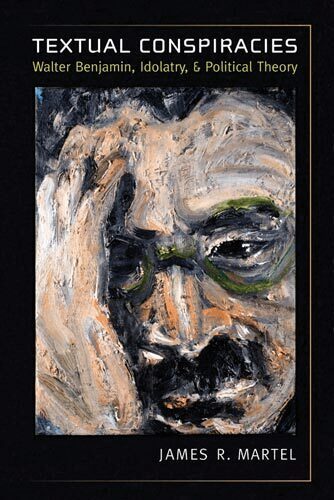
    Textual Conspiracies

    Walter Benjamin, Idolatry, and Political Theory

    AvJames Martel

    Häftad, Engelska, 2012

    465 kr

    Beställningsvara. Skickas inom 5-8 vardagar. Fri frakt över 249 kr.

    Fler format och utgåvor

    E-bok

    697 kr

    Beskrivning

    “This is a sophisticated and fascinating argument written in a very enjoyably entertaining style. It is hard for me to see how readers initially interested in these texts will not be ‘swept off their feet’ by the core assertions of this author, and the devastatingly comprehensive way in which he demonstrates those arguments.” —Brent Steele, University of KansasIn Textual Conspiracies, James R. Martel applies the literary, theological, and philosophical insights of Walter Benjamin to the question of politics and the predicament of the contemporary left. Through the lens of Benjamin’s theories, as influenced by Kafka, of the fetishization of political symbols and signs, Martel looks at the ways in which various political and literary texts “speak” to each other across the gulf of time and space, thereby creating a “textual conspiracy” that destabilizes grand narratives of power and authority and makes the narratives of alternative political communities more apparent. However, in keeping with Benjamin’s insistence that even he is complicit with the fetishism that he battles, Martel decentralizes Benjamin’s position as the key theorist for this conspiracy and contextualizes Benjamin in what he calls a “constellation” of pairs of thinkers and writers throughout history, including Alexis de Tocqueville and Edgar Allen Poe, Hannah Arendt and Federico García Lorca, and Frantz Fanon and Assia Djebar.

    Produktinformation

    • Utgivningsdatum:2012-11-28
    • Mått:152 x 229 x undefined mm
    • Format:Häftad
    • Språk:Engelska
    • Antal sidor:318
    • Förlag:The University of Michigan Press
    • ISBN:9780472035229

    Utforska kategorier

    • Statsvetenskap och politisk teori inom Samhälle och politik
    • Filosofiska discipliner inom Filosofi och religion
    • Litteraturvetenskap inom Skönlitteratur

    Mer om författaren

    James R. Martel is Professor of Political Science at San Francisco State University.

    Recensioner i media

    "Instead of citing Benjamin piously (as most scholars tend to do), Martel utilizes Benjaminian concepts and projects them into new contexts, thereby producing a more critical and practicable version of his political theory and political theology. In doing so, he remains faithful to Benjamin himself, who, too, sought to save the critical voices from the past by giving them a new life and significance in the present." —Theory and Event