• Fri frakt över 249 kr
  • •
  • Snabba leveranser
  • •
  • Billiga böcker
Kundservice

Du är på sajten för privatpersoner.

Företag, bibliotek eller offentlig verksamhet?

Du handlar på classic.bokus.com, där alla dina funktioner finns intakta.
Till classic.bokus.com
Bokus logotyp. Gå till startsidan.
  • Erbjudanden
  • Nyheter
  • Student
  • Topplistor
  • Barn & ungdom
  • Bokus Play
  • E-böcker
  • Pocketböcker
  • Spel & pussel

10% rabatt på allt med kod: NYSTART10 →

Sidfot

Mina sidor

    Hjälp

    • Kundservice
    • Vanliga frågor och svar
    • Frakt och leverans
    • Retur vid ångerrätt
    • Reklamera vara
    • Betalning
    • Köpvillkor
    • Allmänna villkor
    • Information om webbplatsens tillgänglighet

    Om Bokus

    • Om oss
    • Pressrum
    • För studenter
    • För företag
    • För bibliotek och offentlig verksamhet
    • För leverantörer
    • Hållbarhet

    Populärt

    • Aktuella erbjudanden
    • Presentkort
    • Studentlitteratur
    • Nya böcker
    • Topplistor
    • Signerade böcker
    • Engelska böcker

    Inspiration

    • Boktips
    • BookTok
    • Populära bokserier
    • Barnbokskaraktärer
    • Populära författare
    Logotyp för Bokus
    Följ oss på Facebook (extern länk)Följ oss på Instagram (extern länk)Följ oss på YouTube (extern länk)Följ oss på TikTok (extern länk)
    bokus @ CookiesAnpassa cookiesIntegritetspolicyKöpvillkor
    Till Citymail hemsida (extern länk)Till Budbee hemsida (extern länk)Till Postnord hemsida (extern länk)Till Schenker hemsida (extern länk)Till Early Bird hemsida (extern länk)Till Walleys hemsida (extern länk)
    1. Psykologi och pedagogik
    2. Pedagogik
    3. Pedagogisk metodik

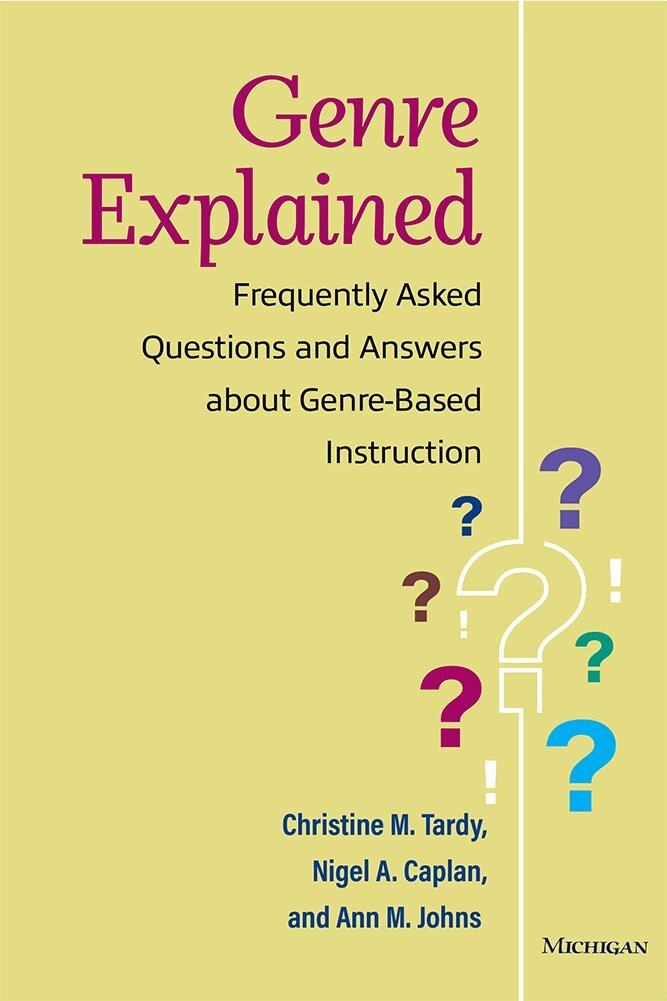
    Genre Explained

    Frequently Asked Questions and Answers about Genre-Based Instruction

    AvChristine Tardy,Nigel A. Caplan

    Häftad, Engelska, 2023

    307 kr

    Beställningsvara. Skickas inom 5-8 vardagar. Fri frakt över 249 kr.

    Beskrivning

    The idea of teaching writing through genres—rather than, say, through prescriptive forms, templates, and rhetorical modes—is intuitively appealing. Yet many teachers have questions, and they are absolutely right to ask them: What are genres? What is genre-based instruction? What do students write if they don’t write essays? Isn’t it easier to teach and learn five-paragraph essays? What’s the role of language in genre teaching? And many more. These are all excellent questions and ones that new and experienced teachers alike have also struggled with. This book sets out to tackle some of the most common questions that teachers, teacher educators, and administrators may have when moving toward a genre-based teaching approach.

    Produktinformation

    • Utgivningsdatum:2023-03-20
    • Mått:152 x 229 x 12 mm
    • Vikt:256 g
    • Format:Häftad
    • Språk:Engelska
    • Antal sidor:150
    • Förlag:The University of Michigan Press
    • ISBN:9780472039340

    Utforska kategorier

    • Pedagogisk metodik inom Psykologi och pedagogik
    • Undervisning i specifika ämnen inom Psykologi och pedagogik

    Mer om författaren

    Christine M. Tardy is Professor of English Applied Linguistics at the University of Arizona. Nigel A. Caplan is an Associate Professor at the University of Delaware English Language Institute. Ann M. Johns is Professor Emerita of Linguistics and Writing Studies at San Diego State University.

    Recensioner i media

    "In short, I strongly believe that both seasoned and novice writing instructors, regardless of their previous familiarity with GBI theory, will consider this book a true gem due to its profound insights presented in the most accessible manner possible."—System

    Innehållsförteckning

    • Table of ContentsForewordIntroductionPart A: Understanding Genre-Based Instruction1. What are genres?2. What are the differences between genre and text?3. What are some genres that students commonly encounter?4. Is the 5PE a genre?5. What are the differences between a genre and a mode?6. What are the differences between a genre and a template?7. What are the differences between genre and argument?8. What is genre knowledge?Part B: Introducing Genre-Based Instruction9. What is genre-based instruction?10. What is genre analysis?11. What are the roles of audience and context in genre-based instruction?12. What is rhetorical moves analysis?13. What does grammar mean in genre-based writing?14. What is register?15. How can grammar, vocabulary, and writing instruction be effectively integrated?16. How can I teach coherence in genre-based instruction?17. How can I teach cohesion in genre-based instruction?18. How can I teach stance in a genre-based classroom?Part C: Designing a Genre-Based Course19. What is the role of needs assessment in genre-based instruction?20. What does a genre-based curriculum look like?21. What does a genre-based unit look like?22. How do I write a good assignment and prompt?23. How do I teach students to analyze assignments for other classes?24. How should I assess genre-based writing?25. How do I write a genre-based rubric?26. What is the role of written corrective feedback in genre-based writing?27. What is the role of reflection in genre-based instruction?28. How can I help students use their prior knowledge strategically in approaching a new genre?29. How can I help students critique genres?Part D: Addressing Common Concerns30. Is genre-based writing instruction only for advanced students?31. Should I assign “essays” in genre-based instruction?32. Should I assign “the research paper” in a genre-based curriculum?33. How can students draw on their multilingual resources in genre-based instruction?34. What do I do if I’m unfamiliar with the genres that students need to learn?35. How do I find and use sample texts?36. What role can emerging multimodal genres play in an academic writing class?Part E: Moving Forward with Genre-Based Instruction37. How do I encourage colleagues to adopt genre-based instruction?38. How do I talk about genre with faculty across the disciplines?39. How do I explain genre to an administrator?40. What do I read next?