• Fri frakt över 249 kr
  • •
  • Snabba leveranser
  • •
  • Billiga böcker
Kundservice

Du är på sajten för privatpersoner.

Företag, bibliotek eller offentlig verksamhet?

Du handlar på classic.bokus.com, där alla dina funktioner finns intakta.
Till classic.bokus.com
Bokus logotyp. Gå till startsidan.
  • Erbjudanden
  • Nyheter
  • Student
  • Topplistor
  • Barn & ungdom
  • Bokus Play
  • E-böcker
  • Pocketböcker
  • Spel & pussel

10% rabatt på allt med kod: NYSTART10 →

Sidfot

Mina sidor

    Hjälp

    • Kundservice
    • Vanliga frågor och svar
    • Frakt och leverans
    • Retur vid ångerrätt
    • Reklamera vara
    • Betalning
    • Köpvillkor
    • Allmänna villkor
    • Information om webbplatsens tillgänglighet

    Om Bokus

    • Om oss
    • Pressrum
    • För studenter
    • För företag
    • För bibliotek och offentlig verksamhet
    • För leverantörer
    • Hållbarhet

    Populärt

    • Aktuella erbjudanden
    • Presentkort
    • Studentlitteratur
    • Nya böcker
    • Topplistor
    • Signerade böcker
    • Engelska böcker

    Inspiration

    • Boktips
    • BookTok
    • Populära bokserier
    • Barnbokskaraktärer
    • Populära författare
    Logotyp för Bokus
    Följ oss på Facebook (extern länk)Följ oss på Instagram (extern länk)Följ oss på YouTube (extern länk)Följ oss på TikTok (extern länk)
    bokus @ CookiesAnpassa cookiesIntegritetspolicyKöpvillkor
    Till Citymail hemsida (extern länk)Till Budbee hemsida (extern länk)Till Postnord hemsida (extern länk)Till Schenker hemsida (extern länk)Till Early Bird hemsida (extern länk)Till Walleys hemsida (extern länk)
    1. Historia och arkeologi
    2. Historia
    3. Europas historia

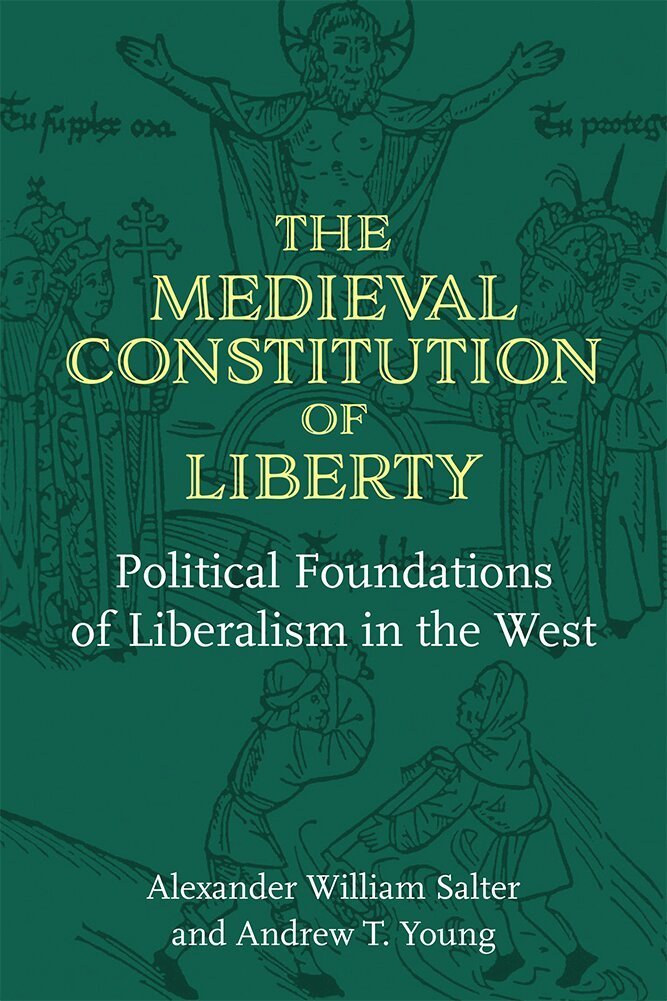
    Medieval Constitution of Liberty

    Political Foundations of Liberalism in the West

    AvAlexander William Salter,Andrew T. Young

    Häftad, Engelska, 2023

    447 kr

    Beställningsvara. Skickas inom 5-8 vardagar. Fri frakt över 249 kr.

    Fler format och utgåvor

    Inbunden

    1 135 kr

    Beskrivning

    Why did enduring traditions of economic and political liberty emerge in Western Europe and not elsewhere? Representative democracy, constitutionalism, and the rule of law are crucial for establishing a just and prosperous society, which we usually treat as the fruits of the Renaissance and Enlightenment, as Western European societies put the Dark Ages behind them.In The Medieval Constitution of Liberty, Salter and Young point instead to the constitutional order that characterized the High Middle Ages. They provide a historical account of how this constitutional order evolved following the fall of the Western Roman Empire. This account runs from the settlements of militarized Germanic elites within the imperial frontiers, to the host of successor kingdoms in the sixth and seventh centuries, and through the short-lived Carolingian empire of the late eighth and ninth centuries and the so-called “feudal anarchy” that followed its demise. Given this unique historical backdrop, Salter and Young consider the resulting structures of political property rights. They argue that the historical reality approximated a constitutional ideal type, which they term polycentric sovereignty. Salter and Young provide a theoretical analysis of polycentric sovereignty, arguing that bargains between political property rights holders within that sort of constitutional order will lead to improvements in governance.

    Produktinformation

    • Utgivningsdatum:2023-08-08
    • Mått:152 x 232 x 12 mm
    • Vikt:227 g
    • Format:Häftad
    • Språk:Engelska
    • Antal sidor:310
    • Förlag:The University of Michigan Press
    • ISBN:9780472056019

    Utforska kategorier

    • Europas historia inom Historia och arkeologi
    • Konstitution: stat och regering inom Samhälle och politik
    • Internationella relationer inom Samhälle och politik

    Mer om författaren

    Alexander William Salter is Georgie G. Snyder Associate Professor of Economics in the Rawls College of Business at Texas Tech University.Andrew T. Young is Professor of Economics in the Rawls College of Business at Texas Tech University.

    Recensioner i media

    “The Medieval Constitution of Liberty is a superb book. It begins with a short tour through the Maddison data. From 1 AD to 1600, income per capita was virtually flat. But starting in the late 18th century forward, the west grew by a factor between 30 and 45. Known variously as the ‘European Miracle,’ the Great Enrichment, or the hockey stick of economic growth, the ‘disparity between the West and the rest is the salient social fact of modernity.’ Salter and Young argue that the West’s political and economic liberty which began in the early Middle Ages, but especially the High Middle Ages, helps explain this fundamental fact of modernity. Liberty, in turn, requires a ‘polycentric’ approach to governance, that is, multiple sources of power, constitutions, and other political institutions. Medieval assemblies, for example, that in some Western European countries much later would become a source of representative institutions, often began as creatures of the monarch for purposes of addressing collective action problems, credible commitment problems, and coordination problems."

    Innehållsförteckning

    • List of IllustrationsList of TablesAcknowledgments1. IntroductionPart 1: The Historical Backdrop2. The Fall of Rome and the Rise of the Barbarian West3. The Carolingian Project4. The Peace of GodPart 2: The Medieval Constitution: Theory and History5. Political Property Rights and Constitutional Bargaining6. Sovereignty and Self-Enforcing Political Property Rights7. Polycentric Sovereignty8. Why Western Europe? Why Not Elsewhere?Part 3: The Medieval Institutions of Liberty9. Representative Assemblies10. The Self-Governing Medieval CityPart 4: The Rise of the Nation-State11. The Tragedy of the Medieval Anticommons?12. What State Capacity Cannot Do13. Postscript: The Road Away from Polycentric Sovereignty14. Appendix: Historiographical Notes