• Fri frakt över 249 kr
  • •
  • Snabba leveranser
  • •
  • Billiga böcker
Kundservice

Du är på sajten för privatpersoner.

Företag, bibliotek eller offentlig verksamhet?

Du handlar på classic.bokus.com, där alla dina funktioner finns intakta.
Till classic.bokus.com
Bokus logotyp. Gå till startsidan.
  • Erbjudanden
  • Nyheter
  • Student
  • Topplistor
  • Barn & ungdom
  • Bokus Play
  • E-böcker
  • Pocketböcker
  • Spel & pussel

Må bättre, för mindre! Upp till 50% rabatt på hälsoböcker

Sidfot

Mina sidor

    Hjälp

    • Kundservice
    • Vanliga frågor och svar
    • Frakt och leverans
    • Retur vid ångerrätt
    • Reklamera vara
    • Betalning
    • Köpvillkor
    • Allmänna villkor
    • Information om webbplatsens tillgänglighet

    Om Bokus

    • Om oss
    • Pressrum
    • För studenter
    • För företag
    • För bibliotek och offentlig verksamhet
    • För leverantörer
    • Hållbarhet

    Populärt

    • Aktuella erbjudanden
    • Presentkort
    • Studentlitteratur
    • Nya böcker
    • Topplistor
    • Signerade böcker
    • Engelska böcker

    Inspiration

    • Boktips
    • BookTok
    • Populära bokserier
    • Barnbokskaraktärer
    • Populära författare
    Logotyp för Bokus
    Följ oss på Facebook (extern länk)Följ oss på Instagram (extern länk)Följ oss på YouTube (extern länk)Följ oss på TikTok (extern länk)
    bokus @ CookiesAnpassa cookiesIntegritetspolicyKöpvillkor
    Till Citymail hemsida (extern länk)Till Budbee hemsida (extern länk)Till Postnord hemsida (extern länk)Till Schenker hemsida (extern länk)Till Early Bird hemsida (extern länk)Till Walleys hemsida (extern länk)
    1. Kultur
    2. Scenkonst och film
    3. Dansböcker
    4. Koreografi

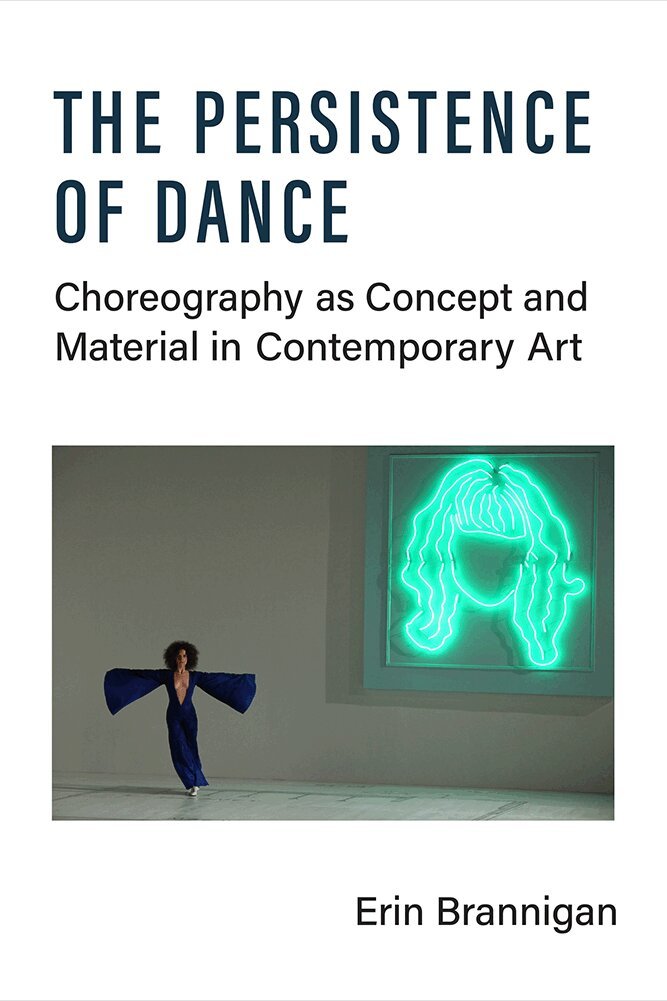
    Persistence of Dance

    Choreography as Concept and Material in Contemporary Art

    AvErin Brannigan

    Häftad, Engelska, 2023

    507 kr

    Beställningsvara. Skickas inom 5-8 vardagar. Fri frakt över 249 kr.

    Fler format och utgåvor

    Inbunden

    1 203 kr

    Beskrivning

    There is a category of choreographic practice with a lineage stretching back to mid-20th century North America that has re-emerged since the early 1990s: dance as a contemporary art medium. Such work belongs as much to the gallery as does video art or sculpture and is distinct from both performance art and its history as well as from theater-based dance. The Persistence of Dance: Choreography as Concept and Material in Contemporary Art clarifies the continuities and differences between the second-wave dance avant-garde in the 1950s‒1970s and the third-wave starting in the 1990s. Through close readings of key artists such as Maria Hassabi, Sarah Michelson, Boris Charmatz, Meg Stuart, Philipp Gehmacher, Adam Linder, Agatha Gothe-Snape, Shelley Lasica and Latai Taumoepeau, The Persistence of Dance traces the relationship between the third-wave and gallery-based work. Looking at these artists highlights how the discussions and practices associated with “conceptual dance” resonate with the categories of conceptual and post-conceptual art as well as with the critical work on the function of visual art categories. Brannigan concludes that within the current post-disciplinary context, there is a persistence of dance and that a model of post-dance exists that encompasses dance as a contemporary art medium.

    Produktinformation

    • Utgivningsdatum:2023-11-28
    • Mått:152 x 229 x undefined mm
    • Format:Häftad
    • Språk:Engelska
    • Antal sidor:374
    • Förlag:The University of Michigan Press
    • ISBN:9780472056484

    Utforska kategorier

    • Koreografi inom Kultur
    • Referensverk och tvärvetenskap inom Samhälle och politik
    • Konsthistoria inom Kultur

    Mer om författaren

    Erin Brannigan is Associate Professor of Theatre and Performance Studies at the University of New South Wales. Her book Choreography, Visual Art and Experimental Composition 1950s-1970s received the Selma-Jeanne Cohen Dance Prize.

    Recensioner i media

    "With this book, Brannigan creates space for us to rethink dance as a contemporary art medium within the museum's 'strategies of renewal.' This is not a historic review but a conceptual argument to take forward as dance continues to enter and reenter, questioning its positionality in the museum and its place within a larger historical context."

    Innehållsförteckning

    • Part I. State of the Art Chapter 1:Unassertive Persistence: Dance Beyond Theater Introduction1.2 Intermedial methods for intermedial practices1.3 Revision and specificity: choreography as a contemporary art medium1.4 Scoping the field: across theory and practiceCase Study 1: Sarah Michelson—Choreography as Concept, Dancing as MaterialChapter 2: Intermedial Methodologies: Dance Composition and the Work of the Work 2.1 Introduction2.2 Poetics as method2.3 Writing dancing2.4 The limit features of dance’s social condition (part 1)Mind-bodySingularity/collectivityPresence/participationProcessPracticeCompositionPerformance2.5 ConclusionPart II. Dance and the Museum Case Study 2: Meg Stuart and Bart De Baere—Choreography and/as Collaboration Chapter 3: The Museum and Dance Since the 1990s 3.1 Introduction3.2 The resistance of dance3.3 Curation since the 2000s: revision, appropriation, and potential3.4 Exhibiting dance, now and then: exclusions and specificities3.5 ConclusionCase Study 3: Curation as Choreography—Copeland’s Choreographing (2007)Case Study 4: Activating Dancer Agency in the Gallery—Adrian Heathfield’sGhost Telephone (2016)Case Study 5: Artist-Led Events—Shelley Lasica and Zoe Theodore,To Do / To Make Part III. Between the Twentieth and Twenty-First Centuries Chapter 4: Between the Second- and Third-Wave Dance Avant-Garde 4.1 Introduction4.2 Conceptual dance and the third-wave dance avant-garde4.3 Continuity between recent experimental dance and the post-war neo-avant-gardeor Neo-Dada4.4 ConclusionCase Study 6: Boris Charmatz—Institutional Critique and Contemporary Dance HistoriesChapter 5: Choreography as Concept and Post-Disciplinarity 5.1 Introduction5.2 Dancing versus choreography5.3 Choreography as concept5.4 ConclusionPart IV: Concept and Material Case Study 7: Adam Linder—Dance as a Contemporary Art MediumChapter 6: TheConceptual–Material Bind in Dance and Visual Art 6.1 Introduction6.2 Conceptual work in dance and visual art6.3 The persistence of a thing called dance6.4 ConclusionChapter 7: The Limit Features of Dance’s Social Condition (part 2) 7.1 Introduction7.2 Breath 7.4 Tone7.5 Movement7.6 Force/Energy/Effort7.7 Rhythm7.8 Space-time7.9 ConclusionCase Study 8: Shelley Lasica—Context and ProcessCase Study 9: Maria Hassabi—Between Sensation and Its DisplayPart V: Beyond Dancing in the Gallery Case Study 10: Agatha Gothe-Snape—Art as GestureChapter 8: The Persistence of Dance at the Point of Its Disappearance 8.1 Introduction8.2 The material genealogy of dance8.3 Post-dance8.4 ConclusionCase Study 11: Latai Taumoepeau—Dancing Moana, Working with UrgencyConclusion: Persistent Resistance Bibliography