• Fri frakt över 249 kr
  • •
  • Snabba leveranser
  • •
  • Billiga böcker
Kundservice

Du är på sajten för privatpersoner.

Företag, bibliotek eller offentlig verksamhet?

Du handlar på classic.bokus.com, där alla dina funktioner finns intakta.
Till classic.bokus.com
Bokus logotyp. Gå till startsidan.
  • Erbjudanden
  • Student
  • Topplistor
  • Barn & ungdom
  • Bokus Play
  • E-böcker
  • Ljudböcker
  • Pocketböcker
  • Spel & pussel

Upp till 25% på utvalda nyheter →

Sidfot

Mina sidor

    Hjälp

    • Kundservice
    • Vanliga frågor och svar
    • Frakt och leverans
    • Retur vid ångerrätt
    • Reklamera vara
    • Betalning
    • Köpvillkor
    • Allmänna villkor
    • Information om webbplatsens tillgänglighet

    Om Bokus

    • Om oss
    • Pressrum
    • För studenter
    • För företag
    • För bibliotek och offentlig verksamhet
    • För leverantörer
    • Hållbarhet

    Populärt

    • Aktuella erbjudanden
    • Presentkort
    • Studentlitteratur
    • Nya böcker
    • Topplistor
    • Signerade böcker
    • Engelska böcker

    Inspiration

    • Boktips
    • BookTok
    • Populära bokserier
    • Barnbokskaraktärer
    • Populära författare
    Logotyp för Bokus
    Följ oss på Facebook (extern länk)Följ oss på Instagram (extern länk)Följ oss på YouTube (extern länk)Följ oss på TikTok (extern länk)
    bokus @ CookiesAnpassa cookiesIntegritetspolicyKöpvillkor
    Till Citymail hemsida (extern länk)Till Budbee hemsida (extern länk)Till Postnord hemsida (extern länk)Till Schenker hemsida (extern länk)Till Early Bird hemsida (extern länk)Till Walleys hemsida (extern länk)
    1. Samhälle och politik
    2. Politik och statsskick
    3. Centralt styre och förvaltning

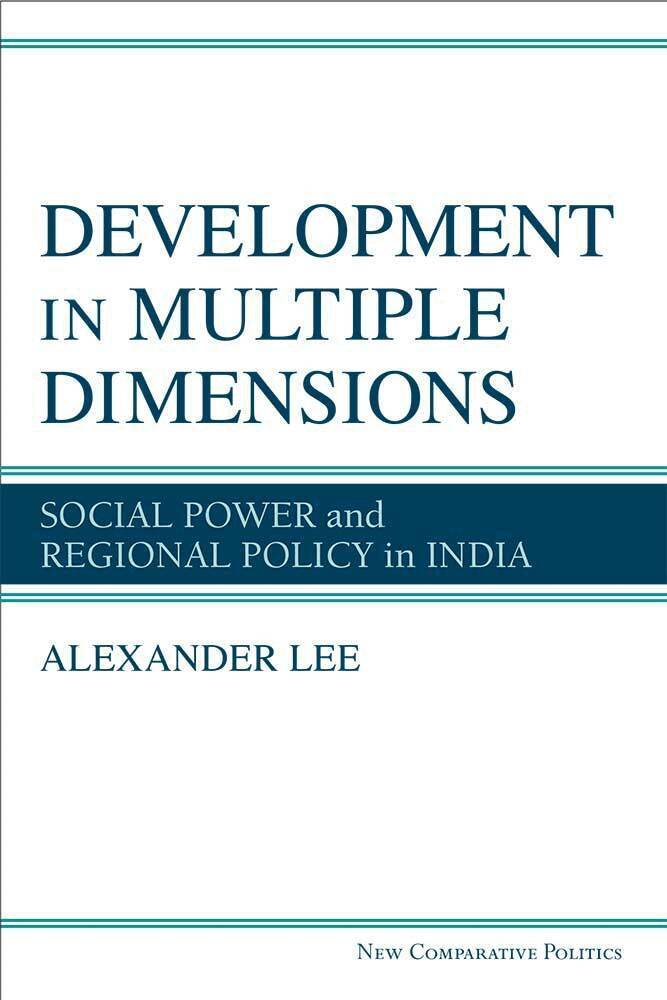
    Development in Multiple Dimensions

    Social Power and Regional Policy in India

    AvAlexander Lee

    Inbunden, Engelska, 2019

    Del i serien New Comparative Politics

    1 112 kr

    Skickas . Fri frakt över 249 kr.

    Fler format och utgåvor

    E-bok

    1 283 kr

    Beskrivning

    Why do some states provide infrastructure and social services to their citizens, and others do not? In Development in Multiple Dimensions, Alexander Lee examines the origins of success and failure in the public services of developing countries. Comparing states within India, this study examines how elites either control, or are shut out of, policy decisions and how the interests of these elites influence public policy. He shows that social inequalities are not single but multiple, creating groups of competing elites with divergent policy interests. Since the power of these elites varies, states do not necessarily focus on the same priorities: some focus on infrastructure, others on social services, and still others on both or neither. The author develops his ideas through quantitative comparisons and case studies focusing on four northern Indian states: Gujarat, West Bengal, Bihar, and Himachal Pradesh, each of which represents different types of political economy and has a different set of powerful caste groups. The evidence indicates that regional variation in India is a consequence of social differences, and the impact of these differences on carefully considered distributional strategies, rather than differences in ideology, geography, or institutions.

    Produktinformation

    • Utgivningsdatum:2019-02-01
    • Mått:152 x 229 x 29 mm
    • Vikt:592 g
    • Format:Inbunden
    • Språk:Engelska
    • Serie:New Comparative Politics
    • Antal sidor:300
    • Förlag:The University of Michigan Press
    • ISBN:9780472131259

    Utforska kategorier

    • Centralt styre och förvaltning inom Samhälle och politik

    Mer om författaren

    Alexander Lee is Assistant Professor of Political Science at the University of Rochester.

    Recensioner i media

    In recent years there has been considerable interest in the diverging development trajectories of Indian states. Some states provide excellent roads, while others invest in education. Why do they provide such different public services or none at all? Unpacking the term development and looking at how power-dynamics differ across states, this book provides a compelling explanation for why such divergence takes place."" - Francesca Refsum Jensenius, University of Oslo