New Comparative Politics – serie
Visar alla böcker i serien New Comparative Politics. Handla med fri frakt och snabb leverans.
14 produkter
14 produkter
Häftad, Engelska, 2013
440 kr
Skickas inom 5-8 vardagar
"The Madisonian Turn is an outstanding assessment of the functioning of democratic institutions in the Nordic countries. If democracy is in trouble in Scandinavia, then it is surely facing problems everywhere, so the book will be read carefully by those concerned about contemporary governance in all modern democracies."---Michael Gallagher, Trinity College, Dublin"This welcome and timely re-evaluation of Nordic politics constitutes a major contribution to comparative government, and is likely to stand as the definitive treatment of politics in the region for many years to come."---Peter Mair, European University Institute"This book is unique in its comparative scope and the wealth of information on the state of parliamentary democracy in the Nordic countries. It is particularly useful for the comparativists who do not come from these countries, because the original literature which it covers in detail is often not accessible for the English-speaking audience."---Hanspeter Kriesi, University of Zurich"The strength of The Madisonian Turn is to interface detailed empirical evidence on the dynamics of democratic politics in Scandinavia with an elaboration and test of rival theories of change in the politics of postindustrial democracies. This book is an inspiration for students of Northern Europe, but also for scholars of comparative legislatures and political parties more generally."---Herbert Kitschelt, Duke UniversityParliamentary democracy is the most common regime type in the contemporary political world, but the quality of governance depends on effective parliamentary oversight and strong political parties. Denmark, Finland, Iceland, Norway, and Sweden have traditionally been strongholds of parliamentary democracy. In recent years, however, critics have suggested that new challenges such as weakened popular attachment, the advent of cartel parties, the judicialization of politics, and European integration have threatened the institutions of parliamentary democracy in the Nordic region.This volume examines these claims and their implications. The authors find that the Nordic states have moved away from their previous resemblance to a Westminster model toward a form of parliamentary democracy with more separation-of-powers features---a Madisonian model. These features are evident both in vertical power relations (e.g., relations with the European Union) and horizontal ones (e.g., increasingly independent courts and central banks). Yet these developments are far from uniform and demonstrate that there may be different responses to the political challenges faced by contemporary Western democracies.Torbjörn Bergman is Professor of Political Science at Umeå University, Sweden.Kaare Strøm is Professor of Political Science at the University of California, San Diego.Jacket Credit: Heidi Hobde Dailey
Häftad, Engelska, 2015
438 kr
Skickas inom 5-8 vardagar
It is often thought that small party survival or failure is a result of institutional constraints, the behavior of large parties, and the choices of individual politicians. Jae-Jae Spoon, in contrast, argues that the decisions made by small parties themselves determine their ability to balance the dual goals of remaining true to their ideals while maximizing their vote and seat shares, thereby enabling them to survive even in adverse electoral systems.Spoon employs a mixed-methods approach in order to explore the policy, electoral, and communication strategies of West European Green Parties from 1980 to the present. She combines cross-national data on these parties with in-depth comparative case studies of two New Politics parties, the French and British Green Parties, that have survived in similar national-level plurality electoral systems. Both of these parties have developed as organizations which run candidates in elections at the local, national, and European levels in their respective countries. The parties’ survival, Spoon asserts, results from their ability to balance their competing electoral, policy, and communication goals.
Häftad, Engelska, 2015
425 kr
Skickas inom 5-8 vardagar
Rather than weakening the forces of nationalism among member states, the expanding power of the European Union actually fosters conditions favorable to regionalist movements within traditional nation-states. Using a cross-national, quantitative study of the advent of regionalist political parties and their success in national parliamentary elections since the 1960s, along with a detailed case study of the fortunes of the pro-independence Scottish National Party, Seth K. Jolly demonstrates that supranational integration and subnational fragmentation are not merely coincidental but related in a theoretical and predictable way. At the core of his argument, Jolly posits the Viability Theory: the theory that the EU makes smaller states more viable and more politically attractive by diminishing the relative economic and political advantages of larger-sized states. European integration allows regionalist groups to make credible claims that they do not need the state to survive because their regions are part of the EU, which provides access to markets, financial institutions, foreign policy, and other benefits. Ultimately, Jolly emphasizes, scholars and policy-makers must recognize that the benefits of European integration come with the challenge of increased regionalist mobilization that has the potential to reshape the national boundaries of Europe.
Häftad, Engelska, 2015
483 kr
Skickas inom 5-8 vardagar
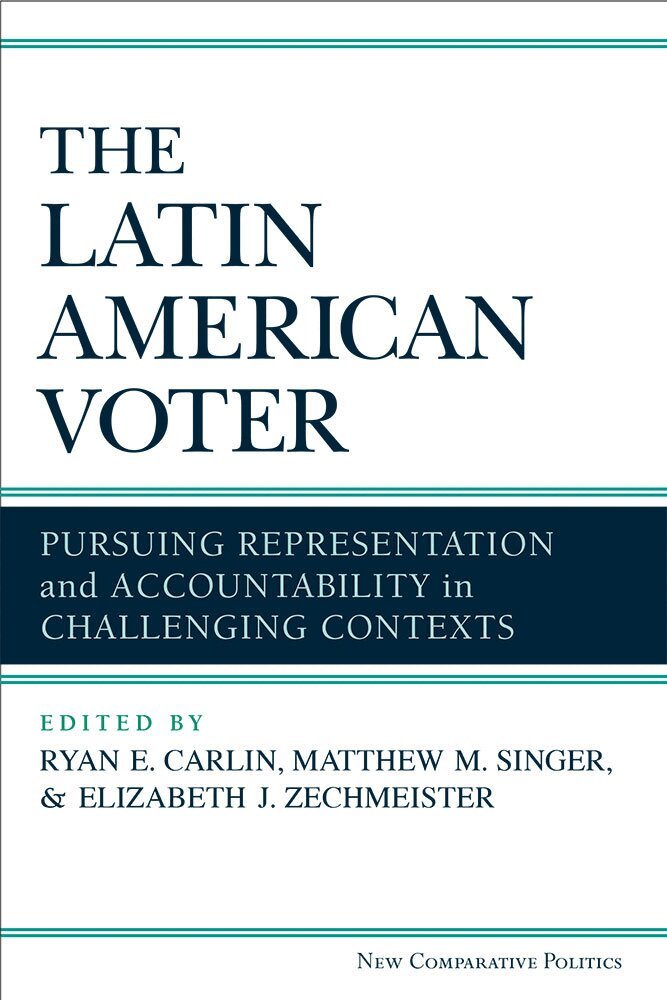
In this volume, experts on Latin American public opinion and political behavior employ region-wide public opinion studies, elite surveys, experiments, and advanced statistical methods to reach several key conclusions about voting behavior in the region’s emerging democracies. In Latin America, to varying degrees the average voter grounds his or her decision in factors identified in classic models of voter choice. Individuals are motivated to go to the polls and select elected officials on the basis of class, religion, gender, ethnicity and other demographic factors; substantive political connections including partisanship, left-right stances, and policy preferences; and politician performance in areas like the economy, corruption, and crime. Yet evidence from Latin America shows that the determinants of voter choice cannot be properly understood without reference to context—the substance (specific cleavages, campaigns, performance) and the structure (fragmentation and polarization) that characterize the political environment. Voting behavior reflects the relative youth and fluidity of the region’s party systems, as parties emerge and splinter to a far greater degree than in long-standing party systems. Consequently, explanations of voter choice centered around country differences stand on equal footing to explanations focused on individual-level factors.
Häftad, Engelska, 2024
425 kr
Skickas inom 5-8 vardagar
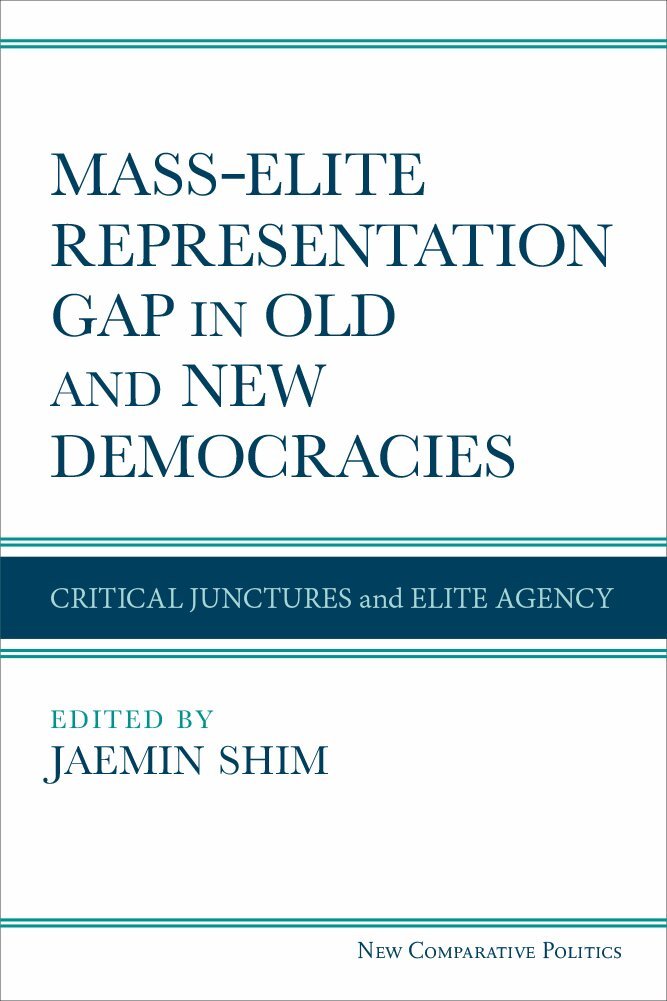
The alignment of voter preferences and the preferences of their parliamentary representatives has long been understood as a vital part of representative democracy. However, recent decades have seen a considerable increase in such gaps between mass (the public) and elite (the representatives) policy preferences, appearing not just as isolated or single-topic issues, but rather across the spectrum of political dimensions. The negative effects can include decreased trust and voter engagement, dissatisfaction with democratic ideals and process, and even democratic backsliding. Mass–Elite Representation Gap in Old and New Democracies brings together a global array of scholars to examine the issue from new angles, drawing on evidence from North Africa, East Asia, Southeast Asia, South America, and Europe. This global-level analysis of different representation gaps demonstrates that these gaps vary in content, structure, and the timing of formation. Moreover, recognizing the socially, culturally, and internationally embedded nature of party politics, the contributors in the volume trace the historical origin of gaps observed in different world regions. The findings show that earlier choices made by political elites during historical-critical junctures lead to preference mismatch, undermining the quality of democratic representation.
Inbunden, Engelska, 2017
882 kr
Skickas inom 5-8 vardagar
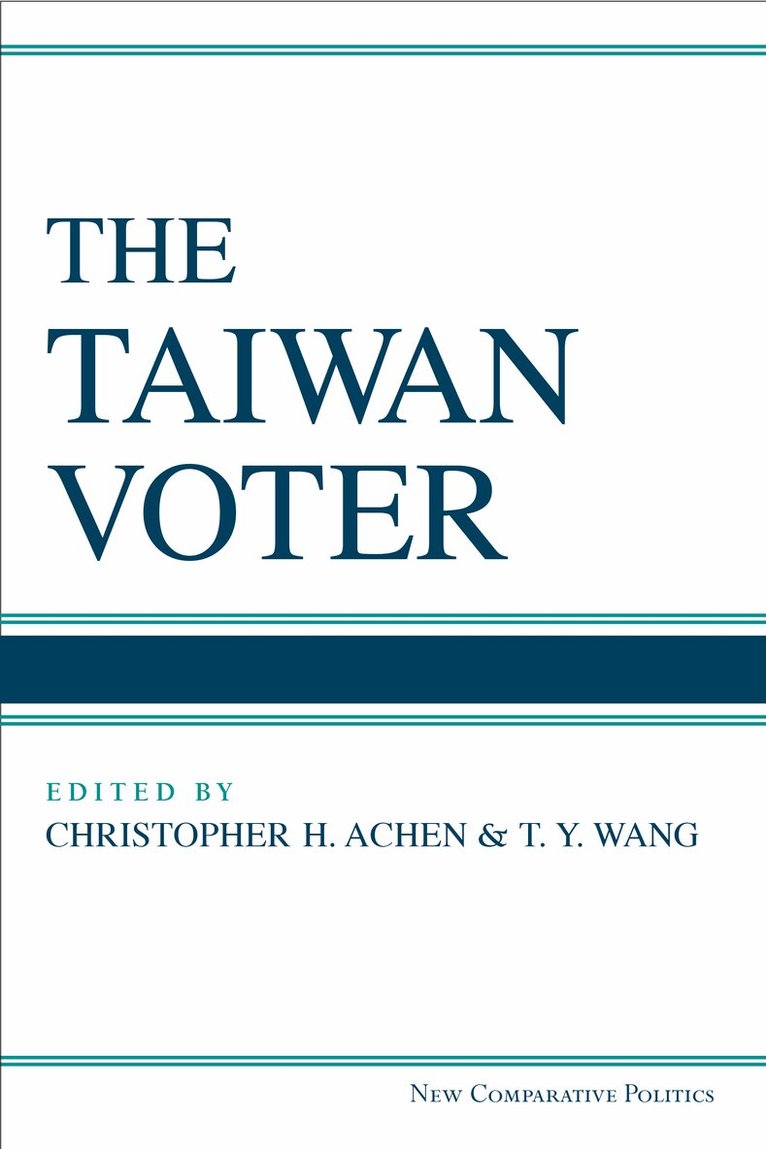
The Taiwan Voter examines the critical role ethnic and national identities play in politics, utilizing the case of Taiwan. Although elections there often raise international tensions, and have led to military demonstrations by China, no scholarly books have examined how Taiwan’s voters make electoral choices in a dangerous environment. Critiquing the conventional interpretation of politics as an ideological battle between liberals and conservatives, The Taiwan Voter demonstrates in Taiwan the party system and voters’ responses are shaped by one powerful determinant of national identity—the China factor.Taiwan’s electoral politics draws international scholarly interest because of the prominent role of ethnic and national identification. While in most countries the many tangled strands of competing identities are daunting for scholarly analysis, in Taiwan the cleavages are powerful and limited in number, so the logic of interrelationships among issues, partisanship, and identity are particularly clear. The Taiwan Voter unites experts to investigate the ways in which social identities, policy views, and partisan preferences intersect and influence each other. These novel findings have wide applicability to other countries, and will be of interest to a broad range of social scientists interested in identity politics.
Inbunden, Engelska, 2024
1 080 kr
Skickas inom 5-8 vardagar
The alignment of voter preferences and the preferences of their parliamentary representatives has long been understood as a vital part of representative democracy. However, recent decades have seen a considerable increase in such gaps between mass (the public) and elite (the representatives) policy preferences, appearing not just as isolated or single-topic issues, but rather across the spectrum of political dimensions. The negative effects can include decreased trust and voter engagement, dissatisfaction with democratic ideals and process, and even democratic backsliding. Mass–Elite Representation Gap in Old and New Democracies brings together a global array of scholars to examine the issue from new angles, drawing on evidence from North Africa, East Asia, Southeast Asia, South America, and Europe. This global-level analysis of different representation gaps demonstrates that these gaps vary in content, structure, and the timing of formation. Moreover, recognizing the socially, culturally, and internationally embedded nature of party politics, the contributors in the volume trace the historical origin of gaps observed in different world regions. The findings show that earlier choices made by political elites during historical-critical junctures lead to preference mismatch, undermining the quality of democratic representation.
Inbunden, Engelska, 2011
1 344 kr
Skickas inom 5-8 vardagar
"The Madisonian Turn is an outstanding assessment of the functioning of democratic institutions in the Nordic countries. If democracy is in trouble in Scandinavia, then it is surely facing problems everywhere, so the book will be read carefully by those concerned about contemporary governance in all modern democracies."---Michael Gallagher, Trinity College, Dublin"This welcome and timely re-evaluation of Nordic politics constitutes a major contribution to comparative government, and is likely to stand as the definitive treatment of politics in the region for many years to come."---Peter Mair, European University Institute"This book is unique in its comparative scope and the wealth of information on the state of parliamentary democracy in the Nordic countries. It is particularly useful for the comparativists who do not come from these countries, because the original literature which it covers in detail is often not accessible for the English-speaking audience."---Hanspeter Kriesi, University of Zurich"The strength of The Madisonian Turn is to interface detailed empirical evidence on the dynamics of democratic politics in Scandinavia with an elaboration and test of rival theories of change in the politics of postindustrial democracies. This book is an inspiration for students of Northern Europe, but also for scholars of comparative legislatures and political parties more generally."---Herbert Kitschelt, Duke UniversityParliamentary democracy is the most common regime type in the contemporary political world, but the quality of governance depends on effective parliamentary oversight and strong political parties. Denmark, Finland, Iceland, Norway, and Sweden have traditionally been strongholds of parliamentary democracy. In recent years, however, critics have suggested that new challenges such as weakened popular attachment, the advent of cartel parties, the judicialization of politics, and European integration have threatened the institutions of parliamentary democracy in the Nordic region.This volume examines these claims and their implications. The authors find that the Nordic states have moved away from their previous resemblance to a Westminster model toward a form of parliamentary democracy with more separation-of-powers features---a Madisonian model. These features are evident both in vertical power relations (e.g., relations with the European Union) and horizontal ones (e.g., increasingly independent courts and central banks). Yet these developments are far from uniform and demonstrate that there may be different responses to the political challenges faced by contemporary Western democracies.Torbjörn Bergman is Professor of Political Science at Umeå University, Sweden.Kaare Strøm is Professor of Political Science at the University of California, San Diego.Jacket Credit: Heidi Hobde Dailey
Inbunden, Engelska, 2016
1 344 kr
Skickas inom 5-8 vardagar
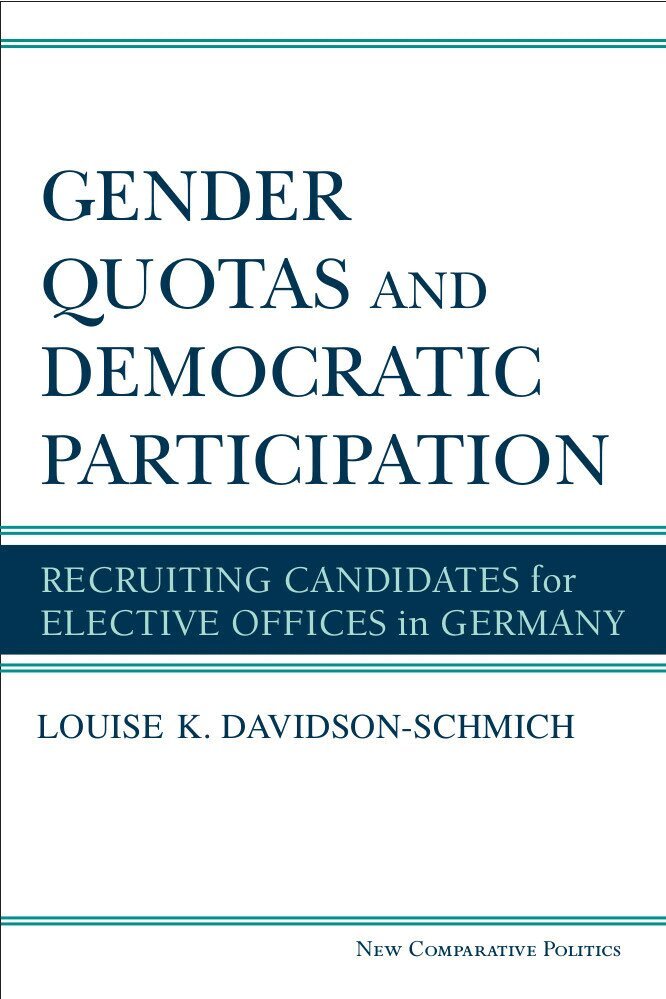
Since the 1970s, quotas for female political candidates in elections have proliferated worldwide. Beyond increasing the numbers of women in high-level elected bodies and, thereby, women’s political representation, advocates claim that quotas foster gender-equal participation in democracy and create female role models. According to this reasoning, quotas also overcome barriers to women’s political participation, especially discriminatory practices in the selection of electoral candidates. Though such claims have persuaded policymakers to adopt quotas, little empirical evidence exists to verify their effects. In Gender Quotas and Democratic Participation, Louise K. Davidson-Schmich employs a pathbreaking research design to assess the effects of gender quotas on all phases of political recruitment. Drawing on interviews with, and an original survey of, potential candidates in Germany, she investigates the extent to which quotas and corresponding increases in women’s descriptive representation have resulted in similar percentages of men and women joining political parties, aspiring to elected office, pursuing ballot nominations, and securing selection as candidates. She also examines the effect of quotas on discriminatory selection procedures. Ultimately, Davidson-Schmich argues, quotas’ intended benefits have been only partially realized. Quotas give women greater presence in powerful elected bodies not by encouraging female citizens to pursue political office at rates similar to men’s, but by improving the odds that the limited number of politically ambitious women who do join parties will be elected. She concludes with concrete, original policy recommendations for increasing women’s political participation.
Inbunden, Engelska, 2019
1 080 kr
Skickas inom 5-8 vardagar
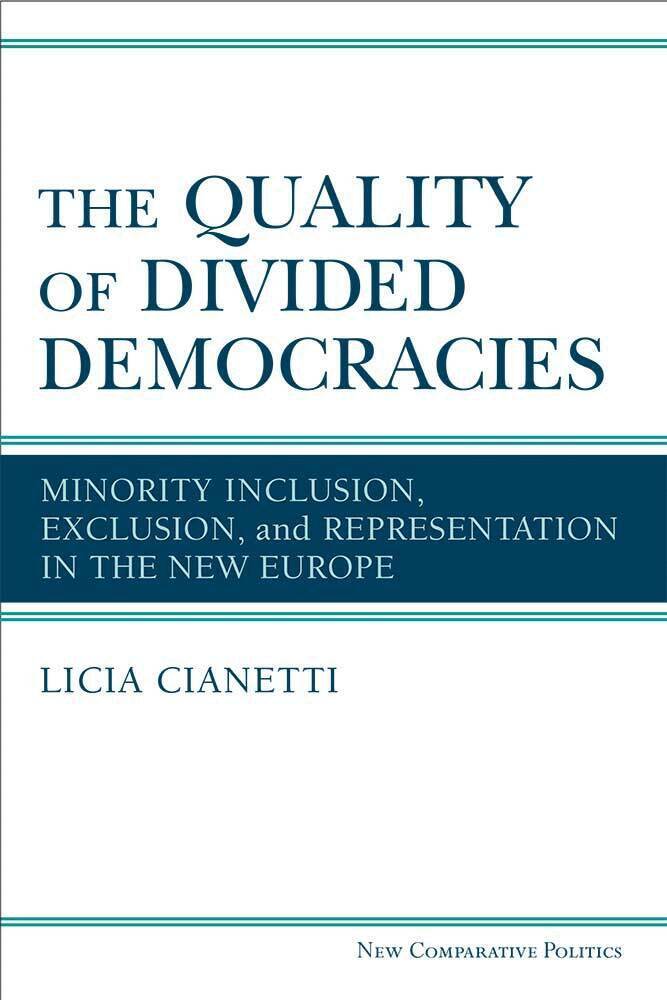
The Quality of Divided Democracies contemplates how democracy works, or fails to work, in ethnoculturally divided societies. It advances a new theoretical approach to assessing quality of democracy in divided societies, and puts it into practice with the focused comparison of two divided democracies—Estonia and Latvia. The book uses rich comparative data to tackle the vital questions of what determines a democracy’s level of inclusiveness and the ways in which minorities can gain access to the policy-making process. It uncovers a “presence–polarization dilemma” for minorities’ inclusion in the democratic process, which has implications for academic debates on minority representation and ethnic politics, as well as practical implications for international and national institutions’ promotion of minority rights.
Inbunden, Engelska, 2019
1 080 kr
Skickas inom 5-8 vardagar
Many citizens, politicians, and political activists voice concern about the political influence of business in the European Union. But do business interests really pull the strings in Brussels? Contrary to expectations, this book shows that business interests are no more influential than other interests in shaping contemporary EU policies. Andreas Dür, David Marshall, and Patrick Bernhagen present an original argument that stresses the role of public actors in facilitating or impeding interest groups’ lobbying success. Novel data on a large number of legislative proposals on the EU’s agenda and three case studies present strong support for this argument. The Political Influence of Business in the European Union offers new insights into how lobbying success depends on the demand and supply of information, as well as new ideas on how to measure lobbying success. The book advances a fresh perspective on the question of business power and shows why business interests often lose in the policy struggle.
Inbunden, Engelska, 2019
1 212 kr
Skickas inom 5-8 vardagar
When people discuss politics, they often mention the promises politicians make during election campaigns. Promises raise hopes that positive policy changes are possible, but people are generally skeptical of these promises. Party Mandates and Democracy reveals the extent to and conditions under which governments fulfill party promises during election campaigns. Contrary to conventional wisdom a majority of pledges—sometimes a large majority—are acted upon in most countries, most of the time. The fulfillment of parties’ election pledges is an essential part of the democratic process. This book is the first major, genuinely comparative study of promises across a broad range of countries and elections, including the United States, Canada, nine Western European countries, and Bulgaria. The book thus adds to the body of literature on the variety of outcomes stemming from alternative democratic institutions.
Inbunden, Engelska, 2019
1 076 kr
Skickas
Why do some states provide infrastructure and social services to their citizens, and others do not? In Development in Multiple Dimensions, Alexander Lee examines the origins of success and failure in the public services of developing countries. Comparing states within India, this study examines how elites either control, or are shut out of, policy decisions and how the interests of these elites influence public policy. He shows that social inequalities are not single but multiple, creating groups of competing elites with divergent policy interests. Since the power of these elites varies, states do not necessarily focus on the same priorities: some focus on infrastructure, others on social services, and still others on both or neither. The author develops his ideas through quantitative comparisons and case studies focusing on four northern Indian states: Gujarat, West Bengal, Bihar, and Himachal Pradesh, each of which represents different types of political economy and has a different set of powerful caste groups. The evidence indicates that regional variation in India is a consequence of social differences, and the impact of these differences on carefully considered distributional strategies, rather than differences in ideology, geography, or institutions.
Inbunden, Engelska, 2021
933 kr
Skickas inom 5-8 vardagar
Vasili Rukhadze examines the factors that contributed to post-uprising leadership durability in the Ukraine, Kyrgyzstan, and Georgia in 2004–12, after these countries underwent their so-called “Color Revolutions.” Using structured, focused comparison and process tracing, he argues that the key independent variable influencing post-mobilization leadership durability is ruling coalition size and cohesion. He demonstrates that if the ruling coalitions are large and fragmented, as in the Ukraine and Kyrgyzstan, the coalitions disintegrate, thus facilitating the downfall of the governments. Alternatively, if the ruling coalition is small and cohesive, as in Georgia, the coalition maintains unity, hence helping the government to stay in power.This study advances the debate on regime changes. By drawing a clear distinction between political leaderships that come to power as a result of popular uprisings and governments that take power through normal democratic processes, military coup, or any other means, the research offers one of the first studies on post-mobilization leadership. Rukhadze helps scholars differentiate between the factors that affect durability of post-uprising leadership from those factors that impact durability of all other political leadership, in turn equipping researchers with new tools to study power politics.