• Fri frakt över 249 kr
  • •
  • Snabba leveranser
  • •
  • Billiga böcker
Kundservice

Du är på sajten för privatpersoner.

Företag, bibliotek eller offentlig verksamhet?

Du handlar på classic.bokus.com, där alla dina funktioner finns intakta.
Till classic.bokus.com
Bokus logotyp. Gå till startsidan.
  • Erbjudanden
  • Nyheter
  • Student
  • Topplistor
  • Barn & ungdom
  • Bokus Play
  • E-böcker
  • Pocketböcker
  • Spel & pussel

10% rabatt på allt med kod: NYSTART10 →

Sidfot

Mina sidor

    Hjälp

    • Kundservice
    • Vanliga frågor och svar
    • Frakt och leverans
    • Retur vid ångerrätt
    • Reklamera vara
    • Betalning
    • Köpvillkor
    • Allmänna villkor
    • Information om webbplatsens tillgänglighet

    Om Bokus

    • Om oss
    • Pressrum
    • För studenter
    • För företag
    • För bibliotek och offentlig verksamhet
    • För leverantörer
    • Hållbarhet

    Populärt

    • Aktuella erbjudanden
    • Presentkort
    • Studentlitteratur
    • Nya böcker
    • Topplistor
    • Signerade böcker
    • Engelska böcker

    Inspiration

    • Boktips
    • BookTok
    • Populära bokserier
    • Barnbokskaraktärer
    • Populära författare
    Logotyp för Bokus
    Följ oss på Facebook (extern länk)Följ oss på Instagram (extern länk)Följ oss på YouTube (extern länk)Följ oss på TikTok (extern länk)
    bokus @ CookiesAnpassa cookiesIntegritetspolicyKöpvillkor
    Till Citymail hemsida (extern länk)Till Budbee hemsida (extern länk)Till Postnord hemsida (extern länk)Till Schenker hemsida (extern länk)Till Early Bird hemsida (extern länk)Till Walleys hemsida (extern länk)
    1. Historia och arkeologi
    2. Historia
    3. Historia: särskilda händelser och ämnen
    4. Socialhistoria och kulturhistoria

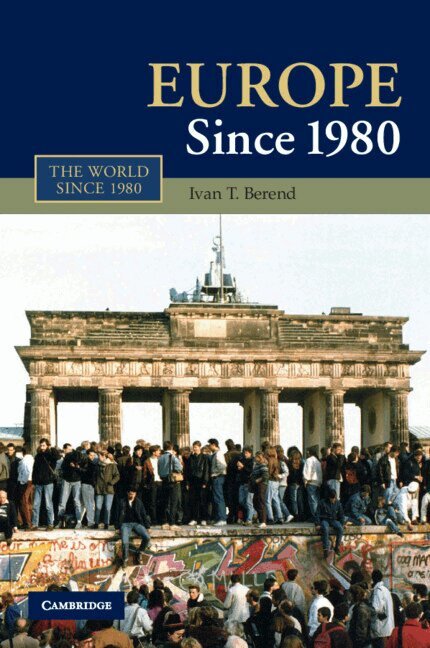
    Decades of Crisis

    Central and Eastern Europe before World War II

    AvIvan T. Berend

    Häftad, Engelska, 2001

    Del i serien University of California Press

    428 kr

    Beställningsvara. Skickas inom 5-8 vardagar. Fri frakt över 249 kr.

    Fler format och utgåvor

    E-bok

    501 kr

    Beskrivning

    Only by understanding Central and Eastern Europe's turbulent history during the first half of the twentieth century can we hope to make sense of the conflicts and crises that have followed World War II and, after that, the collapse of Soviet-controlled state socialism. Ivan Berend looks closely at the fateful decades preceding World War II and at twelve countries whose absence from the roster of major players was enough in itself, he says, to precipitate much of the turmoil. As waves of modernization swept over Europe, the less developed countries on the periphery tried with little or no success to imitate Western capitalism and liberalism. Instead they remained, as Berend shows, rural, agrarian societies notable for the tenacious survival of feudal and aristocratic institutions. In that context of frustration and disappointment, rebellion was inevitable. Berend leads the reader skillfully through the maze of social, cultural, economic, and political changes in Hungary, Czechoslovakia, Yugoslavia, Poland, Romania, Bulgaria, Albania, Austria, Latvia, Lithuania, Estonia, and the Soviet Union, showing how every path ended in dictatorship and despotism by the start of World War II.

    Produktinformation

    • Utgivningsdatum:2001-03-02
    • Mått:152 x 229 x 36 mm
    • Vikt:862 g
    • Format:Häftad
    • Språk:Engelska
    • Serie:University of California Press
    • Antal sidor:485
    • Förlag:University of California Press
    • ISBN:9780520229013

    Utforska kategorier

    • Socialhistoria och kulturhistoria inom Historia och arkeologi
    • Europas historia inom Historia och arkeologi
    • Ekonomisk historia inom Ekonomi och Ledarskap

    Mer om författaren

    Ivan T. Berend, Professor of History at the University of California, Los Angeles, is former President of the International Committee of Historical Sciences and former President of the Hungarian Academy of Sciences (1995-2000). He has published widely on the economy and culture of Central and Eastern Europe.

    Recensioner i media

    "Berend's book is the broadest synthesis of the modern social, economic, and cultural history of the region that we possess, probably in any language. Much of the narrative is masterful, and of an unparalleled richness, both in fact and insight. This work displays well the broad erudition of its author." -John Connelly, Journal of Economic History "Ivan Berend reminds us in his masterful history of Central and Eastern Europe that in order to understand the present state of this region, we must understand its past, particularly the oft-neglected years between the two world wars. Berend skillfully weaves economics, politics, and culture together in telling his story of this region in the years between the two world wars, and the end product is the best account now available of these turbulent years in the history of Eastern and Central Europe." -Virginia Quarterly Review "Berend identifies the influences behind the political misadventure of Central and Eastern Europe during the interwar period. His range of analysis is immense, from economic history of visual arts and music to ethnic conflict." -Foreign Affairs"

    Innehållsförteckning

    • LIST OF ILLUSTRATIONSACKNOWLEDGMENTSFOREWORDMAPSI.The Crisis of Modernization:The Ideologies of Revolts andTheir Expression in Art, 1900-19181.Catching Up or Lagging Behind?The Dual Revolution and the Flourishing of Capitalism in Western EuropeThe Challenge for the Underdeveloped: Temptation and ThreatPolitical Responses: Reforms and RevolutionsLatecomers in an Internationalized World EconomyThe Role of Railroads and Their Spin-Off EffectsAgriculture and the Export SectorsInternational Division of Labor and Its Impact on the BalkansThe Awakening GiantThe Polish and Baltic "Miracles"Hungary's Semisuccessful ModernizationIndustrial Breakthrough in Austria and the Czech LandsThe Semifailure of Central and Eastern European Modernization2.The Peculiar Pattern of Central and Eastern European Societies: The Remnants of Nobleand Incomplete SocietiesThe Deficiency of the Dual Revolution and Its Social ImpactThe Large Estate and the Remnants of Noble SocietyThe Weakness of the Middle Class:Lucken-Positionen and the Emergence of the "Jewish Question"The Incomplete Societies and the Bureaucratic Military Parvenu in the BalkansMinorities and National Conflicts3.The Ideologies of Revolts and Revolutions: The Birth of Nationalist, Communist, and Fascist IdeasNationalismThe Eastern European Approach to Nation BuildingThe Peculiarities of National Ideology: Nation-State versus KulturnationFrom Cultural Movement to Mass OrganizationsCommunismThe Rise of Western Socialist ReformismThe Emergence of Eastern Revolutionary LeninismFascismPopulism and Rising Right-Wing Radicalism in Central and Eastern Europe4.Revolution in Art and the Art in RevolutionArt Nouveau,]ugendstil, Sezession"Ornamentation Is Sin"The Expression of "Irrational Reality" in LiteratureThe Revolution in Music: Schonberg, Stravinsky, and BartokRevolt against Traditional Beauty and Harmony in Visual Art: Kandinsky, Kupka, Bra11Cu§i,and Archipenko"Destruction, Too, Is Creation""Wipe Out the Past Once and for All":Constructivism and SuprematismII.Class Revolutions and Counterrevolutions: National Revolutions and Their Right-Wing Deformation,1918-1929Introduction5.Class Revolutions-CounterrevolutionsRussia's Two Revolutions in 1917Hungary's Two RevolutionsBulgaria's One and a Half RevolutionsRevolutionary Attempts in the Baltic Countries and AustriaThe Wave of Counterrevolutions6.Belated National RevolutionsPlans to Create Democratic ConfederationsVersailles and the Great Powers' Policy of BalkanizationThe Polish CaseThe Independent Baltic StatesThe Making of CzechoslovakiaThe Making of YugoslaviaMaking a Great RomaniaThe Unstoppable New Waves: National Revolutions without Nations7.From National Revolution to Nationalist AuthoritarianismExtreme Ethnic-Religious DiversityNationalism Multiplies by BipartitionNationalism Breaks Loose: The Link to Right-Wing Authoritarianism8.From Bolshevik Revolution to a National-Imperial Modernization DictatorshipThe Hope of a World RevolutionThe Road of Transition: The Introduction of War CommunismA New Approach toward Transition: The New Economic PolicyDebates on the Destiny of the Revolution: "Socialism in One Country"The Concept of Forced Industrialization and Central PlanningMerging "Socialism in One Country" and the Program of Forced Industrialization9.Economic Nationalism and Its ConsequencesInflation and DespairEconomic Slowdown and Structural Crisis in the World EconomyStabilization EffortsThe Principle and Practice of Nationalist Economic PolicyAgricultural Protectionism in Central EuropeThe Decline of International TradeSuccess Stories of the TwentiesThe Lack of Technological- Structural AdjustmentIII.The Great Depression and Its Impact: Social Changes; The Triumphof the Right; The Art of the Crisis and the Crisis in Art, 1929-1939 Introduction 1O.A Distinctive Great Depression in Central and Eastern Europe Moderate Industrial Decline The Agricultural Crisis and Declining Terms of Trade The Debt Crisis and the Golgotha of the Debtors Lack of Adjustment to the Structural Crisis 11.From the Great Depression to Nazi and Stalinist Isolationist Autarchy Emergency Measures to Aniid Financial Collapse Government Interventions and Self Sufficiency The Creation of a German-Led, Isolationist, Regional Agreement System Isolationism and Self-Sufficiency in the Stalinist Soviet Union 12.Social Changes: New Forces and Factors The PeasantryThe Emergence of a Confused Lower Middle Class The New Strata of Workers and Humiliating Unemployment 13.Political Impact: The Dirty Torrent of Dictatorships Engelbert Dollfoss: A Compromise between Political Catholicism and Heimwehr FascismGyula Gombos and His Planned" Radical Operations": Hungarv Shifts Further to the RightJosef Pilsudski and the Dictatorless Dictatorship in PolandPresidential Dictatorships in the Baltic CountriesRoyal Dictatorships in the BalkansThe Characteristics of Fascism and the Authoritarian Regimes in Central and Eastern EuropeFrom Bolshevik Revolution to a Deformed Party-State Dictatorship14.The Art of Crisis and the Crisis in ArtBack to Reality: Protest against a Dadaist WorldThe Straitjacket of Arts: Nazi-Fascist "Retro-Garde''The Stalinist Cultural Dictate: Mandatory Socialist RealismConservative Academism and the Impact of Fascist ArtCONCLUSIONBIBLIOGRAPHYINDEX