• Fri frakt över 249 kr
  • •
  • Snabba leveranser
  • •
  • Billiga böcker
Kundservice

Du är på sajten för privatpersoner.

Företag, bibliotek eller offentlig verksamhet?

Du handlar på classic.bokus.com, där alla dina funktioner finns intakta.
Till classic.bokus.com
Bokus logotyp. Gå till startsidan.
  • Erbjudanden
  • Nyheter
  • Student
  • Topplistor
  • Barn & ungdom
  • Bokus Play
  • E-böcker
  • Pocketböcker
  • Spel & pussel

10% studentrabatt med kod TERM26

Sidfot

Mina sidor

    Hjälp

    • Kundservice
    • Vanliga frågor och svar
    • Frakt och leverans
    • Retur vid ångerrätt
    • Reklamera vara
    • Betalning
    • Köpvillkor
    • Allmänna villkor
    • Information om webbplatsens tillgänglighet

    Om Bokus

    • Om oss
    • Pressrum
    • För studenter
    • För företag
    • För bibliotek och offentlig verksamhet
    • För leverantörer
    • Hållbarhet

    Populärt

    • Aktuella erbjudanden
    • Presentkort
    • Studentlitteratur
    • Nya böcker
    • Topplistor
    • Signerade böcker
    • Engelska böcker

    Inspiration

    • Boktips
    • BookTok
    • Populära bokserier
    • Barnbokskaraktärer
    • Populära författare
    Logotyp för Bokus
    Följ oss på Facebook (extern länk)Följ oss på Instagram (extern länk)Följ oss på YouTube (extern länk)Följ oss på TikTok (extern länk)
    bokus @ CookiesAnpassa cookiesIntegritetspolicyKöpvillkor
    Till Citymail hemsida (extern länk)Till Budbee hemsida (extern länk)Till Postnord hemsida (extern länk)Till Schenker hemsida (extern länk)Till Early Bird hemsida (extern länk)Till Walleys hemsida (extern länk)
    1. Historia och arkeologi
    2. Historia
    3. Forntidens historia

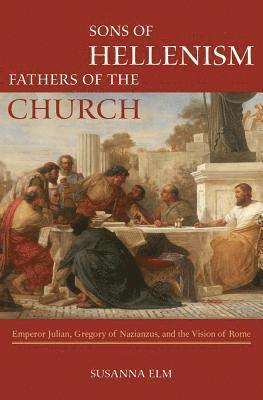
    Sons of Hellenism, Fathers of the Church

    Emperor Julian, Gregory of Nazianzus, and the Vision of Rome

    AvSusanna Elm

    Häftad, Engelska, 2015

    Del 49 i serien Transformation of the Classical Heritage

    301 kr

    Beställningsvara. Skickas inom 5-8 vardagar. Fri frakt över 249 kr.

    Fler format och utgåvor

    E-bok

    518 kr

    Beskrivning

    This ground breaking study brings into dialogue for the first time the writings of Julian, the last non-Christian Roman Emperor, and his most outspoken critic, Bishop Gregory of Nazianzus, a central figure of Christianity. Susanna Elm compares these two men not to draw out the obvious contrast between the Church and the Emperor's neo-Paganism, but rather to find their common intellectual and social grounding. Her insightful analysis, supplemented by her magisterial command of sources, demonstrates the ways in which both men were part of the same dialectical whole. Elm recasts both Julian and Gregory as men entirely of their times, showing how the Roman Empire in fact provided Christianity with the ideological and social matrix without which its longevity and dynamism would have been inconceivable.

    Produktinformation

    • Utgivningsdatum:2015-09-08
    • Mått:145 x 221 x 36 mm
    • Vikt:704 g
    • Format:Häftad
    • Språk:Engelska
    • Serie:Transformation of the Classical Heritage
    • Antal sidor:576
    • Förlag:University of California Press
    • ISBN:9780520287549

    Utforska kategorier

    • Forntidens historia inom Historia och arkeologi
    • Religion: allmänt inom Filosofi och religion
    • Statsvetenskap och politisk teori inom Samhälle och politik

    Mer om författaren

    Susanna Elm is Sidney H. Ehrman Professor of History and Classics at the University of California, Berkeley. She is the author of Virgins of God: The Making of Asceticism in Late Antiquity.

    Recensioner i media

    "A learned study of how the writings of two religious rivals ... were products of the same cultural koine, Hellenism... Recommended." -- K. W. Harl, Tulane University Choice "The refined corrective [Elms] brings to the dominant portrayals of her two protagonists is itself noteworthy, but her book does much more." Bryn Mawr Classical Review (BMCR) "Susanna Elm has produced a work that shakes the classical pillars... Very highly recommended." -- John Anthony McGuckin Marginalia "A multifaceted and deeply erudite work ... [Elm's approach is] not only refreshing, but also necessary." -- Maijastina Kahlos Athenaeum

    Innehållsförteckning

    • Abbreviations Acknowledgments Introduction Universalism and Governance Julian the Emperor and Gregory the Theologian Gregory and the Bishops Julian and Gregory in Context Part I 1. Nazianzus and the Eastern Empire, 330--361 Nazianzus and Gregory: The Personal and the Local Constantinople: Emperor, Cosmopolis, and Cosmos Constantius's Triumph: Unity and Harmony, 358--360 Reversal: Constantius and Julian Augustus, 360--361 2. Julian, from Caesar to Augustus: Paris to Constantinople, 355--362 Toward Constantinople: From Caesar to Augustus, 360--361 Julian's Concepts of Leadership: Philosopher and King 3. Philosopher, Leader, Priest: Julian in Constantinople, Spring 362 The Context of Julian's Concepts of the True Philosophical Life A Philosopher as Leader, in Julian's Own Words: Against the Cynic Heraclius A Universal Divinity for a Universal Empire; or, How to Interpret Myth: Hymn to the Mother of the Gods How to Achieve True Philosophy: Against the Uneducated Cynics The Law Regarding Teachers Part II 4. On the True Philosophical Life and Ideal Christian Leadership: Gregory's Inaugural Address, Oration 2 A High-Wire Act: The True Philosophical Life as the Model of Priesthood in Late Antiquity The Codes of Aptitude 5. The Most Potent Pharmakon: Gregory the Elder and Nazianzus The Other High-Wire Act: Fathers and Sons The Royal Road: Gregory the Elder's Opponents at Nazianzus 6. Armed like a Hoplite--Gregory the Political Philosopher at War: Eunomius, Photinus, and Julian Oikeiosis pros Theon as Political Philosophy The Enemy on the Inside: Photinus and Eunomius What Do Words Mean? Oikeiosis pros Theon: Oration 2 against Eunomius Part III 7. A Health-Giving Star Shining on the East: Julian in Antioch, July 362 to March 363 The Emperor as Priest Julian's Divine Mandate The Platonic Philosopher-King: The Misopogon and Julian's Universal Vision 8. The Making of the Apostate: Gregory's Oration 4 against Julian The Pillar of Infamy: An Inverted Furstenspiegel Imperial Decrees and Divine Enactments: Julian and Constantius 9. A Bloodless Sacrifice of Words to the Word: Logoi for the Logos Myth and Allegory Logoi: The Theological Implications Apostasis versus Theosis; or, True Oikeiosis pros Theon Oration 6, On Peace: Unity and Concord 10. Gregory's Second Strike, Oration 5 The Pagan Context Gregory's Second Strike against the Pagans Procopius versus Valens Conclusion: Visions of Rome Governing the Oikoumene Authority and Kinship of the Elites Competing Universalisms Notes Bibliography Index