• Fri frakt över 249 kr
  • •
  • Snabba leveranser
  • •
  • Billiga böcker
Kundservice

Du är på sajten för privatpersoner.

Företag, bibliotek eller offentlig verksamhet?

Du handlar på classic.bokus.com, där alla dina funktioner finns intakta.
Till classic.bokus.com
Bokus logotyp. Gå till startsidan.
  • Erbjudanden
  • Nyheter
  • Student
  • Topplistor
  • Barn & ungdom
  • Bokus Play
  • E-böcker
  • Pocketböcker
  • Spel & pussel

10% studentrabatt med kod TERM26

Sidfot

Mina sidor

    Hjälp

    • Kundservice
    • Vanliga frågor och svar
    • Frakt och leverans
    • Retur vid ångerrätt
    • Reklamera vara
    • Betalning
    • Köpvillkor
    • Allmänna villkor
    • Information om webbplatsens tillgänglighet

    Om Bokus

    • Om oss
    • Pressrum
    • För studenter
    • För företag
    • För bibliotek och offentlig verksamhet
    • För leverantörer
    • Hållbarhet

    Populärt

    • Aktuella erbjudanden
    • Presentkort
    • Studentlitteratur
    • Nya böcker
    • Topplistor
    • Signerade böcker
    • Engelska böcker

    Inspiration

    • Boktips
    • BookTok
    • Populära bokserier
    • Barnbokskaraktärer
    • Populära författare
    Logotyp för Bokus
    Följ oss på Facebook (extern länk)Följ oss på Instagram (extern länk)Följ oss på YouTube (extern länk)Följ oss på TikTok (extern länk)
    bokus @ CookiesAnpassa cookiesIntegritetspolicyKöpvillkor
    Till Citymail hemsida (extern länk)Till Budbee hemsida (extern länk)Till Postnord hemsida (extern länk)Till Schenker hemsida (extern länk)Till Early Bird hemsida (extern länk)Till Walleys hemsida (extern länk)
    1. Psykologi och pedagogik
    2. Psykologi
    3. Barnpsykologi och utvecklingspsykologi

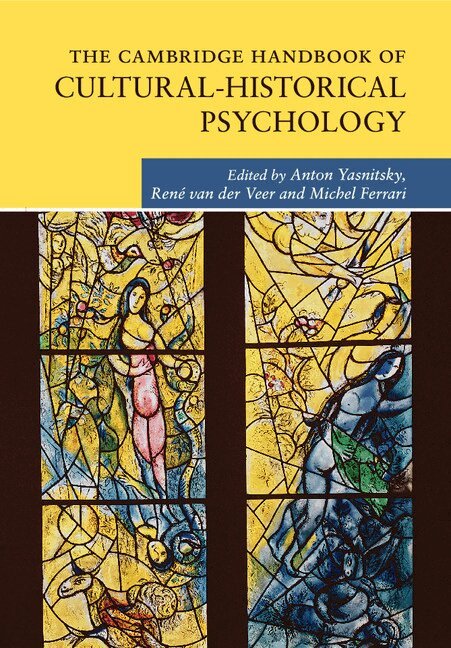
    The Cambridge Handbook of Cultural-Historical Psychology

    AvAnton Yasnitsky,René van der Veer

    Häftad, Engelska, 2017

    Del i serien Cambridge Handbooks in Psychology

    804 kr

    Beställningsvara. Skickas inom 10-15 vardagar. Fri frakt över 249 kr.

    Beskrivning

    The field of cultural-historical psychology originated in the work of Lev Vygotsky and the Vygotsky Circle in the Soviet Union more than eighty years ago, and has now established a powerful research tradition in Russia and the West. The Cambridge Handbook of Cultural-Historical Psychology is the first volume to systematically present cultural-historical psychology as an integrative/holistic developmental science of mind, brain, and culture. Its main focus is the inseparable unity of the historically evolving human mind, brain, and culture, and the ways to understand it. The contributors are major international experts in the field, and include authors of major works on Lev Vygotsky, direct collaborators and associates of Alexander Luria, and renowned neurologist Oliver Sacks. The Handbook will be of interest to students and scholars in the fields of psychology, education, humanities and neuroscience.

    Produktinformation

    • Utgivningsdatum:2017-03-23
    • Mått:170 x 245 x 30 mm
    • Vikt:950 g
    • Format:Häftad
    • Språk:Engelska
    • Serie:Cambridge Handbooks in Psychology
    • Antal sidor:546
    • Förlag:Cambridge University Press
    • ISBN:9780521139946

    Utforska kategorier

    • Barnpsykologi och utvecklingspsykologi inom Psykologi och pedagogik

    Mer om författaren

    Anton Yasnitsky is an independent researcher who specialises in the Vygotsky-Luria circle. René van der Veer is Professor of Education in the Department of Education at Universiteit Leiden. Michel Ferrari is a Professor in the Department of Applied Psychology and Human Development in the Ontario Institute for Studies in Education at the University of Toronto.

    Recensioner i media

    'What a wide-ranging view of the comprehensive subject of mind-culture-neurology! It serves a real purpose both pedagogically and in the scholarly sense.' Jerome Bruner, Professor Emeritus, New York University

    Innehållsförteckning

    • Introduction: what is this book and what is it about? Anton Yasnitsky and René van der Veer; Part I. Theory: 1. Introducing Vygotsky's cultural-historical psychology Ronald Miller; 2. Vygotsky's idea of psychological tools Janette Friedrich; 3. The problem of consciousness in Vygotsky's cultural-historical psychology Ekaterina Zavershneva; Part II. Method: 4. Methodology of cultural-historical psychology Aaro Toomela; 5. Dynamic assessment in search of its identity Alex Kozulin; 6. Encountering the border: Vygotsky's zona blizhaishego razvitia and its implications for theories of development Jaan Valsiner and René van der Veer; Part III. Child: 7. Developmental education Galina Zuckerman; 8. Tracing the untraceable: the nature-nurture controversy in cultural-historical psychology Elena L. Grigorenko; 9. The 'magic of signs': developmental trajectory of cultural mediation Igor M. Arievitch and Anna Stetsenko; Part IV. Language and Culture: 10. Inner form as a notion migrating from West to East: acknowledging the Humboldtian tradition in cultural-historical psychology Marie-Cécile Bertau; 11. A review of inner speech in cultural-historical tradition Anke Werani; 12. Luria and Vygotsky: challenges to current developmental research Eugene Subbotsky; Part V. Brain: 13. There can be no cultural-historical psychology without neuropsychology. And vice versa Aaro Toomela; 14. Cultural-historical neuropsychological perspective on learning disability Tatiana Akhutina and Gary Shereshevsky; 15. Cultural-historical theory and cultural neuropsychology today Bella Kotik-Friedgut and Alfredo Ardila; Part VI. Beyond Psychology: Cultural-Historical Psychology and other Disciplines: 16. Cultural-historical psychotherapy Alexander Venger and Elena Morozova; 17. From expressive movement to the 'basic problem': the Vygotsky-Luria-Eisensteinian theory of art Oksana Bulgakowa; 18. The need for a dialogical science: considering the legacy of Russian-Soviet thinking for contemporary approaches in dialogic research Marie-Cécile Bertau; 19. Cognition and its master: new challenges for cognitive science Maria V. Falikman; 20. Cultural-historical theory and semiotics Vyacheslav V. Ivanov; 21. Luria and 'Romantic Science' Oliver Sacks.