• Fri frakt över 249 kr
  • •
  • Snabba leveranser
  • •
  • Billiga böcker
Kundservice

Du är på sajten för privatpersoner.

Företag, bibliotek eller offentlig verksamhet?

Du handlar på classic.bokus.com, där alla dina funktioner finns intakta.
Till classic.bokus.com
Bokus logotyp. Gå till startsidan.
  • Erbjudanden
  • Nyheter
  • Student
  • Topplistor
  • Barn & ungdom
  • Bokus Play
  • E-böcker
  • Pocketböcker
  • Spel & pussel

10% rabatt på allt med kod: NYSTART10 →

Sidfot

Mina sidor

    Hjälp

    • Kundservice
    • Vanliga frågor och svar
    • Frakt och leverans
    • Retur vid ångerrätt
    • Reklamera vara
    • Betalning
    • Köpvillkor
    • Allmänna villkor
    • Information om webbplatsens tillgänglighet

    Om Bokus

    • Om oss
    • Pressrum
    • För studenter
    • För företag
    • För bibliotek och offentlig verksamhet
    • För leverantörer
    • Hållbarhet

    Populärt

    • Aktuella erbjudanden
    • Presentkort
    • Studentlitteratur
    • Nya böcker
    • Topplistor
    • Signerade böcker
    • Engelska böcker

    Inspiration

    • Boktips
    • BookTok
    • Populära bokserier
    • Barnbokskaraktärer
    • Populära författare
    Logotyp för Bokus
    Följ oss på Facebook (extern länk)Följ oss på Instagram (extern länk)Följ oss på YouTube (extern länk)Följ oss på TikTok (extern länk)
    bokus @ CookiesAnpassa cookiesIntegritetspolicyKöpvillkor
    Till Citymail hemsida (extern länk)Till Budbee hemsida (extern länk)Till Postnord hemsida (extern länk)Till Schenker hemsida (extern länk)Till Early Bird hemsida (extern länk)Till Walleys hemsida (extern länk)
    1. Naturvetenskap och teknik
    2. Geovetenskap
    3. Miljövetenskap och miljöpolitik

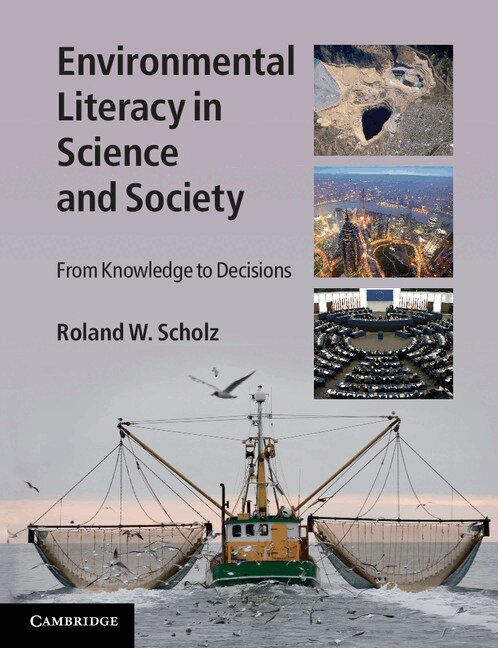
    Environmental Literacy in Science and Society

    From Knowledge to Decisions

    AvRoland W. Scholz

    Häftad, Engelska, 2011

    635 kr

    Beställningsvara. Skickas inom 10-15 vardagar. Fri frakt över 249 kr.

    Beskrivning

    In an era where humans affect virtually all of the earth's processes, questions arise about whether we have sufficient knowledge of human-environment interactions. How can we sustain the Earth's ecosystems to prevent collapses and what roles should practitioners and scientists play in this process? These are the issues central to the concept of environmental literacy. This unique book provides a comprehensive review and analysis of environmental literacy within the context of environmental science and sustainable development. Approaching the topic from multiple perspectives, it explores the development of human understanding of the environment and human-environment interactions in the fields of biology, psychology, sociology, economics and industrial ecology. The discussion emphasises the importance of knowledge integration and transdisciplinary processes as key strategies for understanding complex human-environment systems (HES). In addition, the author defines the HES framework as a template for investigating sustainably coupled human-environment systems in the 21st century.

    Produktinformation

    • Utgivningsdatum:2011-07-21
    • Mått:189 x 245 x 29 mm
    • Vikt:1 300 g
    • Format:Häftad
    • Språk:Engelska
    • Antal sidor:656
    • Förlag:Cambridge University Press
    • ISBN:9780521183338

    Utforska kategorier

    • Miljövetenskap och miljöpolitik inom Naturvetenskap och teknik
    • Biovetenskap inom Naturvetenskap och teknik

    Mer om författaren

    Roland W. Scholz chairs the Natural and Social Science Interface in the Department of Environmental Sciences at the ETH (Swiss Federal Institute of Technology), Zürich. A mathematician, psychologist and decision theorist by training, he is particularly interested in environmental systems analysis, human-environment interactions, environmental decisions and risk assessment. He has led numerous large-scale transdisciplinary processes to foster sustainable transitions of urban and regional systems.

    Recensioner i media

    '… Environmental Literacy in Science and Society provides a potential basis for research and conceptual revisions in coming decades.' Harald A. Mieg, Science

    Innehållsförteckning

    • List of boxes; Overview; Roadmap to environmental literacy; Part I. Invention of the Environment: Origins, Transdisciplinarity, and Theory of Science Perspectives: 1. What knowledge about what environment?; 2. From environmental literacy to transdisciplinarity; 3. Basic epistemological assumptions; Part II. History of Biological Knowledge: 4. Emerging knowledge on morphology, ecology, and evolution; 5. From molecular structures to ecosystems; Part III. Contributions of Psychology: 6. Psychological approaches to human-environment interactions; 7. Drivers of individual behavior and action; Part IV. Contributions of Sociology: 8. Traditional sociological approaches to human-environment interactions; 9. Modern sociological approaches to human-environment interactions; Part V. Contributions of Economics: 10. Origins of economic thinking and the environment; 11. Contemporary economic theories dealing with the environment; Part VI. Contributions of Industrial Ecology: 12. The emergence of industrial ecology; 13. Industrial agents and global biogeochemical dynamics; Part VII. Beyond Disciplines and Sciences: 14. Integrated systems modeling of complex human-environment systems Roland W. Scholz, Justus Gallati, Quang Bao Le and Roman Seidl; 15. Transdisciplinarity – a tool for environmental literacy; Part VIII. A Framework for Investigating Human-Environment Systems (HES): 16. The HES postulates; 17. The HES framework Roland W. Scholz, Claudia R. Binder and Daniel J. Lang; 18. Applying the HES framework Roland W. Scholz, Claudia R. Binder, Daniel J. Lang, Timo Smieszek and Michael Stauffacher; 19. Comparing the HES framework with alternative approaches Roland W. Scholz and Fridolin Brand; Part IX. Perspectives for Environmental Literacy: 20. New horizons: environmental and sustainability sciences; Glossary; References; Index.