• Fri frakt över 249 kr
  • •
  • Snabba leveranser
  • •
  • Billiga böcker
Kundservice

Du är på sajten för privatpersoner.

Företag, bibliotek eller offentlig verksamhet?

Du handlar på classic.bokus.com, där alla dina funktioner finns intakta.
Till classic.bokus.com
Bokus logotyp. Gå till startsidan.
  • Erbjudanden
  • Nyheter
  • Student
  • Topplistor
  • Barn & ungdom
  • Bokus Play
  • E-böcker
  • Pocketböcker
  • Spel & pussel

Må bättre, för mindre! Upp till 50% rabatt på hälsoböcker

Sidfot

Mina sidor

    Hjälp

    • Kundservice
    • Vanliga frågor och svar
    • Frakt och leverans
    • Retur vid ångerrätt
    • Reklamera vara
    • Betalning
    • Köpvillkor
    • Allmänna villkor
    • Information om webbplatsens tillgänglighet

    Om Bokus

    • Om oss
    • Pressrum
    • För studenter
    • För företag
    • För bibliotek och offentlig verksamhet
    • För leverantörer
    • Hållbarhet

    Populärt

    • Aktuella erbjudanden
    • Presentkort
    • Studentlitteratur
    • Nya böcker
    • Topplistor
    • Signerade böcker
    • Engelska böcker

    Inspiration

    • Boktips
    • BookTok
    • Populära bokserier
    • Barnbokskaraktärer
    • Populära författare
    Logotyp för Bokus
    Följ oss på Facebook (extern länk)Följ oss på Instagram (extern länk)Följ oss på YouTube (extern länk)Följ oss på TikTok (extern länk)
    bokus @ CookiesAnpassa cookiesIntegritetspolicyKöpvillkor
    Till Citymail hemsida (extern länk)Till Budbee hemsida (extern länk)Till Postnord hemsida (extern länk)Till Schenker hemsida (extern länk)Till Early Bird hemsida (extern länk)Till Walleys hemsida (extern länk)
    1. Naturvetenskap och teknik
    2. Matematik och naturvetenskap
    3. Biologi
    4. Djurens beteende

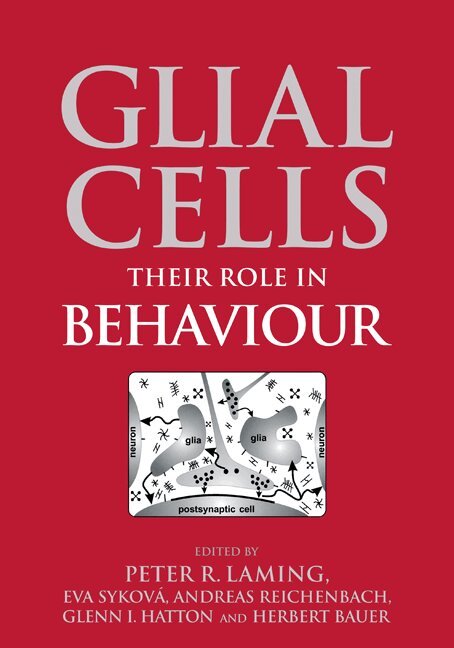
    Glial Cells

    Their Role in Behaviour

    AvP. R. Laming,Peter R. Laming

    Häftad, Engelska, 2011

    753 kr

    Beställningsvara. Skickas inom 10-15 vardagar. Fri frakt över 249 kr.

    Beskrivning

    In mammals the glial (or glue) cells contribute some 50% of the volume of the brain. In contrast to the traditional view that they have a purely physically supportive role, research in the last three decades has shown that glia interact morphologically, biochemically and physiologically with neurons during changes in behaviour. The evidence suggests that glia may modulate neuronal activity and thereby influence behaviour. This 1998 book was the first to describe and discuss these neuronal-glial interactions in relation to behaviour. A distinguished set of authors discuss these interactions from a number of viewpoints, and the book will familiarise neuroscientists, zoologists, physiologists and psychologists with the new knowledge of how neurons and glial cells interact with each other to affect behaviour.

    Produktinformation

    • Utgivningsdatum:2011-02-17
    • Mått:178 x 254 x 23 mm
    • Vikt:770 g
    • Format:Häftad
    • Språk:Engelska
    • Antal sidor:446
    • Förlag:Cambridge University Press
    • ISBN:9780521183826

    Utforska kategorier

    • Djurens beteende inom Naturvetenskap och teknik
    • Biovetenskap inom Naturvetenskap och teknik
    • Djurböcker inom Djur och Natur

    Recensioner i media

    Review of the hardback: ' … a very useful book for a neurobiologist's library'. Bernhard H. J. Juurlink, TINS

    Innehållsförteckning

    • Preface; 1. Changing concepts on the role of glia Peter Laming; 2. The phylogeny of glial–neuronal relationships and behaviour Betty Roots and Peter Laming; 3. Glial cells in brain development and plasticity Christian Müller; 4. The retina as a model of glial function in the brain Andreas Reichenbach, Serguei N. Skatchkov and Winfried Reichelt; 5. Metabolic trafficking between neurons and glia Stephen R. Robinson, Arne Schousboe, Ralf Dringen, Pierre Magistretti, Jonathan Coles and Leif Hertz; 6. Transmitter receptor and uptake systems in astrocytes and their relation to behaviour Harold K. Kimelberg, Tuula O. Jalonen, Chiye Aoki and Ken McCarthy; 7. Glial regulation of the neuronal microenvironment Eva Sykova, Elisabeth Hansson, Lars Rönnbäck and Charles Nicholson; 8. Role of periaxonal glia in nerve conduction Joan Abbott; 9. Transplantation of myelin-forming glial cells into the spinal cord: restoration of normal conduction in previously demyelinated axons Jeffery D. Kocsis and Stephen G. Waxman; 10. Contributions of potassium currents and glia to slow potential shifts Uwe Heinemann and Wolfgang Walz; 11. Acid alkaline transients and pH regulation glia Joachim Deitmer; 12. Intra-cranial slow potential shifts and behavioural state Peter Laming, Alister Nichol and John Roughan; 13. Slow brain potentials, sensory processing and cognition Herbert Bauer, Niels Birbaumer and Frank Roesler; 14. Recent evidence from around the brain for structural plasticity of astrocytes in the adult CNS Adrienne Salm, N. Hawrylak, J. B. Bobak, G. I. Hatton and C. Aoki; 15. Astrocytic involvement in learning Kim Ng, Ciaran Regan and Brona O'Dowd; References; Index.