• Fri frakt över 249 kr
  • •
  • Snabba leveranser
  • •
  • Billiga böcker
Kundservice

Du är på sajten för privatpersoner.

Företag, bibliotek eller offentlig verksamhet?

Du handlar på classic.bokus.com, där alla dina funktioner finns intakta.
Till classic.bokus.com
Bokus logotyp. Gå till startsidan.
  • Erbjudanden
  • Nyheter
  • Student
  • Topplistor
  • Barn & ungdom
  • Bokus Play
  • E-böcker
  • Pocketböcker
  • Spel & pussel

10% rabatt på allt med kod NYSTART10 →

Sidfot

Mina sidor

    Hjälp

    • Kundservice
    • Vanliga frågor och svar
    • Frakt och leverans
    • Retur vid ångerrätt
    • Reklamera vara
    • Betalning
    • Köpvillkor
    • Allmänna villkor
    • Information om webbplatsens tillgänglighet

    Om Bokus

    • Om oss
    • Pressrum
    • För studenter
    • För företag
    • För bibliotek och offentlig verksamhet
    • För leverantörer
    • Hållbarhet

    Populärt

    • Aktuella erbjudanden
    • Presentkort
    • Studentlitteratur
    • Nya böcker
    • Topplistor
    • Signerade böcker
    • Engelska böcker

    Inspiration

    • Boktips
    • BookTok
    • Populära bokserier
    • Barnbokskaraktärer
    • Populära författare
    Logotyp för Bokus
    Följ oss på Facebook (extern länk)Följ oss på Instagram (extern länk)Följ oss på YouTube (extern länk)Följ oss på TikTok (extern länk)
    bokus @ CookiesAnpassa cookiesIntegritetspolicyKöpvillkor
    Till Citymail hemsida (extern länk)Till Budbee hemsida (extern länk)Till Postnord hemsida (extern länk)Till Schenker hemsida (extern länk)Till Early Bird hemsida (extern länk)Till Walleys hemsida (extern länk)
    1. Naturvetenskap och teknik
    2. Geovetenskap
    3. Miljövetenskap och miljöpolitik

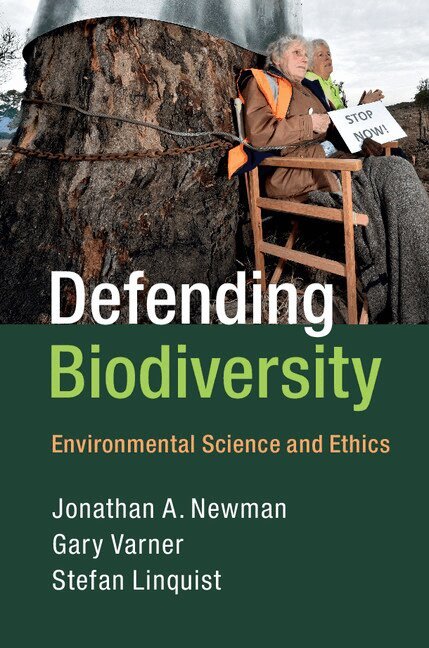
    Defending Biodiversity

    Environmental Science and Ethics

    AvJonathan A. Newman,Gary Varner

    Inbunden, Engelska, 2017

    1 107 kr

    Beställningsvara. Skickas inom 10-15 vardagar. Fri frakt över 249 kr.

    Fler format och utgåvor

    Häftad

    623 kr

    Beskrivning

    Imagine that you are an environmentalist who passionately believes that it is wrong to drill for oil in the Arctic National Wildlife Refuge. How do you convince someone that a decision to drill is wrong? Debates about the environment and how humans ought to treat it have gone on for decades, yet arguments in favor of preserving biodiversity often lack empirical substance or are philosophically naïve, making them far less effective than they could be. This book critically examines arguments that are commonly offered in support of biodiversity conservation. The authors adopt a skeptical viewpoint to thoroughly test the strength of each argument and, by demonstrating how scientific evidence can be integrated with philosophical reasoning, they help environmentalists to better engage with public debate and judiciously inform public policy. This interdisciplinary and accessible book is essential reading for anyone who engages in discussions about the value of biodiversity conservation.

    Produktinformation

    • Utgivningsdatum:2017-10-05
    • Mått:158 x 235 x 26 mm
    • Vikt:850 g
    • Format:Inbunden
    • Språk:Engelska
    • Antal sidor:454
    • Förlag:Cambridge University Press
    • ISBN:9780521768863

    Utforska kategorier

    • Miljövetenskap och miljöpolitik inom Naturvetenskap och teknik
    • Biovetenskap inom Naturvetenskap och teknik

    Mer om författaren

    Jonathan A. Newman is Dean of the College of Biological Science at the University of Guelph, Ontario, where he was also the founding Director of the School of Environmental Sciences, and the Chair of the Department of Environmental Biology. He has held previous faculty positions at the University of Oxford and at Southern Illinois University, Carbondale. He has been associated editor for the Journal of Ecology and for the Journal of Animal Ecology, and a member of the editorial boards of the journals Global Change Biology and Behavioral Ecology. He is the lead author for the 2011 book Climate Change Biology and has published more than 100 scientific journal articles on plant-animal-fungal interactions, invasive species, climate change, and the determinants and impacts of biodiversity. He is a member of the Ecological Society of America, the Canadian Society of Ecology and Evolution, and the British Ecological Society. He is a Fellow of the British Royal Society of Biology, and a monthly donor to Greenpeace Canada. He holds B.A. and Ph.D. degrees from the State University of New York, Albany, and a postgraduate diploma in learning and teaching in higher education from the University of Oxford. Gary Varner is a Professor and former head of Philosophy at Texas A & M University. Varner wrote one of the first dissertations on environmental ethics. His publications have covered topics in hunting, animal agriculture and human nutrition, medical research, cloning, and pet ownership, as well as philosophical issues associated with professional ethics and environmental law. He is the author of In Nature's Interests? Interests, Animal Rights, and Environmental Ethics (1998), and Personhood, Ethics, and Animal Cognition Situating Animals in Hare's Two Level Utilitarianism (2012). He is a lifetime member of the American Philosophical Association, and a charter member of the International Society for Environmental Ethics. He holds a B.A. degree from Arizona State University, an M.S. from the University of Georgia, and a Ph.D. from the University of Wisconsin, Madison. Stefan Linquist is a professor of philosophy and adjunct professor of biology at the University of Guelph, Ontario. He is a philosopher of biology with research interests in ecology, genomics, evolution, and psychology. His publications have covered topics in genome-level ecology, the nature of ecological laws/contingency, function concepts in genomics, and cultural evolution. He holds B.A. (Simon Fraser University) and Ph.D. (Duke University) degrees in philosophy, and an MS.c. (State University of New York, Binghampton) degree in evolutionary biology. He is a founding director of the Ucluelet Aquarium Society – a public education facility focusing on marine biodiversity in British Columbia. In 2016 he was awarded the Guelph Faculty Association's Distinguished Professor Award for Excellence in Teaching.

    Recensioner i media

    '… the book provides an incredibly valuable discussion; one that ought to be had between wildlife managers, conservationists, and biologists the world over. Anyone working within the environmental field is likely to find this volume engaging and useful for carefully examining the strength of their own beliefs and go-to arguments for biodiversity conservation.' Emily A. Gregg, The Quarterly Review of Biology

    Innehållsförteckning

    • Preface; Acknowledgements; Part I. Instrumental Value Defenses: 1. Biodiversity and the environmentalist agenda; 2. Ecosystem functioning and stability; 3. The precautionary principle; 4. Agricultural and pharmaceutical benefits; 5. Nature-based tourism and 'transformative value'; 6. How far do instrumental-value defenses get us?; Part II. Intrinsic Value Defenses: 7. Methodology in philosophical ethics; 8. Extensionism in environmental ethics; 9. Ecoholism: do ecological wholes have intrinsic value?; 10. Ecoholism 2: Callicott on the Leopold land ethic; 11. Should biodiversity be conserved for its aesthetic value?; 12. How far do intrinsic value defenses go?; 13. Conclusions and personal reflections; References; Index.