• Fri frakt över 249 kr
  • •
  • Snabba leveranser
  • •
  • Billiga böcker
Kundservice

Du är på sajten för privatpersoner.

Företag, bibliotek eller offentlig verksamhet?

Du handlar på classic.bokus.com, där alla dina funktioner finns intakta.
Till classic.bokus.com
Bokus logotyp. Gå till startsidan.
  • Erbjudanden
  • Nyheter
  • Student
  • Topplistor
  • Barn & ungdom
  • Bokus Play
  • E-böcker
  • Pocketböcker
  • Spel & pussel

10% rabatt på allt med kod: NYSTART10 →

Sidfot

Mina sidor

    Hjälp

    • Kundservice
    • Vanliga frågor och svar
    • Frakt och leverans
    • Retur vid ångerrätt
    • Reklamera vara
    • Betalning
    • Köpvillkor
    • Allmänna villkor
    • Information om webbplatsens tillgänglighet

    Om Bokus

    • Om oss
    • Pressrum
    • För studenter
    • För företag
    • För bibliotek och offentlig verksamhet
    • För leverantörer
    • Hållbarhet

    Populärt

    • Aktuella erbjudanden
    • Presentkort
    • Studentlitteratur
    • Nya böcker
    • Topplistor
    • Signerade böcker
    • Engelska böcker

    Inspiration

    • Boktips
    • BookTok
    • Populära bokserier
    • Barnbokskaraktärer
    • Populära författare
    Logotyp för Bokus
    Följ oss på Facebook (extern länk)Följ oss på Instagram (extern länk)Följ oss på YouTube (extern länk)Följ oss på TikTok (extern länk)
    bokus @ CookiesAnpassa cookiesIntegritetspolicyKöpvillkor
    Till Citymail hemsida (extern länk)Till Budbee hemsida (extern länk)Till Postnord hemsida (extern länk)Till Schenker hemsida (extern länk)Till Early Bird hemsida (extern länk)Till Walleys hemsida (extern länk)
    1. Naturvetenskap och teknik
    2. Matematik och naturvetenskap
    3. Biologi
    4. Biovetenskap

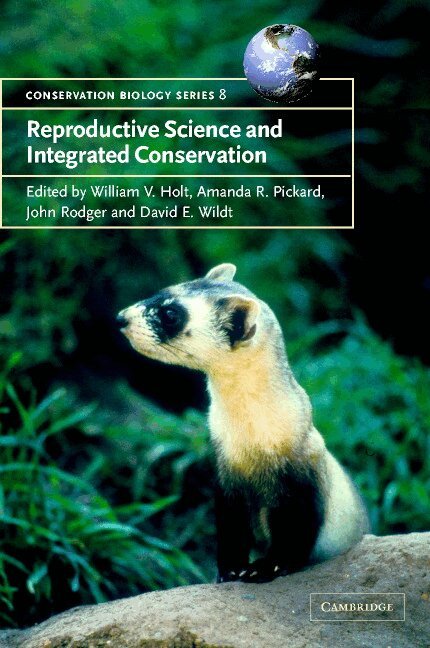
    Reproductive Science and Integrated Conservation

    AvWilliam V. Holt,Amanda R. Pickard

    Inbunden, Engelska, 2002

    Del 8 i serien Conservation Biology

    2 327 kr

    Beställningsvara. Skickas inom 10-15 vardagar. Fri frakt över 249 kr.

    Beskrivning

    Reproduction is essential to the continuation and evolution of life on this planet and is therefore a centrally important process in the conservation of wildlife. However, reproductive mechanisms are well understood in only a handful of vertebrate species, mostly domestic livestock and laboratory animals. This means that attempts to develop and implement management policies for wildlife conservation, and especially for endangered species that, by definition, are difficult to study, are often based on poor data or no data at all. In Reproductive Science and Integrated Conservation leading authorities provide glimpses of reproductive diversity in fishes, amphibia, reptiles, birds and mammals. Conservation plans are founded on the assumption that reproduction will be successful, but what if it fails? This book reviews the many factors that influence reproduction, including genetics, behaviour and nutrition, and experts assess the potential conservation relevance of the recent rapid advances in reproductive technology and medicine.

    Produktinformation

    • Utgivningsdatum:2002-12-05
    • Mått:152 x 229 x 24 mm
    • Vikt:820 g
    • Format:Inbunden
    • Språk:Engelska
    • Serie:Conservation Biology
    • Antal sidor:426
    • Förlag:Cambridge University Press
    • ISBN:9780521812153

    Utforska kategorier

    • Biovetenskap inom Naturvetenskap och teknik
    • Miljövetenskap och miljöpolitik inom Naturvetenskap och teknik

    Mer om författaren

    William V. Holt is a Senior Research Fellow at the Institute of Zoology, Zoological Society of London, and heads the Reproductive Biology Group. Amanda Pickard is a Research Fellow at the Institute of Zoology, Zoological Society of London. John Rodger is Director of the Australian Government's multi-organisation Cooperative Research Centre for Conservation and Management of Marsupials. David Wildt is Senior Scientist and Head, Department of Reproductive Sciences, Smithsonian National Zoological Park, Washington.

    Recensioner i media

    'This is a readable and engrossing book. This book reviews the many factors that influence reproduction. Sixth formers, students and zoo educators would benefit from reading the book if they have an interest in conservation. Long time biologists like me may be absorbed in the topic and heartily encouraged.' Journal of Biological Education

    Innehållsförteckning

    • List of contributors; Foreword Richard Stone; Part I. Introduction: 1. Toward more effective reproductive science for conservation David E. Wildt, Susie Ellis, Donald Janssen and Jennifer Buff; Part II. Reproduction and Population Viability: Introduction; 2. Behaviour and reproduction Alan Dixson, Nancy Harvey, Marilyn Patton and Joanna Setchell; 3. Nutrition and its interaction with reproductive processes Tom G. McEvoy and John J. Robinson; 4. Environmental chemicals and the threat to male fertility in mammals: evidence and perspective Helen S. Baillie, Allan A. Pacey and Harry D. M. Moore; 5. Assessing the consequences of inbreeding for population fitness: past challenges and future prospects Andrea C. Taylor; 6. Impacts of inbreeding on components of reproductive success Karen Koeninger Ryan, Robert C. Lacy and Susan W. Margulis; 7. The major histocompatibility complex (MHC) in declining populations: an example of adaptive variation Philip Hedrick; 8. When is the birth rate the key factor associated with population dynamics? Tim Coulson and Elodie Hudson; Part III. Reproductive Techniques for Conservation Management: Introduction; 9. Reproductive and welfare monitoring for the management of ex-situ populations Amanda R. Pickard; 10. Non-invasive endocrine measures of reproduction and stress in wild populations Steven L. Monfort; 11. Ultrasound for analysis of reproductive function in wildlife species Thomas B. Hildebrandt, Janine L. Brown, Robert Hermes and Frank Goritz; 12. Role of embryo technologies in genetic management and conservation of wildlife Naida M. Loskutoff; 13. Application of nuclear transfer technology to wildlife species J. K. Critser, L. K. Riley and R. S. Prather; Part IV. Integrated Conservation Management: Introduction; 14. Integrating reproductive sciences into recovery programmes for declining and extinct marsupial populations Peter D. Temple-Smith; 15. Captive breeding and predator control: a successful strategy for conservation in Western Australia Terry Fletcher and Keith Morris; 16. Black-footed ferret: model for assisted reproductive technologies contributing to in situ conservation JoGayle Howard, Paul E. Marinari and David E. Wildt; 17. Genetic resource banks for species conservation W. V. Holt, Teresa Abaigar, P. F. Watson and D. E. Wildt; 18. Fertility control for wildlife John C. Rodger; 19. Contraceptive vaccine development Karen E. Mate and Lyn A. Hinds; 20. Field applications of fertility control for wildlife management Phil Cowan, Roger Pech and Paul Curtis; Part V. Reproductive Science in Non-Mammalian Species: Introduction; 21. Reproductive technologies and challenges in avian conservation and management Ann M. Donoghue, Juan Manuel Blanco, George F. Gee, Yvonne Kirkby and David E. Wildt; 22. Reptile reproduction and endocrinology Valentine A. Lance; 23. Reproductive research and the worldwide amphibian extinction crisis Terri L. Roth and Amy Obringer; 24. Reproduction in fishes in relation to conservation Gordon McGregor Reid and Heather Hall; Part VI. Conclusion: 25. Postscript - sex, wildlife and vindication W. V. Holt, A. R. Pickard, J. C. Rodger and D. E. Wildt; Index.