• Fri frakt över 249 kr
  • •
  • Snabba leveranser
  • •
  • Billiga böcker
Kundservice

Du är på sajten för privatpersoner.

Företag, bibliotek eller offentlig verksamhet?

Du handlar på classic.bokus.com, där alla dina funktioner finns intakta.
Till classic.bokus.com
Bokus logotyp. Gå till startsidan.
  • Erbjudanden
  • Student
  • Topplistor
  • Barn & ungdom
  • Bokus Play
  • E-böcker
  • Ljudböcker
  • Pocketböcker
  • Spel och pussel

Pocketfynda! Hundratals böcker för 49 kr/st →

Sidfot

Mina sidor

    Hjälp

    • Kundservice
    • Vanliga frågor och svar
    • Frakt och leverans
    • Retur vid ångerrätt
    • Reklamera vara
    • Betalning
    • Köpvillkor
    • Allmänna villkor
    • Information om webbplatsens tillgänglighet

    Om Bokus

    • Om oss
    • Pressrum
    • För studenter
    • För företag
    • För bibliotek och offentlig verksamhet
    • För leverantörer
    • Hållbarhet

    Populärt

    • Aktuella erbjudanden
    • Presentkort
    • Studentlitteratur
    • Nya böcker
    • Topplistor
    • Signerade böcker
    • Engelska böcker

    Inspiration

    • Boktips
    • BookTok
    • Barnbokskaraktärer
    • Populära författare
    Logotyp för Bokus
    Följ oss på Facebook (extern länk)Följ oss på Instagram (extern länk)Följ oss på YouTube (extern länk)Följ oss på TikTok (extern länk)
    bokus @ CookiesAnpassa cookiesIntegritetspolicyKöpvillkor
    Till Citymail hemsida (extern länk)Till Budbee hemsida (extern länk)Till Postnord hemsida (extern länk)Till Schenker hemsida (extern länk)Till Early Bird hemsida (extern länk)Till Walleys hemsida (extern länk)
    1. Samhälle och politik
    2. Politik och statsskick
    3. Internationella relationer

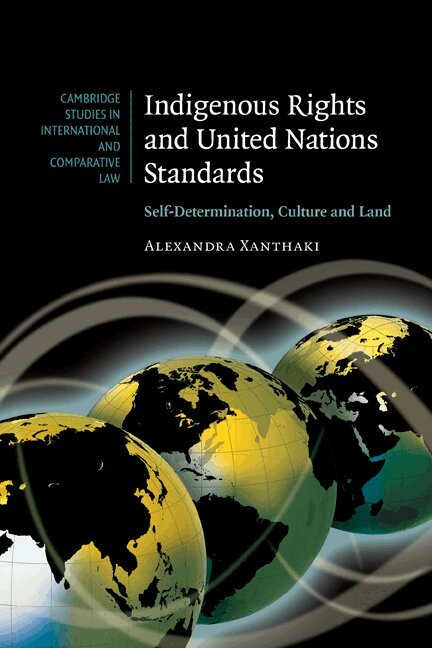
    Indigenous Rights and United Nations Standards

    Self-Determination, Culture and Land

    AvAlexandra Xanthaki

    Inbunden, Engelska, 2007

    Del 52 i serien Cambridge Studies in International and Comparative Law

    1 616 kr

    Beställningsvara. Skickas inom 7-10 vardagar. Fri frakt över 249 kr.

    Fler format och utgåvor

    Häftad

    597 kr

    Beskrivning

    The debate on indigenous rights has revealed some serious difficulties for current international law, posed mainly by different understandings of important concepts. This book explores the extent to which indigenous claims, as recorded in the United Nations forums, can be accommodated by international law. By doing so, it also highlights how the indigenous debate has stretched the contours and ultimately evolved international human rights standards. The book first reflects on the international law responses to the theoretical arguments on cultural membership. After a comprehensive analysis of the existing instruments on indigenous rights, the discussion turns to self-determination. Different views are assessed and a fresh perspective on the right to self-determination is outlined. Ultimately, the author refuses to shy away from difficult questions and challenging issues and offers a comprehensive discussion of indigenous rights and their contribution to international law.

    Produktinformation

    • Utgivningsdatum:2007-05-17
    • Mått:160 x 235 x 30 mm
    • Vikt:702 g
    • Format:Inbunden
    • Språk:Engelska
    • Serie:Cambridge Studies in International and Comparative Law
    • Antal sidor:360
    • Förlag:Cambridge University Press
    • ISBN:9780521835749

    Utforska kategorier

    • Internationella relationer inom Samhälle och politik

    Mer om författaren

    Alexandra Xanthaki is a Lecturer in International Human Rights at Brunel University.

    Recensioner i media

    Review of the hardback: '… this book provides a useful introduction to indigenous rights. … It offers a helpful overview of a difficult subject, and may well whet the appetite of the interested student.' Gordon Bennett

    Innehållsförteckning

    • Introduction; 1. Recognition of cultural membership; 2. United Nations instruments on indigenous peoples; 3. Emerging law: the United Nations draft declaration on indigenous peoples; 4. Do indigenous peoples have the right to self-determination?; 5. Indigenous cultural rights; 6. Indigenous land rights; Conclusions.