• Fri frakt över 249 kr
  • •
  • Snabba leveranser
  • •
  • Billiga böcker
Kundservice

Du är på sajten för privatpersoner.

Företag, bibliotek eller offentlig verksamhet?

Du handlar på classic.bokus.com, där alla dina funktioner finns intakta.
Till classic.bokus.com
Bokus logotyp. Gå till startsidan.
  • Erbjudanden
  • Student
  • Topplistor
  • Barn & ungdom
  • Bokus Play
  • E-böcker
  • Ljudböcker
  • Pocketböcker
  • Spel och pussel

Pocketfynda! Hundratals böcker för 49 kr/st →

Sidfot

Mina sidor

    Hjälp

    • Kundservice
    • Vanliga frågor och svar
    • Frakt och leverans
    • Retur vid ångerrätt
    • Reklamera vara
    • Betalning
    • Köpvillkor
    • Allmänna villkor
    • Information om webbplatsens tillgänglighet

    Om Bokus

    • Om oss
    • Pressrum
    • För studenter
    • För företag
    • För bibliotek och offentlig verksamhet
    • För leverantörer
    • Hållbarhet

    Populärt

    • Aktuella erbjudanden
    • Presentkort
    • Studentlitteratur
    • Nya böcker
    • Topplistor
    • Signerade böcker
    • Engelska böcker

    Inspiration

    • Boktips
    • BookTok
    • Barnbokskaraktärer
    • Populära författare
    Logotyp för Bokus
    Följ oss på Facebook (extern länk)Följ oss på Instagram (extern länk)Följ oss på YouTube (extern länk)Följ oss på TikTok (extern länk)
    bokus @ CookiesAnpassa cookiesIntegritetspolicyKöpvillkor
    Till Citymail hemsida (extern länk)Till Budbee hemsida (extern länk)Till Postnord hemsida (extern länk)Till Schenker hemsida (extern länk)Till Early Bird hemsida (extern länk)Till Walleys hemsida (extern länk)
    1. Naturvetenskap och teknik
    2. Matematik och naturvetenskap
    3. Astronomi

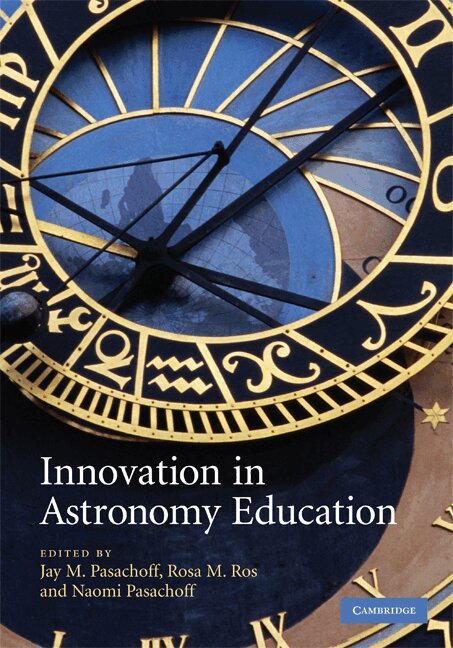
    Innovation in Astronomy Education

    AvJay M. Pasachoff,Rosa M. Ros

    Inbunden, Engelska, 2008

    1 684 kr

    Beställningsvara. Skickas inom 7-10 vardagar. Fri frakt över 249 kr.

    Beskrivning

    Astronomy leads to an understanding of the history and nature of science, and attracts many young people to education in science and technology. But while in many countries astronomy is not part of the standard curriculum, many scientific and educational societies and government agencies have produced materials and educational resources in astronomy for all educational levels. This volume highlights the general strategies for effective teaching and introduces innovative points of view regarding methods of teaching and learning, particularly those using new technologies. Technology is used in astronomy both for obtaining observations and for teaching. The book also presents ideas for how astronomy can be connected to environmental issues and other topics of public interest. This valuable overview is based on papers and posters presented by many of the world's leading astronomy educators at a Special Session of the International Astronomical Union General Assembly in Prague in 2006.

    Produktinformation

    • Utgivningsdatum:2008-07-24
    • Mått:178 x 252 x 22 mm
    • Vikt:840 g
    • Format:Inbunden
    • Språk:Engelska
    • Antal sidor:350
    • Förlag:Cambridge University Press
    • ISBN:9780521880152

    Utforska kategorier

    • Astronomi inom Naturvetenskap och teknik
    • Högskola och universitet inom Psykologi och pedagogik

    Mer om författaren

    Jay M. Pasachoff is Field Memorial Professor of Astronomy at Williams College, and was President of the Commission on Education and Development of the International Astronomical Union. Rosa M. Ros is Professor of Technical University of Catalonia in Barcelona and Vice-President of the International Astronomical Union's Commission on Education and Development. Naomi Pasachoff is a Research Associate at Williams College and an author of science textbooks and biographies of scientists.

    Recensioner i media

    Reviews from Teaching and Learning Astronomy by Jay M. Pasachoff and John R. Percy: 'What makes this book special is the care that has gone into articulating why astronomy education is important and why it is necessary to better train and support preservice and in-service science teachers. This book is a must-have for anyone working to add astronomy to any curriculum or to persuade funders to invest in science education ... it is a book that will give the experienced astronomy educator some novel activities, new resource lists, and well-argued reasons to introduce astronomy to as many minds as possible.' Astronomy Education Review

    Innehållsförteckning

    • Preface; Part I. General Strategies for Effective Teaching: Introduction; 1. Main objectives of SpS2; 2. Learning astronomy by doing astronomy; 3. Hands-on Universe-Europe; 4. Life on Earth in the atmosphere of the Sun; 5. A model of teaching astronomy to pre-service teachers; 6. How to teach, learn about, and enjoy astronomy; 7. Clickers: a new teaching tool of exceptional promise; 8. Educational opportunities in pro-am collaboration; 9. Teaching history of astronomy to second-year engineering students; 10. Teaching the evolution of stellar and Milky Way concepts through the ages; 11. Educational efforts of the International Astronomical Union; 12. Astronomy in culture; 13. Light pollution: a tool for astronomy education; 14. Astronomy by distance learning; 15. Edible astronomy demonstrations; 16. Amateur astronomers as public outreach partners; 17. Does the Sun rotate around Earth or Earth rotate around the Sun?; 18. Using sounds and sonifications for astronomy outreach; 19. Teaching astronomy and the crisis in science education; 20. Astronomy for all as part of a general education; Poster abstracts; Part II. Connecting Astronomy with the Public: Introduction; 21. A status report from the Division XII working group; 22. Outreach using media; 23. Astronomy podcasting; 24. IAU's communication strategy, hands-on science communication, and the communication of the planet definition discussion; 25. Getting a word in edgeways: the survival of discourse in audiovisual astronomy; 26. Critical evaluation of the new Hall of Astronomy; 27. Revitalizing astronomy teaching through research on student understanding; Poster abstracts; Part III. Effective Use of Instruction and Information Technology: Introduction; 28. ESO's astronomy education program; 29. US student astronomy research and remote observing projects; 30. Global network of autonomous observatories dedicated to student research; 31. Remote telescopes in education: report of an Australian study; 32. Visualizing large astronomical data holdings; Poster abstracts; Part IV. Practical Issues Connected with the Implementation of the 2003 IAU Resolution: Introduction; 33. Stellar evolution for students of Moscow University; 34. Astronomy for everybody: An approach from the CASAO/NAUH view; 35. Toward a new program in astronomy education in secondary schools in Turkey; 36. Universe awareness for young children; 37. Education in Egypt and Egyptian responses to eclipses; 38. Astronomy in the cultural heritage of African societies; 39. Education at the Pierre Auger Observatory: the cinema as a tool in science education; 40. Freshman seminars: interdisciplinary engagements in astronomy; 41. Astronomy for teachers; Poster abstracts; Conclusion.