• Fri frakt över 249 kr
  • •
  • Snabba leveranser
  • •
  • Billiga böcker
Kundservice

Du är på sajten för privatpersoner.

Företag, bibliotek eller offentlig verksamhet?

Du handlar på classic.bokus.com, där alla dina funktioner finns intakta.
Till classic.bokus.com
Bokus logotyp. Gå till startsidan.
  • Erbjudanden
  • Nyheter
  • Student
  • Topplistor
  • Barn & ungdom
  • Bokus Play
  • E-böcker
  • Pocketböcker
  • Spel & pussel

10% studentrabatt med kod TERM26

Sidfot

Mina sidor

    Hjälp

    • Kundservice
    • Vanliga frågor och svar
    • Frakt och leverans
    • Retur vid ångerrätt
    • Reklamera vara
    • Betalning
    • Köpvillkor
    • Allmänna villkor
    • Information om webbplatsens tillgänglighet

    Om Bokus

    • Om oss
    • Pressrum
    • För studenter
    • För företag
    • För bibliotek och offentlig verksamhet
    • För leverantörer
    • Hållbarhet

    Populärt

    • Aktuella erbjudanden
    • Presentkort
    • Studentlitteratur
    • Nya böcker
    • Topplistor
    • Signerade böcker
    • Engelska böcker

    Inspiration

    • Boktips
    • BookTok
    • Populära bokserier
    • Barnbokskaraktärer
    • Populära författare
    Logotyp för Bokus
    Följ oss på Facebook (extern länk)Följ oss på Instagram (extern länk)Följ oss på YouTube (extern länk)Följ oss på TikTok (extern länk)
    bokus @ CookiesAnpassa cookiesIntegritetspolicyKöpvillkor
    Till Citymail hemsida (extern länk)Till Budbee hemsida (extern länk)Till Postnord hemsida (extern länk)Till Schenker hemsida (extern länk)Till Early Bird hemsida (extern länk)Till Walleys hemsida (extern länk)
    1. Historia och arkeologi
    2. Historia
    3. Europas historia

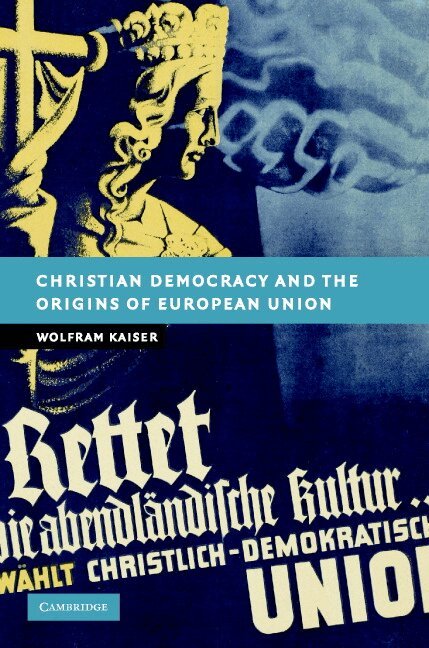
    Christian Democracy and the Origins of European Union

    AvWolfram Kaiser

    Inbunden, Engelska, 2007

    Del i serien New Studies in European History

    1 415 kr

    Beställningsvara. Skickas inom 10-15 vardagar. Fri frakt över 249 kr.

    Fler format och utgåvor

    Häftad

    615 kr

    Beskrivning

    Major study of the role of European Christian democratic parties in the making of the European Union. It radically re-conceptualises European integration in long-term historical perspective as the outcome of partisan competition of political ideologies and parties and their guiding ideas for the future of Europe. Wolfram Kaiser takes a comparative approach to political Catholicism in the nineteenth century, Catholic parties in interwar Europe and Christian democratic parties in postwar Europe and studies these parties' cross-border contacts and co-ordination of policy-making. He shows how well networked party elites ensured that the origins of European Union were predominately Christian democratic, with considerable repercussions for the present-day EU. The elites succeeded by intensifying their cross-border communication and coordinating their political tactics and policy making in government. This is a major contribution to the new transnational history of Europe and the history of European integration.

    Produktinformation

    • Utgivningsdatum:2007-11-29
    • Mått:152 x 229 x 25 mm
    • Vikt:740 g
    • Format:Inbunden
    • Språk:Engelska
    • Serie:New Studies in European History
    • Antal sidor:390
    • Förlag:Cambridge University Press
    • ISBN:9780521883108

    Utforska kategorier

    • Europas historia inom Historia och arkeologi
    • Sociala grupper och identitet inom Samhälle och politik
    • Kristendom inom Filosofi och religion

    Mer om författaren

    Wolfram Kaiser is Professor of European Studies at the University of Portsmouth, UK, and Visiting Professor at the College of Europe in Bruges, Belgium. He has published numerous books, journal articles and book chapters, especially in the field of European Union history and politics, Christian democracy and the history of globalisation.

    Recensioner i media

    Review of the hardback: 'Kaiser's survey impresses for its analytical incisiveness and chronological and geographic scope.' Central European History

    Innehållsförteckning

    • Introduction; 1. All paths to Rome? Transnational Catholicism in the nineteenth century; 2. Under siege: Catholic parties in interwar Europe; 3. After Versailles: left-Catholic cooperation; 4. In the shadow of dictatorship: contacts in exile; 5. Hegemony by default: Christian democracy in postwar Europe; 6. Creating core Europe: the rise of the party network; 7. Deepening integration: the supranational coalition embattled; 8. Informal politics: from Rome to Maastricht.