• Fri frakt över 249 kr
  • •
  • Snabba leveranser
  • •
  • Billiga böcker
Kundservice

Du är på sajten för privatpersoner.

Företag, bibliotek eller offentlig verksamhet?

Du handlar på classic.bokus.com, där alla dina funktioner finns intakta.
Till classic.bokus.com
Bokus logotyp. Gå till startsidan.
  • Erbjudanden
  • Nyheter
  • Student
  • Topplistor
  • Barn & ungdom
  • Bokus Play
  • E-böcker
  • Pocketböcker
  • Spel & pussel

10% studentrabatt med kod TERM26

Sidfot

Mina sidor

    Hjälp

    • Kundservice
    • Vanliga frågor och svar
    • Frakt och leverans
    • Retur vid ångerrätt
    • Reklamera vara
    • Betalning
    • Köpvillkor
    • Allmänna villkor
    • Information om webbplatsens tillgänglighet

    Om Bokus

    • Om oss
    • Pressrum
    • För studenter
    • För företag
    • För bibliotek och offentlig verksamhet
    • För leverantörer
    • Hållbarhet

    Populärt

    • Aktuella erbjudanden
    • Presentkort
    • Studentlitteratur
    • Nya böcker
    • Topplistor
    • Signerade böcker
    • Engelska böcker

    Inspiration

    • Boktips
    • BookTok
    • Populära bokserier
    • Barnbokskaraktärer
    • Populära författare
    Logotyp för Bokus
    Följ oss på Facebook (extern länk)Följ oss på Instagram (extern länk)Följ oss på YouTube (extern länk)Följ oss på TikTok (extern länk)
    bokus @ CookiesAnpassa cookiesIntegritetspolicyKöpvillkor
    Till Citymail hemsida (extern länk)Till Budbee hemsida (extern länk)Till Postnord hemsida (extern länk)Till Schenker hemsida (extern länk)Till Early Bird hemsida (extern länk)Till Walleys hemsida (extern länk)
    1. Historia och arkeologi
    2. Historia
    3. Europas historia

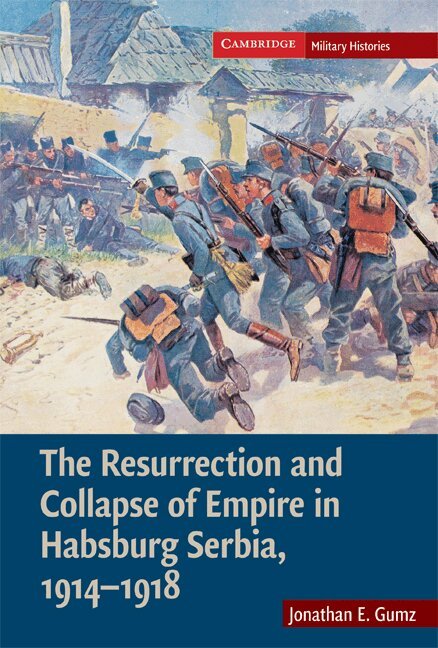
    The Resurrection and Collapse of Empire in Habsburg Serbia, 1914-1918: Volume 1

    AvJonathan E. Gumz

    Inbunden, Engelska, 2009

    Del i serien Cambridge Military Histories

    1 375 kr

    Beställningsvara. Skickas inom 10-15 vardagar. Fri frakt över 249 kr.

    Fler format och utgåvor

    Häftad

    477 kr

    Beskrivning

    This book examines the Habsburg Army's occupation of Serbia from 1914 through 1918. This occupation ran along a distinctly European-centered trajectory radically different from other great power colonial projects or occupations during the 20th century. Unlike these projects and occupations, the Habsburg Army sought to denationalize and depoliticize Serbia, to gradually reduce the occupation's violence, and to fully integrate the country into the Empire. These aims stemmed from 19th-century conservative and monarchical convictions that compelled the Army to operate under broad legal and civilizational constraints. Gumz's research provides a counterpoint to interpretations of the First World War that emphasize the centrality of racially inflected, Darwinist worldviews in the war.

    Produktinformation

    • Utgivningsdatum:2009-06-15
    • Mått:152 x 229 x 32 mm
    • Vikt:900 g
    • Format:Inbunden
    • Språk:Engelska
    • Serie:Cambridge Military Histories
    • Antal sidor:288
    • Förlag:Cambridge University Press
    • ISBN:9780521896276

    Utforska kategorier

    • Europas historia inom Historia och arkeologi

    Mer om författaren

    Jonathan Gumz is currently Assistant Professor of History at the United States Military Academy at West Point. He earned his Ph.D. from the University of Chicago and has held teaching positions at the United States Naval War College, University of Wisconsin, Milwaukee, and the University of Chicago. His articles have appeared in the Historical Journal and the Historian. He was the recipient of a Fulbright Fellowship for study in Vienna and a Harry Frank Guggenheim Foundation Fellowship.

    Recensioner i media

    'This book effectively refutes the argument that Austria-Hungary's occupation of Serbia constituted an unrestrained war of national destruction. It also challenges recent scholarship that views wartime occupation practices in Eastern Europe through a lens of colonization that anticipated Nazi atrocities in the Second World War. Jonathan Gumz argues that unlike many of their peers elsewhere in Europe, Austria-Hungary's conservative military leaders in fact rejected total war policies that merged war and home fronts. Gumz clearly elaborates this traditional military culture, demonstrating its workings at both the casual village level in occupied Serbia and in the highest Imperial councils in Vienna. He elucidates the key conflicts that set the military against the imperial bureaucracies during the War, and that by 1918 had helped to destroy the regime's legitimacy among its citizens. Above all, his comparative approach produces important insights onto wartime practices, not only in Austria-Hungary but throughout Europe. This is military history at its best, broadly conceived, clearly applicable beyond specifically military situations, and above all, superbly grounded in archival research.' Pieter Judson, Swarthmore College

    Innehållsförteckning

    • 1. The summer of 1914: the Hapsburg empire meets Serbian warfare; 2. Eradicating national politics in occupied Serbia; 3. Legal severity, international law, and the tottering empire in occupied Serbia; 4. Food as salvation: food supply, the monarchy, and Serbia, 1916–18; 5. A levee en masse nation no more? Guerilla war in Hapsburg Serbia.