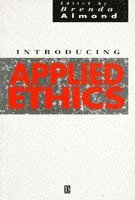
Introducing Applied Ethics
596 kr
Beställningsvara. Skickas inom 5-8 vardagar. Fri frakt över 249 kr.
Beskrivning
Produktinformation
- Utgivningsdatum:1995-04-28
- Mått:156 x 230 x 29 mm
- Vikt:510 g
- Format:Häftad
- Språk:Engelska
- Antal sidor:388
- Förlag:John Wiley and Sons Ltd
- ISBN:9780631193913
Utforska kategorier
Mer om författaren
Brenda Almond is Professor of Moral and Social Philosophy at the University of Hull. She is Chair of the Society for Applied Philosophy, and Joint Editor of the Journal of Applied Philosophy. She has published widely on the ethical and philosophical aspects of contemporary issues in various "applied" areas, including education, medicine, human relationships, and environment. She is also author of the classic, popular introduction to philosophy, Exploring Philosophy, published by Blackwell Publishers.
Recensioner i media
"Although the level of Almond's language is too high for many A-level students, her book makes a good revision text for more advanced candidates." Jonathan Webber, Dialogue, 1996 "This excellent, handy collection will be found useful by anyone who wants to show how philosophy is 'relevant'." Richard Ashcroft, University of Liverpool, Society for Applied Philosophy, 1996"This volume provides a most valuable collection of articles arranged in five sections dealing with family relationships, the professions, crime and punishment, economics and politics, and international and global dimensions. The contributors are leading philosophers and ethicists. There can be few better ways of approaching such a wide range of issues." The Expository Times
Innehållsförteckning
- List of Contributors. Introduction. Ethical Theory and Ethical Practice: Brenda Almond (University of Hull).Part I: The Personal Dimension: Family and Relationships:.1. Trouble with Familes?: Mary Midgley and Judith Hughes (Both at Newcastle).2. Love and Personal Relationships: Paul Gregory (Germany).3. Between the Sexes: Care or Justice?: Moira Gatens (Sydney).4. Children Who Run: Ethics and Homelesness: Michael Parker (Middlesex).Part II: Public and Professional Dimensions: Ethics and the Professions:.5. Education: Conserving Tradition: John Haldane (St. Andrews).6. Ethics, Law and the Quality of the Media: Andrew Belsey (University of Wales College of Cardiff).7. Reconciling Business Imperatives and Moral Virtues: Jennifer Jackson (Leeds).8. The Gene Revolution: Ruth Chadwick (Cardiff).9. Information and Accountability in Science: Dick Holdsworth (Luxembourg).10. Psychiatry, Compulsory Treatment and the Value-Based Model of Mental Illness: W. Fulford (Warneford Hospital).Part III: The Legal Dimensions: Crime and Punishment:.11. Crime and Responsibility: H. Tam (Cambridge).12. Is Psychopathy a Moral Concept?: M. Bavidge and A. Cole (Both at Newcastle).13. Life, Death and the Law: Robert Campbell (Bolton Institute).14. Ethical Questions Facing Law Enforcement Agents: John Kleinig (CUNY).Part IV: Economic and Political Dimensions: Politics and Society:.15. Is Efficiency Ethical? Resource Issues in Health Care: Donna Dickenson (Open University, Milton Keyne).16. Liberty or Community? Defining the Postmarxist Agenda: Brenda Almond (Hull).17. A Defence of Property Rights and Capitalism: Tibor Machan (Auburn).18. Nationalism and Intervention: A. J. Coady (University of Melbourne).Part V: International and Global Dimensions: Extending the Moral Community:.19. Rich and Poor: Jennifer Trusted (Exeter).20. War, Terrorism and Ethical Consistency: Gerry Wallace (Hull).21. Enlarging the Community: Companion Animals: Stephen Clark (Liverpool).22. Ethics and the Environment: the Global Perspective: Robin Attfield (Cardiff).Bibliographies.Index.