• Fri frakt över 249 kr
  • •
  • Snabba leveranser
  • •
  • Billiga böcker
Kundservice

Du är på sajten för privatpersoner.

Företag, bibliotek eller offentlig verksamhet?

Du handlar på classic.bokus.com, där alla dina funktioner finns intakta.
Till classic.bokus.com
Bokus logotyp. Gå till startsidan.
  • Erbjudanden
  • Nyheter
  • Student
  • Topplistor
  • Barn & ungdom
  • Bokus Play
  • E-böcker
  • Pocketböcker
  • Spel & pussel

10% rabatt på allt med kod NYSTART10 →

Sidfot

Mina sidor

    Hjälp

    • Kundservice
    • Vanliga frågor och svar
    • Frakt och leverans
    • Retur vid ångerrätt
    • Reklamera vara
    • Betalning
    • Köpvillkor
    • Allmänna villkor
    • Information om webbplatsens tillgänglighet

    Om Bokus

    • Om oss
    • Pressrum
    • För studenter
    • För företag
    • För bibliotek och offentlig verksamhet
    • För leverantörer
    • Hållbarhet

    Populärt

    • Aktuella erbjudanden
    • Presentkort
    • Studentlitteratur
    • Nya böcker
    • Topplistor
    • Signerade böcker
    • Engelska böcker

    Inspiration

    • Boktips
    • BookTok
    • Populära bokserier
    • Barnbokskaraktärer
    • Populära författare
    Logotyp för Bokus
    Följ oss på Facebook (extern länk)Följ oss på Instagram (extern länk)Följ oss på YouTube (extern länk)Följ oss på TikTok (extern länk)
    bokus @ CookiesAnpassa cookiesIntegritetspolicyKöpvillkor
    Till Citymail hemsida (extern länk)Till Budbee hemsida (extern länk)Till Postnord hemsida (extern länk)Till Schenker hemsida (extern länk)Till Early Bird hemsida (extern länk)Till Walleys hemsida (extern länk)
    1. Psykologi och pedagogik
    2. Psykologi
    3. Barnpsykologi och utvecklingspsykologi

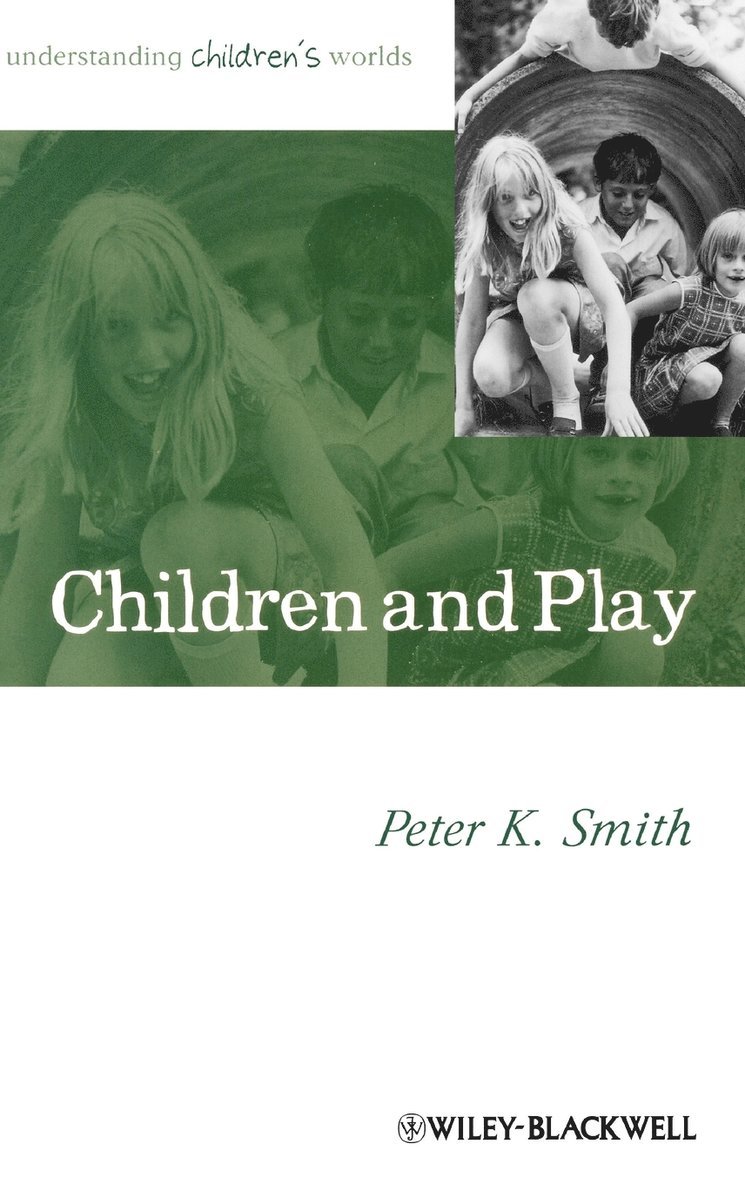
    Children and Play

    Understanding Children's Worlds

    AvPeter K. Smith

    Inbunden, Engelska, 2009

    Del 11 i serien Understanding Children's Worlds

    1 377 kr

    Beställningsvara. Skickas inom 5-8 vardagar. Fri frakt över 249 kr.

    Fler format och utgåvor

    Häftad

    472 kr

    E-bok

    1 579 kr

    Beskrivning

    The role of play in child development is a source of ongoing interest and debate. In this book, renowned expert Peter Smith offers an expansive definition of the term “play”, taking an in-depth look at its impact on children, as well as its adaptive value for birds and mammals, including primates. Using both contemporary and classic research, Smith examines how different age groups and sexes participate in a wide variety of play, including exercise and rough-and- tumble play, fantasy play and imaginary friends, and play with objects. The book gauges the function of play in early childhood education and makes the case for and against recess breaks in school. How play occurs in different societies and among various populations – including children with special needs – is also explored.With its comprehensive coverage of theoretical, historical, cross-cultural, and evolutionary perspectives, Children and Play holds significant insights for parents, educators, and clinicians.

    Produktinformation

    • Utgivningsdatum:2009-04-17
    • Mått:160 x 239 x 21 mm
    • Vikt:540 g
    • Format:Inbunden
    • Språk:Engelska
    • Serie:Understanding Children's Worlds
    • Antal sidor:272
    • Förlag:John Wiley and Sons Ltd
    • ISBN:9780631235217

    Utforska kategorier

    • Barnpsykologi och utvecklingspsykologi inom Psykologi och pedagogik
    • Psykologi inom Psykologi och pedagogik
    • Pedagogisk psykologi inom Psykologi och pedagogik

    Mer om författaren

    Peter K. Smith is Professor of Psychology and Head of the Unit for School and Family Studies at Goldsmiths, University of London. He is co-author of Understanding Children's Development and co-editor of The Blackwell Handbook of Childhood Social Development and of The Nature of Play: Great Apes and Humans. He has written widely on children's play, especially pretend play training, and rough-and-tumble play.

    Innehållsförteckning

    • ContentsSeries Editor’s PrefaceAcknowledgmentsviiixChapter 1 An Introduction to Play 1Why Play? 1Examples of What Is and What Is Not Play 2Characteristics of Playful Behavior 4Types of Play 8Things That Are Probably Not Play: Exploration, Stereotypic Behavior, Work, Rule-Governed Games 10Methods of Studying Play 12Plan of the Book 20Chapter 2 A Brief History of the Study of Play and of Play Theories 21Early European Educators and the Role of Play 22Evolutionary Theory and Play: Darwin, Spencer, and Groos 24Psychoanalytic Perspectives on Play 27The Play Ethos 27Anthropological Perspectives on Play 30Psychological Perspectives: Vygotsky and Piaget 31Developmental Sequences in Play: Piaget, Smilansky, Rubin 35More Recent Play Theorists 39Chapter 3 Animal Play: Definitions and Descriptions 41Possible Play in Birds, Lower Vertebrates, and Invertebrates 41Play in Mammals 44Some Examples of Mammalian Play 46Do All Mammals Play? 52Play in Monkeys and Apes 54Chapter 4 Animal Play: Theoretical Perspectives on Function 62Theories and Evidence Concerning the Evolution and Adaptive Value of Animal Play 62Examining Possible Benefits of Play 70General Views on the Benefits of Play 70The Possible Relevance for Human Play of Studying Animal Play 77Chapter 5 Play in Different Cultures 80(author: Yumi Gosso) Parakanã Children 81Factors Contributing to Cultural Similarities and Differences 85Similarities and Differences across Cultures 95Chapter 6 Physical Activity Play: Exercise Play and Rough-and-Tumble 99Stages in Physical Activity Play 100Rough-and-Tumble Play 104Sex Differences in Physical Activity Play 113Functions of Physical Activity Play 115Chapter 7 Object Play 124Sensorimotor or Functional Play 124Beyond the Sensorimotor Period 131Functions of Object Play 134Experiments with Object Play and Creative Problem-Solving 140Chapter 8 Pretend Play: Description 148Definitions of Pretend or Fantasy Play 148The Development of Pretend Play in Children 155Solitary and Social Pretend Play 157Sociodramatic Play 158Imaginary Companions 159Distinguishing Fantasy and Reality 161Gender Differences 163Pretend Play and Friendship 163Other Factors Affecting Pretend Play 165A Universal Human Feature? 166Children with Autism 167Pretend Play as a Lifespan Activity? 168Chapter 9 Pretend Play: Theories and Functions 170Arguments for Benefits of Pretend or Fantasy Play 170Theories Concerning the Function of Pretend Play 172Models of the Role of Pretend Play in Development 178Evidence for the Functions of Pretend Play 180Experimental Studies 188Chapter 10 Some Practical Issues Concerning Play 194The Role of Parents in Encouraging and Structuring Children’s Play 194The Role of Play in the Early Childhood Curriculum: Play Training 196Attitudes to War Play 197The Arguments For (and Against) Recess Breaks 201The Role of Play in Helping Children under Stress, or with Illness or Disability 205Chapter 11 Concluding Comments: Play and the Middle Way 213Play: Ignored or Idealized? 213References 218Author Index 247Subject Index 253