• Fri frakt över 249 kr
  • •
  • Snabba leveranser
  • •
  • Billiga böcker
Kundservice

Du är på sajten för privatpersoner.

Företag, bibliotek eller offentlig verksamhet?

Du handlar på classic.bokus.com, där alla dina funktioner finns intakta.
Till classic.bokus.com
Bokus logotyp. Gå till startsidan.
  • Erbjudanden
  • Nyheter
  • Student
  • Topplistor
  • Barn & ungdom
  • Bokus Play
  • E-böcker
  • Pocketböcker
  • Spel & pussel

10% rabatt på allt med kod NYSTART10 →

Sidfot

Mina sidor

    Hjälp

    • Kundservice
    • Vanliga frågor och svar
    • Frakt och leverans
    • Retur vid ångerrätt
    • Reklamera vara
    • Betalning
    • Köpvillkor
    • Allmänna villkor
    • Information om webbplatsens tillgänglighet

    Om Bokus

    • Om oss
    • Pressrum
    • För studenter
    • För företag
    • För bibliotek och offentlig verksamhet
    • För leverantörer
    • Hållbarhet

    Populärt

    • Aktuella erbjudanden
    • Presentkort
    • Studentlitteratur
    • Nya böcker
    • Topplistor
    • Signerade böcker
    • Engelska böcker

    Inspiration

    • Boktips
    • BookTok
    • Populära bokserier
    • Barnbokskaraktärer
    • Populära författare
    Logotyp för Bokus
    Följ oss på Facebook (extern länk)Följ oss på Instagram (extern länk)Följ oss på YouTube (extern länk)Följ oss på TikTok (extern länk)
    bokus @ CookiesAnpassa cookiesIntegritetspolicyKöpvillkor
    Till Citymail hemsida (extern länk)Till Budbee hemsida (extern länk)Till Postnord hemsida (extern länk)Till Schenker hemsida (extern länk)Till Early Bird hemsida (extern länk)Till Walleys hemsida (extern länk)
    1. Samhälle och politik
    2. Politik och statsskick
    3. Statsskick och politiska processer

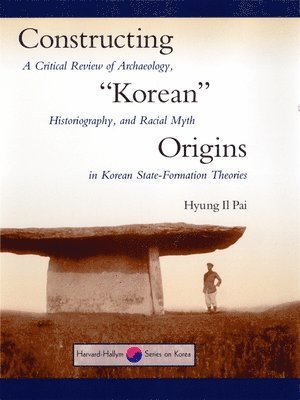
    Constructing “Korean” Origins

    A Critical Review of Archaeology, Historiography, and Racial Myth in Korean State-Formation Theories

    AvHyung Il Pai

    Inbunden, Engelska, 2000

    Del 187 i serien Harvard East Asian Monographs

    443 kr

    Beställningsvara. Skickas inom 5-8 vardagar. Fri frakt över 249 kr.

    Beskrivning

    In this wide-ranging study, Hyung Il Pai examines how archaeological finds from throughout Northeast Asia have been used in Korea to construct a myth of state formation. This myth emphasizes the ancient development of a pure Korean race that created a civilization rivaling those of China and Japan and a unified state controlling a wide area in Asia. Through a new analysis of the archaeological data, Pai shows that the Korean state was in fact formed much later and that it reflected diverse influences from throughout Northern Asia, particularly the material culture of Han China. Her deconstruction of the uses of the archaeological finds by nationalistic historians reveals how they have been utilized to legitimate Korean nationalism and a particular form of national identity.

    Produktinformation

    • Utgivningsdatum:2000-07-01
    • Mått:152 x 229 x 43 mm
    • Vikt:953 g
    • Format:Inbunden
    • Språk:Engelska
    • Serie:Harvard East Asian Monographs
    • Antal sidor:592
    • Förlag:Harvard University, Asia Center
    • ISBN:9780674002449

    Utforska kategorier

    • Statsskick och politiska processer inom Samhälle och politik
    • Arkeologiska perioder och områden inom Historia och arkeologi
    • Asiens historia inom Historia och arkeologi

    Mer om författaren

    Hyung Il Pai is Associate Professor of Korean History and East Asian Anthropology at the University of California, Santa Barbara.

    Recensioner i media

    Pai takes an archeological perspective on how the Korean identity has been destroyed, altered, and rewritten. She explores the need for Koreans to reclaim their racial-national identity. She explores Korea's need for identity through the facts and arguments of social migration, ethnic diffusion, parallel evolution, and cultural trade and theft...This is an interesting book, at times quite provocative...[and] loaded with revealing facts...[Pai] has produced a studied research, a solid reference source that could be used in an activist's argument on Korean issues of identity.