• Fri frakt över 249 kr
  • •
  • Snabba leveranser
  • •
  • Billiga böcker
Kundservice

Du är på sajten för privatpersoner.

Företag, bibliotek eller offentlig verksamhet?

Du handlar på classic.bokus.com, där alla dina funktioner finns intakta.
Till classic.bokus.com
Bokus logotyp. Gå till startsidan.
  • Erbjudanden
  • Nyheter
  • Student
  • Topplistor
  • Barn & ungdom
  • Bokus Play
  • E-böcker
  • Pocketböcker
  • Spel & pussel

10% rabatt på allt med kod: NYSTART10 →

Sidfot

Mina sidor

    Hjälp

    • Kundservice
    • Vanliga frågor och svar
    • Frakt och leverans
    • Retur vid ångerrätt
    • Reklamera vara
    • Betalning
    • Köpvillkor
    • Allmänna villkor
    • Information om webbplatsens tillgänglighet

    Om Bokus

    • Om oss
    • Pressrum
    • För studenter
    • För företag
    • För bibliotek och offentlig verksamhet
    • För leverantörer
    • Hållbarhet

    Populärt

    • Aktuella erbjudanden
    • Presentkort
    • Studentlitteratur
    • Nya böcker
    • Topplistor
    • Signerade böcker
    • Engelska böcker

    Inspiration

    • Boktips
    • BookTok
    • Populära bokserier
    • Barnbokskaraktärer
    • Populära författare
    Logotyp för Bokus
    Följ oss på Facebook (extern länk)Följ oss på Instagram (extern länk)Följ oss på YouTube (extern länk)Följ oss på TikTok (extern länk)
    bokus @ CookiesAnpassa cookiesIntegritetspolicyKöpvillkor
    Till Citymail hemsida (extern länk)Till Budbee hemsida (extern länk)Till Postnord hemsida (extern länk)Till Schenker hemsida (extern länk)Till Early Bird hemsida (extern länk)Till Walleys hemsida (extern länk)
    1. Ekonomi och Ledarskap
    2. Nationalekonomi

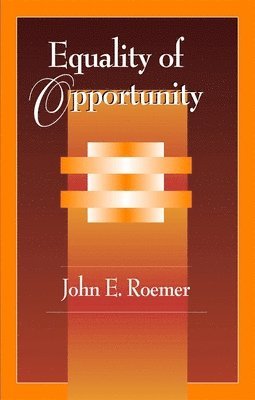
    Equality of Opportunity

    AvJohn E. Roemer

    Häftad, Engelska, 2000

    399 kr

    Beställningsvara. Skickas inom 10-15 vardagar. Fri frakt över 249 kr.

    Beskrivning

    John Roemer points out that there are two views of equality of opportunity that are widely held today. The first, which he calls the nondiscrimination principle, states that in the competition for positions in society, individuals should be judged only on attributes relevant to the performance of the duties of the position in question. Attributes such as race or sex should not be taken into account. The second states that society should do what it can to level the playing field among persons who compete for positions, especially during their formative years, so that all those who have the relevant potential attributes can be considered.Common to both positions is that at some point the principle of equal opportunity holds individuals accountable for achievements of particular objectives, whether they be education, employment, health, or income. Roemer argues that there is consequently a "before" and an "after" in the notion of equality of opportunity: before the competition starts, opportunities must be equalized, by social intervention if need be; but after it begins, individuals are on their own. The different views of equal opportunity should be judged according to where they place the starting gate which separates "before" from "after." Roemer works out in a precise way how to determine the location of the starting gate in the different views.

    Produktinformation

    • Utgivningsdatum:2000-10-16
    • Mått:156 x 235 x undefined mm
    • Vikt:181 g
    • Format:Häftad
    • Språk:Engelska
    • Antal sidor:128
    • Förlag:Harvard University Press
    • ISBN:9780674004221

    Utforska kategorier

    • Nationalekonomi inom Ekonomi och Ledarskap
    • Sociologi inom Samhälle och politik
    • Diskriminering och rättvisa inom Samhälle och politik

    Mer om författaren

    John E. Roemer is Elizabeth S. and A. Varick Stout Professor of Political Science and Economics at Yale University.

    Recensioner i media

    Roemer's combination of the techniques of economics and philosophy throws down a challenge to those in both disciplines. He believes he has sorted out equal opportunity, to leave us only with questions of personal responsibility and efficiency. A dash of political science may rein in what we can make of his account, but Equality of Opportunity is a very important work of metaphysical welfare economics.

    Innehållsförteckning

    • Preface Introduction Circumstances, Types, and Autonomous Choice Justifying the Proposal A Formal Definition of Equality of Opportunity Incentive Properties of the EOp Mechanism Equality of Opportunity with Production Equality of Opportunity for Welfare Equality of Opportunity for Health Education and Advantage Equal-Opportunity Unemployment Insurance The EOp Distribution of Educational Finance in the United States The Scope and Extent of Equal Opportunity To What Extent Should We Equalize Opportunities? Affirmative Action Concluding Remarks References Index