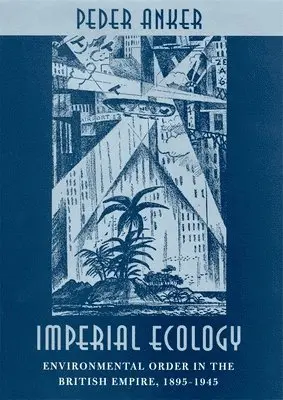
Inbunden, Engelska, 2002
Imperial Ecology
Environmental Order in the British Empire, 1895-1945
Av Peder Anker
976 kr
Beställningsvara. Skickas inom 10-15 vardagar. Fri frakt över 249 kr.
Beskrivning
From 1895 to the founding of the United Nations in 1945, the promising new science of ecology flourished in the British Empire. Peder Anker asks why ecology expanded so rapidly and how a handful of influential scientists and politicians established a tripartite ecology of nature, knowledge, and society.Patrons in the northern and southern extremes of the Empire, he argues, urgently needed tools for understanding environmental history as well as human relations to nature and society in order to set policies for the management of natural resources and to effect social control of natives and white settlement. Holists such as Jan Christian Smuts and mechanists such as Arthur George Tansley vied for the right to control and carry out ecological research throughout the British Empire and to lay a foundation of economic and social policy that extended from Spitsbergen to Cape Town.The enlargement of the field from botany to human ecology required a broader methodological base, and ecologists drew especially on psychology and economy. They incorporated those methodologies and created a new ecological order for environmental, economic, and social management of the Empire.
Produktinformation
- Utgivningsdatum: 2002-01-25
- Mått: 156 x 235 x 31 mm
- Vikt: 703 g
- Format: Inbunden
- Språk: Engelska
- Antal sidor: 352
- Förlag: Harvard University Press
- ISBN: 9780674005952
- Utmärkelser: Nominated for Morris D. Forkosch Prize 2002, Nominated for Pfizer Award 2002, Nominated for Abel Wolman Award 2002, Nominated for Rachel Carson Prize & Ludwik Fleck Prize 2003, Nominated for Pfizer Award 2004
Utforska kategorier
Recensioner i media
Anker has written a ruthlessly honest political and cultural history of ecology, setting it firmly in the world of nineteenth-century colonialism. Illusions vanish here: turn of the century ecology did not stand for a pure pacifism or an eden of natural harmony. Instead, we find that both the liberal mechanism of British ecologist Arthur George Tansley and the holistic ecology of South African statesman Jan Christian Smuts were both firmly built upon nationalism--and a nationalism that mattered a great deal, militarily, racially, and socially. This is important work and a riveting read.
Betyg & recensioner
0 recensioner
Inga recensioner tillgängliga.