• Fri frakt över 249 kr
  • •
  • Snabba leveranser
  • •
  • Billiga böcker
Kundservice

Du är på sajten för privatpersoner.

Företag, bibliotek eller offentlig verksamhet?

Du handlar på classic.bokus.com, där alla dina funktioner finns intakta.
Till classic.bokus.com
Bokus logotyp. Gå till startsidan.
  • Erbjudanden
  • Nyheter
  • Student
  • Topplistor
  • Barn & ungdom
  • Bokus Play
  • E-böcker
  • Pocketböcker
  • Spel & pussel

10% rabatt på allt med kod NYSTART10 →

Sidfot

Mina sidor

    Hjälp

    • Kundservice
    • Vanliga frågor och svar
    • Frakt och leverans
    • Retur vid ångerrätt
    • Reklamera vara
    • Betalning
    • Köpvillkor
    • Allmänna villkor
    • Information om webbplatsens tillgänglighet

    Om Bokus

    • Om oss
    • Pressrum
    • För studenter
    • För företag
    • För bibliotek och offentlig verksamhet
    • För leverantörer
    • Hållbarhet

    Populärt

    • Aktuella erbjudanden
    • Presentkort
    • Studentlitteratur
    • Nya böcker
    • Topplistor
    • Signerade böcker
    • Engelska böcker

    Inspiration

    • Boktips
    • BookTok
    • Populära bokserier
    • Barnbokskaraktärer
    • Populära författare
    Logotyp för Bokus
    Följ oss på Facebook (extern länk)Följ oss på Instagram (extern länk)Följ oss på YouTube (extern länk)Följ oss på TikTok (extern länk)
    bokus @ CookiesAnpassa cookiesIntegritetspolicyKöpvillkor
    Till Citymail hemsida (extern länk)Till Budbee hemsida (extern länk)Till Postnord hemsida (extern länk)Till Schenker hemsida (extern länk)Till Early Bird hemsida (extern länk)Till Walleys hemsida (extern länk)
    1. Samhälle och politik
    2. Samhälle och kultur
    3. Kultur och medier
    4. Kulturvetenskap

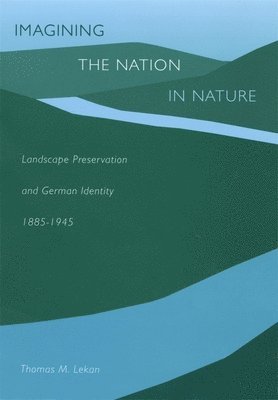
    Imagining the Nation in Nature

    Landscape Preservation and German Identity, 1885–1945

    AvThomas M. Lekan

    Inbunden, Engelska, 2004

    931 kr

    Beställningsvara. Skickas inom 10-15 vardagar. Fri frakt över 249 kr.

    Beskrivning

    One of the most powerful nationalist ideas in modern Europe is the assertion that there is a link between people and their landscape. Focusing on the heart of German romanticism, the Rhineland, Thomas Lekan examines nature protection activities from Wilhelmine Germany through the end of the Nazi era to illuminate the relationship between environmental reform and the cultural construction of national identity.In the late nineteenth century, anxieties about national character infused ecological concerns about industrialization, spurring landscape preservationists to protect the natural environment. In the Rhineland’s scenic rivers, forests, and natural landmarks, they saw Germany as a timeless and organic nation rather than a recently patchworked political construct. Landscape preservation also served conservative social ends during a period of rapid modernization, as outdoor pursuits were promoted to redirect class-conscious factory workers and unruly youth from “crass materialism” to the German homeland. Lekan’s examination of Nazi environmental policy challenges recent work on the “green” Nazis by showing that the Third Reich systematically subordinated environmental concerns to war mobilization and racial hygiene.This book is an original contribution not only to studies of national identity in modern Germany but also to the growing field of European environmental history.

    Produktinformation

    • Utgivningsdatum:2004-02-17
    • Mått:156 x 235 x 31 mm
    • Vikt:640 g
    • Format:Inbunden
    • Språk:Engelska
    • Antal sidor:342
    • Förlag:Harvard University Press
    • ISBN:9780674010703
    • Utmärkelser:Nominated for George L. Mosse Prize 2004

    Utforska kategorier

    • Kulturvetenskap inom Samhälle och politik
    • Europas historia inom Historia och arkeologi

    Mer om författaren

    Thomas M. Lekan is Associate Professor of History at the University of South Carolina.

    Recensioner i media

    One of the strengths of Thomas Lekan’s book on German landscape preservation movements is that it notes the country’s regional and historical diversity. It demonstrates as well the tension and conflicts regarding the racial and mystical approach to landscapes, which occurred even during the height of the Nazi era. No simple line of völkisch continuity, but a twisted road through complexity, is offered in this insightful text… The book challenges the viewpoint that German landscape preservationists were antimodern. It also undercuts claims about the origins of present environmental policies emerging during the Nazi era.

    Innehållsförteckning

    • Introduction 1. Nature's Homelands: The Origins of Landscape Preservation, 1885-1914 2. The Militarization of Nature and Heimat, 1914-1923 3. The Landscape of Modernity in theWeimar Era 4. From Landscape to Lebensraum: Race and Environment under Nazism 5. Constructing Nature in the Third Reich Conclusion Abbreviations Notes Sources Acknowledgments Index