• Fri frakt över 249 kr
  • •
  • Snabba leveranser
  • •
  • Billiga böcker
Kundservice

Du är på sajten för privatpersoner.

Företag, bibliotek eller offentlig verksamhet?

Du handlar på classic.bokus.com, där alla dina funktioner finns intakta.
Till classic.bokus.com
Bokus logotyp. Gå till startsidan.
  • Erbjudanden
  • Nyheter
  • Student
  • Topplistor
  • Barn & ungdom
  • Bokus Play
  • E-böcker
  • Pocketböcker
  • Spel & pussel

10% rabatt på allt med kod: NYSTART10 →

Sidfot

Mina sidor

    Hjälp

    • Kundservice
    • Vanliga frågor och svar
    • Frakt och leverans
    • Retur vid ångerrätt
    • Reklamera vara
    • Betalning
    • Köpvillkor
    • Allmänna villkor
    • Information om webbplatsens tillgänglighet

    Om Bokus

    • Om oss
    • Pressrum
    • För studenter
    • För företag
    • För bibliotek och offentlig verksamhet
    • För leverantörer
    • Hållbarhet

    Populärt

    • Aktuella erbjudanden
    • Presentkort
    • Studentlitteratur
    • Nya böcker
    • Topplistor
    • Signerade böcker
    • Engelska böcker

    Inspiration

    • Boktips
    • BookTok
    • Populära bokserier
    • Barnbokskaraktärer
    • Populära författare
    Logotyp för Bokus
    Följ oss på Facebook (extern länk)Följ oss på Instagram (extern länk)Följ oss på YouTube (extern länk)Följ oss på TikTok (extern länk)
    bokus @ CookiesAnpassa cookiesIntegritetspolicyKöpvillkor
    Till Citymail hemsida (extern länk)Till Budbee hemsida (extern länk)Till Postnord hemsida (extern länk)Till Schenker hemsida (extern länk)Till Early Bird hemsida (extern länk)Till Walleys hemsida (extern länk)
    1. Samhälle och politik
    2. Politik och statsskick
    3. Statsskick och politiska processer
    4. Konstitution: stat och regering

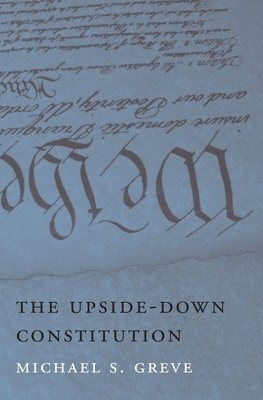
    Upside-Down Constitution

    AvMichael S. Greve

    Inbunden, Engelska, 2012

    792 kr

    Beställningsvara. Skickas inom 10-15 vardagar. Fri frakt över 249 kr.

    Beskrivning

    Over the course of the nation’s history, the Constitution has been turned upside-down, Michael Greve argues in this provocative book. The Constitution’s vision of a federalism in which local, state, and federal government compete to satisfy the preferences of individuals has given way to a cooperative, cartelized federalism that enables interest groups to leverage power at every level for their own benefit. Greve traces this inversion from the Constitution’s founding through today, dispelling much received wisdom along the way.The Upside-Down Constitution shows how federalism’s transformation was a response to states’ demands, not an imposition on them. From the nineteenth-century judicial elaboration of a competitive federal order, to the New Deal transformation, to the contemporary Supreme Court’s impoverished understanding of constitutional structure, and the “devolution” in vogue today, Greve describes a trend that will lead to more government and fiscal profligacy, not less. Taking aim at both the progressive heirs of the New Deal and the vocal originalists of our own time, The Upside-Down Constitution explains why the current fiscal crisis will soon compel a fundamental renegotiation of a new federalism grounded in constitutional principles.

    Produktinformation

    • Utgivningsdatum:2012-02-29
    • Mått:156 x 235 x 39 mm
    • Vikt:953 g
    • Format:Inbunden
    • Språk:Engelska
    • Antal sidor:528
    • Förlag:Harvard University Press
    • ISBN:9780674061910
    • Utmärkelser:Nominated for C. Herman Pritchett Award 2013

    Utforska kategorier

    • Konstitution: stat och regering inom Samhälle och politik
    • Amerikas historia inom Historia och arkeologi
    • Juridik: metod och teori inom Juridik

    Mer om författaren

    Michael S. Greve is the John G. Searle Scholar at the American Enterprise Institute for Public Policy Research.

    Recensioner i media

    Michael Greve has written the best book on American federalism in years. One need not agree with his general argument in order to find constant stimulation and illumination in every chapter. No one interested in American constitutional development (and its future) can afford to ignore this book.