• Fri frakt över 249 kr
  • •
  • Snabba leveranser
  • •
  • Billiga böcker
Kundservice

Du är på sajten för privatpersoner.

Företag, bibliotek eller offentlig verksamhet?

Du handlar på classic.bokus.com, där alla dina funktioner finns intakta.
Till classic.bokus.com
Bokus logotyp. Gå till startsidan.
  • Erbjudanden
  • Nyheter
  • Student
  • Topplistor
  • Barn & ungdom
  • Bokus Play
  • E-böcker
  • Pocketböcker
  • Spel & pussel

10% rabatt på allt med kod: NYSTART10 →

Sidfot

Mina sidor

    Hjälp

    • Kundservice
    • Vanliga frågor och svar
    • Frakt och leverans
    • Retur vid ångerrätt
    • Reklamera vara
    • Betalning
    • Köpvillkor
    • Allmänna villkor
    • Information om webbplatsens tillgänglighet

    Om Bokus

    • Om oss
    • Pressrum
    • För studenter
    • För företag
    • För bibliotek och offentlig verksamhet
    • För leverantörer
    • Hållbarhet

    Populärt

    • Aktuella erbjudanden
    • Presentkort
    • Studentlitteratur
    • Nya böcker
    • Topplistor
    • Signerade böcker
    • Engelska böcker

    Inspiration

    • Boktips
    • BookTok
    • Populära bokserier
    • Barnbokskaraktärer
    • Populära författare
    Logotyp för Bokus
    Följ oss på Facebook (extern länk)Följ oss på Instagram (extern länk)Följ oss på YouTube (extern länk)Följ oss på TikTok (extern länk)
    bokus @ CookiesAnpassa cookiesIntegritetspolicyKöpvillkor
    Till Citymail hemsida (extern länk)Till Budbee hemsida (extern länk)Till Postnord hemsida (extern länk)Till Schenker hemsida (extern länk)Till Early Bird hemsida (extern länk)Till Walleys hemsida (extern länk)
    1. Ekonomi och Ledarskap
    2. Nationalekonomi
    3. Ekonomisk politik

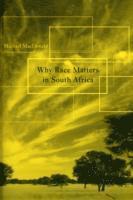
    Why Race Matters in South Africa

    AvMichael MacDonald

    Häftad, Engelska, 2012

    309 kr

    Beställningsvara. Skickas inom 10-15 vardagar. Fri frakt över 249 kr.

    Beskrivning

    This book tells the story of how the transition to democracy in South Africa enfranchised blacks politically but without raising most of them from poverty. It shows in detail how the continuing strength of the white establishment forces the leaders of the African National Congress (ANC) to compromise plans for full political and economic transformation. Deferring the economic transformation, the new dispensation nurtures a small black elite. The new elite absorbs the economic interests of the established white elites while continuing to share racial identities with the majority of their countrymen, muffling the divisions between rich whites and poor blacks, thus ensuring political stability in the new South Africa.Although democratic South Africa is officially "non-racial," the book shows that racial solidarities continue to play a role in the country's political economy. Ironically, racial identities, which ultimately proved the undoing of apartheid, have come to the rescue of contemporary democratic capitalism. The author explains how and why racial solidarities are being revamped, focusing particularly on the role of black economic empowerment, the black bourgeoisie, and how calls to represent the identities of black South Africans are having the effect of substituting the racial interests of black elites for the economic interests of the black poor.

    Produktinformation

    • Utgivningsdatum:2012-03-05
    • Mått:156 x 235 x 17 mm
    • Vikt:444 g
    • Format:Häftad
    • Språk:Engelska
    • Antal sidor:256
    • Förlag:Harvard University Press
    • ISBN:9780674063891
    • Utmärkelser:Nominated for Woodrow Wilson Foundation Award 2007

    Utforska kategorier

    • Ekonomisk politik inom Ekonomi och Ledarskap
    • Etnicitet inom Samhälle och politik
    • Sociala och etiska frågor inom Samhälle och politik

    Mer om författaren

    Michael MacDonald is Frederick L. Schuman Professor of International Relations at Williams College.

    Recensioner i media

    Why Race Matters is an exposure of the intimate link between racialism and political economic power, how in Neville Alexander’s words, a nonracial capitalism is impossible, as it is also a devastating critique of the limitations of liberal non-racialism, conceived as the ‘representation of identities.’ But it is also, for political theorists, a paradigmatic case study of a future perfect (not subjunctive) politics of the impossible, an empirical enactment of a non-racialism to come.

    Innehållsförteckning

    • Acknowledgments Introduction 1. The Logic of White Supremacy 2. The Mother of Identity Politics 3. The White Man's Burden 4. The Politics of the Political Economy 5. Dodging the Apocalypse: The Power Politics of the Transition to Democracy 6. Non-Racialism as an Ideology 7. The Political Economy of Identity Politics 8. The Who, not the What 9. Conclusion Notes Bibliography Index