• Fri frakt över 249 kr
  • •
  • Snabba leveranser
  • •
  • Billiga böcker
Kundservice

Du är på sajten för privatpersoner.

Företag, bibliotek eller offentlig verksamhet?

Du handlar på classic.bokus.com, där alla dina funktioner finns intakta.
Till classic.bokus.com
Bokus logotyp. Gå till startsidan.
  • Erbjudanden
  • Nyheter
  • Student
  • Topplistor
  • Barn & ungdom
  • Bokus Play
  • E-böcker
  • Pocketböcker
  • Spel & pussel

10% rabatt på allt med kod: NYSTART10 →

Sidfot

Mina sidor

    Hjälp

    • Kundservice
    • Vanliga frågor och svar
    • Frakt och leverans
    • Retur vid ångerrätt
    • Reklamera vara
    • Betalning
    • Köpvillkor
    • Allmänna villkor
    • Information om webbplatsens tillgänglighet

    Om Bokus

    • Om oss
    • Pressrum
    • För studenter
    • För företag
    • För bibliotek och offentlig verksamhet
    • För leverantörer
    • Hållbarhet

    Populärt

    • Aktuella erbjudanden
    • Presentkort
    • Studentlitteratur
    • Nya böcker
    • Topplistor
    • Signerade böcker
    • Engelska böcker

    Inspiration

    • Boktips
    • BookTok
    • Populära bokserier
    • Barnbokskaraktärer
    • Populära författare
    Logotyp för Bokus
    Följ oss på Facebook (extern länk)Följ oss på Instagram (extern länk)Följ oss på YouTube (extern länk)Följ oss på TikTok (extern länk)
    bokus @ CookiesAnpassa cookiesIntegritetspolicyKöpvillkor
    Till Citymail hemsida (extern länk)Till Budbee hemsida (extern länk)Till Postnord hemsida (extern länk)Till Schenker hemsida (extern länk)Till Early Bird hemsida (extern länk)Till Walleys hemsida (extern länk)
    1. Historia och arkeologi
    2. Historia
    3. Europas historia

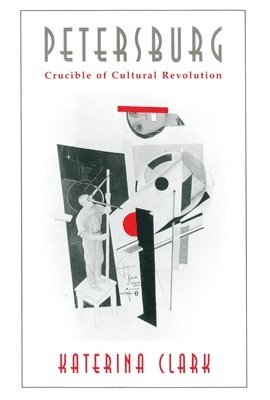
    Petersburg

    Crucible of Cultural Revolution

    AvKaterina Clark

    Häftad, Engelska, 1998

    399 kr

    Beställningsvara. Skickas inom 10-15 vardagar. Fri frakt över 249 kr.

    Beskrivning

    One of the most creative periods of Russian culture and the most energized period of the Revolution coincided in the fateful years 1913–1931. During this time both the Party and the intellectuals of Petersburg strove to transform backward Russia into a nation so advanced it would shine like a beacon for the rest of the world. Yet the end result was the Stalinist culture of the 1930s with its infamous purges.In this new book, Katerina Clark does not attempt to account for such a devolution by looking at the broad political arena. Rather, she follows the quest of intellectuals through these years to embody the Revolution, a focus that casts new light on the formation of Stalinism. This revisionist work takes issue with many existing cultural histories by resisting the temptation to structure its narrative as a saga of the oppressive regime versus the benighted intellectuals. In contrast, Clark focuses on the complex negotiations between the extraordinary environment of a revolution, the utopian striving of both politicians and intellectuals, the local culture system, and that broader environment, the arena of contemporary European and American culture. In doing so, the author provides a case study in the ecology of cultural revolution, viewed through the prism of Petersburg, which on the eve of the Revolution was one of the cultural capitals of Europe. Petersburg today is in the national imagination of modern Russia, a symbol of Westernization and radical change.

    Produktinformation

    • Utgivningsdatum:1998-01-20
    • Mått:162 x 235 x 24 mm
    • Vikt:513 g
    • Format:Häftad
    • Språk:Engelska
    • Antal sidor:377
    • Förlag:Harvard University Press
    • ISBN:9780674663367
    • Utmärkelser:Joint winner of Wayne S. Vucinich Book Prize 1996

    Utforska kategorier

    • Europas historia inom Historia och arkeologi
    • Politisk aktivism inom Samhälle och politik
    • Marxism och kommunism inom Samhälle och politik

    Mer om författaren

    Katerina Clark was B. E. Bensinger Professor of Comparative Literature and of Slavic Languages and Literatures at Yale University. Her books include Eurasia without Borders; Moscow, the Fourth Rome; Petersburg: Crucible of Cultural Revolution; and, with Michael Holquist, Mikhail Bakhtin.

    Recensioner i media

    [Clark argues that] the cultural atmosphere that evolved in the Soviet Union during the 1920s and made the Great Terror of the late 1930s possible was actually created by the idealistic intellectuals and artists themselves… In developing this revisionist argument, Ms. Clark forces us to rethink the relationship of a totalitarian government to its subjects. She makes us ask the same question now being raised in Germany in connection with the 50th anniversary of the end of World War II: Who were the real victims and who were the real perpetrators?… In the course of her Herculean labors, she has sifted through piles of archival material, consulted all the leading authorities, viewed scores of films, read hundreds of novels and mastered a dazzling array of historical, theatrical, linguistic, and literary theories. What she has produced is a major contribution to the cultural history of this seminal period.

    Innehållsförteckning

    • Preface Introduction: The Ecology of Revolution Revolution as Revelation: The Avant-Garde Imperial Petersburg, 1913 Masquerade Theater and Revolution in the New Republic Petrograd: Ritual Capital of Revolutionary Russia NEP and the "Art of Capitulation" Revolutionary Culture Meets the Jazz Age The Establishment of Soviet Culture Promethean Linguistics Straight Talk and the Campaign against Wagner The Sacralization of Everyday Life The Ultimate Cultural Revolution Epilogue: The Thirties Abbreviations Notes Acknowledgments Index