• Fri frakt över 249 kr
  • •
  • Snabba leveranser
  • •
  • Billiga böcker
Kundservice

Du är på sajten för privatpersoner.

Företag, bibliotek eller offentlig verksamhet?

Du handlar på classic.bokus.com, där alla dina funktioner finns intakta.
Till classic.bokus.com
Bokus logotyp. Gå till startsidan.
  • Erbjudanden
  • Nyheter
  • Student
  • Topplistor
  • Barn & ungdom
  • Bokus Play
  • E-böcker
  • Pocketböcker
  • Spel & pussel

10% rabatt på allt med kod NYSTART10 →

Sidfot

Mina sidor

    Hjälp

    • Kundservice
    • Vanliga frågor och svar
    • Frakt och leverans
    • Retur vid ångerrätt
    • Reklamera vara
    • Betalning
    • Köpvillkor
    • Allmänna villkor
    • Information om webbplatsens tillgänglighet

    Om Bokus

    • Om oss
    • Pressrum
    • För studenter
    • För företag
    • För bibliotek och offentlig verksamhet
    • För leverantörer
    • Hållbarhet

    Populärt

    • Aktuella erbjudanden
    • Presentkort
    • Studentlitteratur
    • Nya böcker
    • Topplistor
    • Signerade böcker
    • Engelska böcker

    Inspiration

    • Boktips
    • BookTok
    • Populära bokserier
    • Barnbokskaraktärer
    • Populära författare
    Logotyp för Bokus
    Följ oss på Facebook (extern länk)Följ oss på Instagram (extern länk)Följ oss på YouTube (extern länk)Följ oss på TikTok (extern länk)
    bokus @ CookiesAnpassa cookiesIntegritetspolicyKöpvillkor
    Till Citymail hemsida (extern länk)Till Budbee hemsida (extern länk)Till Postnord hemsida (extern länk)Till Schenker hemsida (extern länk)Till Early Bird hemsida (extern länk)Till Walleys hemsida (extern länk)
    1. Historia och arkeologi
    2. Historia
    3. Historia: särskilda händelser och ämnen
    4. Socialhistoria och kulturhistoria

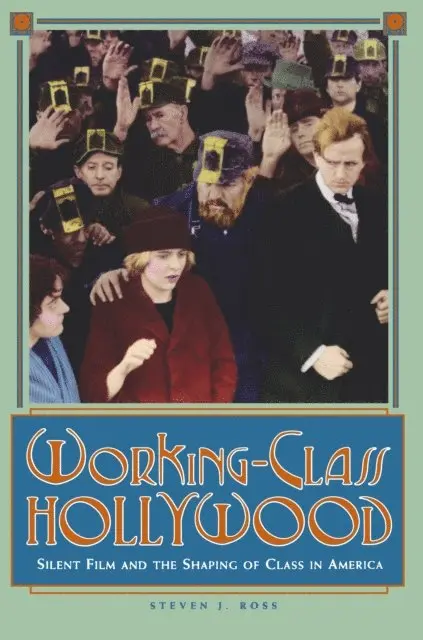
    Working-Class Hollywood

    Silent Film and the Shaping of Class in America

    AvSteven J. Ross

    Häftad, Engelska, 2000

    493 kr

    Beställningsvara. Skickas inom 5-8 vardagar. Fri frakt över 249 kr.

    Fler format och utgåvor

    E-bok

    704 kr

    Beskrivning

    This path-breaking book reveals how Hollywood became "Hollywood" and what that meant for the politics of America and American film. Working-Class Hollywood tells the story of filmmaking in the first three decades of the twentieth century, a time when going to the movies could transform lives and when the cinema was a battleground for control of American consciousness. Steven Ross documents the rise of a working-class film movement that challenged the dominant political ideas of the day. Between 1907 and 1930, worker filmmakers repeatedly clashed with censors, movie industry leaders, and federal agencies over the kinds of images and subjects audiences would be allowed to see. The outcome of these battles was critical to our own times, for the victors got to shape the meaning of class in twentieth- century America. Surveying several hundred movies made by or about working men and women, Ross shows how filmmakers were far more concerned with class conflict during the silent era than at any subsequent time. Directors like Charlie Chaplin, D. W. Griffith, and William de Mille made movies that defended working people and chastised their enemies.Worker filmmakers went a step further and produced movies from A Martyr to His Cause (1911) to The Gastonia Textile Strike (1929) that depicted a unified working class using strikes, unions, and socialism to transform a nation. J. Edgar Hoover considered these class-conscious productions so dangerous that he assigned secret agents to spy on worker filmmakers. Liberal and radical films declined in the 1920s as an emerging Hollywood studio system, pressured by censors and Wall Street investors, pushed American film in increasingly conservative directions. Appealing to people's dreams of luxury and upward mobility, studios produced lavish fantasy films that shifted popular attention away from the problems of the workplace and toward the pleasures of the new consumer society. While worker filmmakers were trying to heighten class consciousness, Hollywood producers were suggesting that class no longer mattered. Working-Class Hollywood shows how silent films helped shape the modern belief that we are a classless nation.


    Produktinformation

    • Utgivningsdatum:2000-01-03
    • Mått:197 x 254 x 25 mm
    • Vikt:522 g
    • Format:Häftad
    • Språk:Engelska
    • Antal sidor:392
    • Förlag:Princeton University Press
    • ISBN:9780691024646
    • Utmärkelser:Short-listed for Theatre Library Association Award 1999

    Utforska kategorier

    • Socialhistoria och kulturhistoria inom Historia och arkeologi
    • Sociala grupper och identitet inom Samhälle och politik
    • Media och underhållning inom Ekonomi och Ledarskap

    Mer om författaren

    Steven J. Ross is Professor of History at the University of Southern California, where he teaches courses in American Social History and popular culture. He is the author of Workers on the Edge: Work, Leisure, and Politics in Industrializing Cincinnati, 1788-1890, and has published numerous articles on film history, labor history, and social history.

    Recensioner i media

    Winner of the 1999 Book Award, Theatre Library Association One of Los Angeles Times's Best Nonfiction Books for 1998 "One of the satisfactions in reading Working-Class Hollywood is that the author is as happily polemical as his subjects and not afraid to take sides. This gives his impressively researched and annotated book a scrappy, personal tone that is refreshing to find in a work of such academic weight."--Los Angeles Times "A breakthrough volume in terms of American film history."--Vancouver Sun "A rigorously researched and refreshingly accessible book."--The Nation "Working-Class Hollywood is ... a meticulous and beautifully accomplished re-creation of the lost world of labor and radical films... No one reading this masterly new study can look at nearly a century of movie making in quite the same way again."--Journal of American History "Working-class Hollywood, Steven J. Ross has gone a long way to show, is an oxymoron. Ross has uncovered a lively scene of decentralized, diversified production in the early motion picture business."--Michael Rogin, American Historical Review "A vividly written chronicle of multi-faceted struggles over the meaning of class in American life as they took shape in silent film... By analyzing the range of perspectives on class in early feature films, Ross provides a nuanced picture of the ways class issues and class relations were defined for movie audiences... [A] rich, well-researched monograph ... [and a] provocative and informative book."--Kathryn J. Oberdeck, Reviews in American History "An impassioned celebration of a movement that depicted social issues at the birth of the big screen... A valuable addition to cinema history... "--Kirkus Review "Steeped in labor and class history, sweetened by a perceptive moviegoer's parsing of onscreen images, Working-Class Hollywood is a fascinating study of how movies make us."--Washington Post Book World "Steven J. Ross spent a decade laboring on Working-Class Hollywood, and it shows on every page. It is a phenomenally well-researched study ... And yet is highly readable, without a hint of droning pedantry."--Ben Singer, Modernism/Modernity "Steven J. Ross has an important story to tell, and he tells it with great passion and conviction."--Peter Kramer, Labour History Review

    Innehållsförteckning

    • List of IllustrationsPrefaceAcknowledgmentsPt. IThe Rise of the Movies: Political Filmmaking and the Working Class1Introduction31Going to the Movies: Leisure, Class, and Danger in the Early Twentieth Century112Visualizing the Working Class: Cinema and Politics before Hollywood343The Good, the Bad, and the Violent: Class Conflict and the Labor-Capital Genre564Making a Pleasure of Agitation: The Rise of the Worker Film Movement86Pt. IIThe Rise of Hollywood: From Working Class to Middle Class1135When Russia Invaded America: Hollywood, War, and the Movies1156Struggles for the Screen: The Revival of the Worker Film Movement1437Fantasy and Politics: Moviegoing and Movies in the 1920s1738Lights Out: The Decline of Labor Filmmaking and the Triumph of Hollywood212Epilogue: The Movies Talk But What Do They Say?240Select Filmography259Sources and Methods for Writing Film History263Abbreviations277Notes279Index353