• Fri frakt över 249 kr
  • •
  • Snabba leveranser
  • •
  • Billiga böcker
Kundservice

Du är på sajten för privatpersoner.

Företag, bibliotek eller offentlig verksamhet?

Du handlar på classic.bokus.com, där alla dina funktioner finns intakta.
Till classic.bokus.com
Bokus logotyp. Gå till startsidan.
  • Erbjudanden
  • Nyheter
  • Student
  • Topplistor
  • Barn & ungdom
  • Bokus Play
  • E-böcker
  • Pocketböcker
  • Spel & pussel

10% rabatt på allt med kod: NYSTART10 →

Sidfot

Mina sidor

    Hjälp

    • Kundservice
    • Vanliga frågor och svar
    • Frakt och leverans
    • Retur vid ångerrätt
    • Reklamera vara
    • Betalning
    • Köpvillkor
    • Allmänna villkor
    • Information om webbplatsens tillgänglighet

    Om Bokus

    • Om oss
    • Pressrum
    • För studenter
    • För företag
    • För bibliotek och offentlig verksamhet
    • För leverantörer
    • Hållbarhet

    Populärt

    • Aktuella erbjudanden
    • Presentkort
    • Studentlitteratur
    • Nya böcker
    • Topplistor
    • Signerade böcker
    • Engelska böcker

    Inspiration

    • Boktips
    • BookTok
    • Populära bokserier
    • Barnbokskaraktärer
    • Populära författare
    Logotyp för Bokus
    Följ oss på Facebook (extern länk)Följ oss på Instagram (extern länk)Följ oss på YouTube (extern länk)Följ oss på TikTok (extern länk)
    bokus @ CookiesAnpassa cookiesIntegritetspolicyKöpvillkor
    Till Citymail hemsida (extern länk)Till Budbee hemsida (extern länk)Till Postnord hemsida (extern länk)Till Schenker hemsida (extern länk)Till Early Bird hemsida (extern länk)Till Walleys hemsida (extern länk)
    1. Naturvetenskap och teknik
    2. Matematik och naturvetenskap
    3. Biologi
    4. Biovetenskap

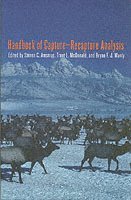
    Handbook of Capture-Recapture Analysis

    AvSteven C. Amstrup,Trent L. McDonald

    Häftad, Engelska, 2005

    905 kr

    Beställningsvara. Skickas inom 5-8 vardagar. Fri frakt över 249 kr.

    Beskrivning

    Every day, biologists in parkas, raincoats, and rubber boots go into the field to capture and mark a variety of animal species. Back in the office, statisticians create analytical models for the field biologists' data. But many times, representatives of the two professions do not fully understand one another's roles. This book bridges this gap by helping biologists understand state-of-the-art statistical methods for analyzing capture-recapture data. In so doing, statisticians will also become more familiar with the design of field studies and with the real-life issues facing biologists. Reliable outcomes of capture-recapture studies are vital to answering key ecological questions. Is the population increasing or decreasing? Do more or fewer animals have a particular characteristic? In answering these questions, biologists cannot hope to capture and mark entire populations. And frequently, the populations change unpredictably during a study. Thus, increasingly sophisticated models have been employed to convert data into answers to ecological questions.This book, by experts in capture-recapture analysis, introduces the most up-to-date methods for data analysis while explaining the theory behind those methods. Thorough, concise, and portable, it will be immensely useful to biologists, biometricians, and statisticians, students in both fields, and anyone else engaged in the capture-recapture process.

    Produktinformation

    • Utgivningsdatum:2005-11-20
    • Mått:152 x 235 x 20 mm
    • Vikt:458 g
    • Format:Häftad
    • Språk:Engelska
    • Antal sidor:336
    • Förlag:Princeton University Press
    • ISBN:9780691089683
    • Utmärkelser:Winner of TWS Wildlife Publication Awards: Editorship 2007

    Utforska kategorier

    • Biovetenskap inom Naturvetenskap och teknik

    Mer om författaren

    Steven C. Amstrup researches bears and their ecosystems. His interests include distribution and movement patterns as well as wildlife population dynamics. Trent L. McDonald is a statistician and project manager with Western EcoSystems Technology, Inc. and Adjunct Professor of Statistics at the University of Wyoming. Bryan F. J. Manly is the author of several books on the statistics of natural selection, multivariate analysis, resource selection by animals, research study designs, computer-intensive statistics, and environmental statistics.

    Recensioner i media

    Winner of the 2007 Wildlife Publications Award in the Outstanding Edited Book Category, The Wildlife Society "This is a good book for anyone with a basic understanding of capture-recapture models who wants to develop their knowledge and apply these techniques to their own data. Exactly what a handbook should be!"--Laura Cowen, Quarterly Review of Biology "The editors have done an admirable job in trying to make complex capture-recapture models accessible to a greater range of field-based ecologists."--David Wilson, Austral Ecology "The capture, tagging, and subsequent recapture of animals, birds, and fish is the field biologists most important tool for enumerating and quantifying the status of wild populations. This mark-recapture data must be subjected to sophisticated statistical analyses back in the office, and there can be a disconnect between those who do the field work and those who do the analyses. This text, written by authors with expertise in the field and in the office, successfully bridges that gap. This handbook will be immediately useful to ecologists, biologists, and statisticians."--Northeastern Naturalist

    Innehållsförteckning

    • List of Illustrations ix List of Tables xi Preface xvii Chapter One: Introduction to the Handbook by Bryan F. J. Manly, Trent L. McDonald, and Steven C. Amstrup 1 1.1 Introduction 1 1.2 Overview of chapters 2 to 8 3 1.3 Maximum Likelihood with Capture-Recapture Methods 9 1.4 Model Selection Procedures 17 1.5 Notation 19 Chapter Two: Classical Closed-population Capture-Recapture Models by Anne Chao and Richard M. Huggins 22 2.1 Introduction 22 2.2 Structure of Capture-Recapture Experiments and Data 23 2.3 Early Models and Estimators 26 2.4 Limitations of Early Models and the Motivation for More General Models 34 2.5 Chapter Summary 35 Chapter Three: Classical Open-population Capture-Recapture Models by Kenneth H. Pollock and Russell Alpizar-Jara 36 3.1 Introduction 36 3.2 The Original Jolly-Seber Model 38 3.3 The Jolly-Seber Likelihood Components 44 3.4 Restrictions and Generalizations of the Jolly-Seber Model 45 3.5 Age-dependent Models 46 3.6 Goodness-of-Fit and Model Selection Issues 47 3.7 Examples 48 3.8 Conclusions 55 3.9 Chapter Summary 55 Chapter Four: Modern Closed-population Capture-Recapture Models by Anne Chao and Richard M. Huggins 58 4.1 Introduction 58 4.2 Discrete-time Models with Unequal Catchabilities 58 4.3 Continuous-time Models 78 4.4 Computing Considerations 85 4.5 Chapter Summary 86 Chapter Five: Modern Open-population Capture-Recapture Models by James D. Nichols 88 5.1 Introduction 88 5.2 Conditional Single-age Models 89 5.3 Conditional Multiple-age Models 102 5.4 Reverse-time Models 107 5.5 Unconditional Models 109 5.6 The Robust Design 116 5.7 Discussion 120 5.8 Chapter Summary 121 Chapter Six: Tag-recovery Models by John M. Hoenig, Kenneth H. Pollock, and William Hearn 124 6.1 Introduction 124 6.2 Assumptions of Brownie Models 128 6.3 Interpretation of the Tag-recovery Rate Parameter 128 6.4 Functional Linkage Between the Exploitation Rate and the Survival Rate 131 6.5 Instantaneous Rate Models for Estimating Harvest and Natural Mortality 131 6.6 Diagnostics and Tests of Assumptions 132 6.7 Preventing and Dealing with Failures of Assumptions 134 6.8 Chapter Summary 140 Chapter Seven: Joint Modeling of Tag-recovery and Live-resighting Data by Richard J. Barker 142 7.1 Introduction 142 7.2 Data Structure 144 7.3 Simple Models 145 7.4 More General Models 156 7.5 Model Fitting and Assessment 157 7.6 Tag Misreads and Tag Loss 161 7.7 Computing Considerations 161 7.8 Chapter Summary 163 Chapter Eight: Multistate Models by Carl J. Schwarz 165 8.1 Introduction 165 8.2 The Arnason-Schwarz Model 166 8.3 The Jolly-Seber Approach 177 8.4 Multisample Stratified Closed Populations 187 8.5 Multisample Stratified Open Populations 192 8.6 Chapter Summary 194 Chapter Nine: Examples by Trent L. McDonald, Steven C. Amstrup, Eric V. Regehr, and Bryan F. J. Manly 194 9.1 Introduction 196 9.2 Open-population Analyses of Data on the European Dipper 198 9.3 The Huggins Closed-population Model Applied to the European Dipper Data 231 9.4 Assessing Goodness-of-Fit 236 9.5 Horvitz-Thompson Open-population Size Estimates 241 9.6 A Multistate (Multistrata) Model 245 9.7 Polar Bears in the Southern Beaufort Sea 247 9.8 Dead Recoveries of Mallard Ducks 254 9.9 Chapter Summary 263 Chapter Ten: Capture-Recapture Methods in Practice by Bryan F. J. Manly, Steven C. Amstrup, and Trent L. McDonald 266 10.1 Introduction 266 10.2 Closed-population Models 266 10.3 Open-population Models 267 10.4 Tag-recovery Models 269 10.5 Other Models 270 10.6 Model Selection 271 10.7 Known Ages 272 Appendix 275 A.1 Capability Matrix for Common Capture-Recapture Software Packages 275 A.2 General and Contact Information for Common Capture-Recapture Software Packages Listed in Table A.1 277 References 281 Contributor's Notes 301 Index 303