• Fri frakt över 249 kr
  • •
  • Snabba leveranser
  • •
  • Billiga böcker
Kundservice

Du är på sajten för privatpersoner.

Företag, bibliotek eller offentlig verksamhet?

Du handlar på classic.bokus.com, där alla dina funktioner finns intakta.
Till classic.bokus.com
Bokus logotyp. Gå till startsidan.
  • Erbjudanden
  • Nyheter
  • Student
  • Topplistor
  • Barn & ungdom
  • Bokus Play
  • E-böcker
  • Pocketböcker
  • Spel & pussel

10% studentrabatt med kod TERM26

Sidfot

Mina sidor

    Hjälp

    • Kundservice
    • Vanliga frågor och svar
    • Frakt och leverans
    • Retur vid ångerrätt
    • Reklamera vara
    • Betalning
    • Köpvillkor
    • Allmänna villkor
    • Information om webbplatsens tillgänglighet

    Om Bokus

    • Om oss
    • Pressrum
    • För studenter
    • För företag
    • För bibliotek och offentlig verksamhet
    • För leverantörer
    • Hållbarhet

    Populärt

    • Aktuella erbjudanden
    • Presentkort
    • Studentlitteratur
    • Nya böcker
    • Topplistor
    • Signerade böcker
    • Engelska böcker

    Inspiration

    • Boktips
    • BookTok
    • Populära bokserier
    • Barnbokskaraktärer
    • Populära författare
    Logotyp för Bokus
    Följ oss på Facebook (extern länk)Följ oss på Instagram (extern länk)Följ oss på YouTube (extern länk)Följ oss på TikTok (extern länk)
    bokus @ CookiesAnpassa cookiesIntegritetspolicyKöpvillkor
    Till Citymail hemsida (extern länk)Till Budbee hemsida (extern länk)Till Postnord hemsida (extern länk)Till Schenker hemsida (extern länk)Till Early Bird hemsida (extern länk)Till Walleys hemsida (extern länk)
    1. Naturvetenskap och teknik
    2. Matematik och naturvetenskap
    3. Biologi

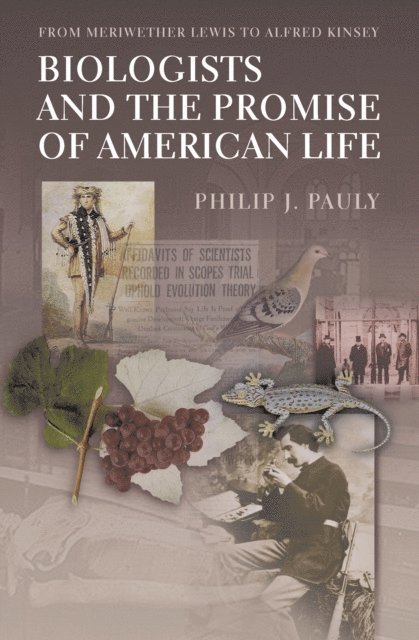
    Biologists and the Promise of American Life

    From Meriwether Lewis to Alfred Kinsey

    AvPhilip J. Pauly

    Häftad, Engelska, 2002

    440 kr

    Beställningsvara. Skickas inom 5-8 vardagar. Fri frakt över 249 kr.

    Fler format och utgåvor

    E-bok

    622 kr

    Beskrivning

    Explorers, evolutionists, eugenicists, sexologists, and high school biology teachers--all have contributed to the prominence of the biological sciences in American life. In this book, Philip Pauly weaves their stories together into a fascinating history of biology in America over the last two hundred years. Beginning with the return of the Lewis and Clark expedition in 1806, botanists and zoologists identified science with national culture, linking their work to continental imperialism and the creation of an industrial republic. Pauly examines this nineteenth-century movement in local scientific communities with national reach: the partnership of Asa Gray and Louis Agassiz at Harvard University, the excitement of work at the Smithsonian Institution and the Geological Survey, and disputes at the Agriculture Department over the continent's future. He then describes the establishment of biology as an academic discipline in the late nineteenth century, and the retreat of life scientists from the problems of American nature. The early twentieth century, however, witnessed a new burst of public-oriented activity among biologists.Here Pauly chronicles such topics as the introduction of biology into high school curricula, the efforts of eugenicists to alter the "breeding" of Americans, and the influence of sexual biology on Americans' most private lives. Throughout much of American history, Pauly argues, life scientists linked their study of nature with a desire to culture--to use intelligence and craft to improve American plants, animals, and humans. They often disagreed and frequently overreached, but they sought to build a nation whose people would be prosperous, humane, secular, and liberal. Life scientists were significant participants in efforts to realize what Progressive Era oracle Herbert Croly called "the promise of American life." Pauly tells their story in its entirety and explains why now, in a society that is rapidly returning to a complex ethnic mix similar to the one that existed for a hundred years prior to the Cold War, it is important to reconnect with the progressive creators of American secular culture.

    Produktinformation

    • Utgivningsdatum:2002-03-17
    • Mått:152 x 235 x 21 mm
    • Vikt:481 g
    • Format:Häftad
    • Språk:Engelska
    • Antal sidor:336
    • Förlag:Princeton University Press
    • ISBN:9780691092867

    Utforska kategorier

    • Biologi inom Naturvetenskap och teknik
    • Naturvetenskapens filosofi inom Naturvetenskap och teknik
    • Naturvetenskapens historia inom Naturvetenskap och teknik

    Mer om författaren

    Philip J. Pauly is Professor of History at Rutgers University. He is the author of Controlling Life: Jacques Loeb and the Engineering Ideal in Biology.

    Recensioner i media

    "A tantalizing and ambitious study that places American biologists squarely in the middle of national, social political, and economic development ...Pauly has an elegant writing style that makes this book a pleasure to read... A remarkable vision of the place of science in American life that will be enjoyed by historians and scientists alike."--Audra J. Wolfe, Science "Ambitious in its scope ... Pauly's book grafts the stories of local and regional communities of scientists onto a narrative stock of national improvement and progress... [A] valuable contribution to the local and regional history of biology in American culture."--Gregg Mitman, American Scientist "This book is a significant contribution to the worthy task of integrating the history of science and American history."--Christine Keiner, Perspectives in Biology and Medicine "An engaging, intelligent, and challenging study... It is a masterful narrative that raises fascinating and thought-provoking issues."--Otniel E. Dror, Journal of the History of Medicine "Here, at last, is a book that skillfully narrates stories from the biological sciences in ways that demonstrate their connection to other aspects of American culture. An important book."--Sally Gergory Kohlestedt, The Journal of American History "A wonderful book about biologists and their work on the American continent... Biologists and the Promise of American Life is an important and well-crafted contribution to American history."--John L. Rudolph, History of Education Quarterly "Biologists and the Promise of American Life offers a fascinating overview of the development of American biology from the beginning of the nineteenth century to the second World War."--Gerald J. Fitzgerald, Environmental History "Biologists and the Promise of American Life ... is extremely well researched, it is very well written, and it provides many interesting historical insights while, at the same time, it asks many provocative questions. Pauly's new work will become the standard text for overviews of American biology from the early nineteenth century until the Second World War."--Keith R. Benson, Bulletin of the History of Medicine "An engaging history that will be valued by both specialists and general readers... The treatment of people is insightful and sympathetic. In a series of vignettes Pauly captures each person's essential qualities--and eccentricities--and shows how in diverse ways they expressed the many varieties of American experience... While covering vast ground, he engages the reader's attention by keeping the individuals in clear focus."--Sharon Kingsland, Isis "In this thoughtful and gracefully written book, Pauly shows how American biologists in the first half of the twentieth century took on the project of developing the science of biology in the United States as a cultural project... He shows us a world of scientists deeply engaged in a project that they understand as simultaneously moral, social, political, and thoroughly scientific."--Naomi Oreskes, Journal of the History of Behavioral Science "A useful and thought-provoking contribution to the understanding of the role of a natural science--biology--in shaping the culture of the modern world."--Maciej Henneberg, Journal of Biosocial Science

    Innehållsförteckning

    • List of Illustrations xi Preface and Acknowledgments xiii INTRODUCTION Toward a Cultural History of American Biology 3 PART I Naturalist and National Development in the Nineteenth Century CHAPTER ONE Natural History and Manifest Destiny, 1800-1865 15 Lewis to Barton to Pursh: The Lack of Teamwork among American Naturalists 15 Nature in the Early Republic 17 The Education of John Torrey 22 Asa Gray, American Botanical Entrepreneur 25 Gray, Agassiz, and the Impending Crisis 33 Darwin and the Union's Struggle for Existence 39 CHAPTER TWO Culturing Fish, Culturing People: Federal Naturalists in the Gilded Age, 1865-1893 44 The Struggles of Spencer Baird 45 A Golden Age in the Gilded Age 47 A Scientific Community 51 Guiding National Development 56 Evolutionary Culture 60 CHAPTER THREE Conflicting Visions of American Ecological Independence 71 The Beauty and Menace of the Japanese Cherry Trees 71 America's Ecological Open Door 74 The Beginnings of a Federal Response to Pests 76 Ecological Cosmopolitanism in the Bureau of Plant Industry 80 The Return of the Nativists 84 Ecological Independence and Immigration Restriction 89 PART II SPECIALIZATION AND ORGANIZATION PROLOGUE Whitman's American Biology 94 CHAPTER FOUR Life Science Initiatives in the Late Nineteenth Century 99 The Eclipse of the Federal Naturalists 99 From Agassiz to Burbank: A Cross-Country Tour 103 CHAPTER FIVE Academic Biology: Searching for Order in Life 126 American Naturalists 127 A Scientific Confederacy 131 Medical Reform, Universities, and Urban Life 133 Whitman and Chicago 139 Challenges to University Biology 141 CHAPTER SIX A Place of Their Own: The Significance of Woods Hole 145 Summer Colonies 146 Summering Scientists 148 The Development of Woods Hole 150 Whitman's Desires 152 The Biological Community 153 Woods Hole and American Biology 158 Neglecting American Life 160 PART III THE AGE OF BIOLOGY PROLOGUE A View from the Heights 166 CHAPTER SEVEN The Development of High School Biology 171 Life in Hell's Kitchen 173 Biology Education and Mental Development 179 Pedagogical Problems 185 Producing Modern Americans 191 CHAPTER EIGHT Big Questions 194 Why the Scopes Trial Mattered 194 The Rough Rider, and Other Spokesmen for Science 196 Academic Biologists Address the Public 198 William Emerson Ritter and the Glory of life 201 CHAPTER NINE Good Breeding in Modern America 214 The Imperfect Amalgamation of Eugenics and Biology 215 Charles B. Davenport and the Difficullty of Eugenic Research 221 Solving the Problems of Sex 227 Alfred Kinsey's America 233 Epilogue 239 Notes 245 Index 303