• Fri frakt över 249 kr
  • •
  • Snabba leveranser
  • •
  • Billiga böcker
Kundservice

Du är på sajten för privatpersoner.

Företag, bibliotek eller offentlig verksamhet?

Du handlar på classic.bokus.com, där alla dina funktioner finns intakta.
Till classic.bokus.com
Bokus logotyp. Gå till startsidan.
  • Erbjudanden
  • Student
  • Topplistor
  • Barn & ungdom
  • Bokus Play
  • E-böcker
  • Ljudböcker
  • Pocketböcker
  • Spel och pussel

Pocketfynda! Hundratals böcker för 49 kr/st →

Sidfot

Mina sidor

    Hjälp

    • Kundservice
    • Vanliga frågor och svar
    • Frakt och leverans
    • Retur vid ångerrätt
    • Reklamera vara
    • Betalning
    • Köpvillkor
    • Allmänna villkor
    • Information om webbplatsens tillgänglighet

    Om Bokus

    • Om oss
    • Pressrum
    • För studenter
    • För företag
    • För bibliotek och offentlig verksamhet
    • För leverantörer
    • Hållbarhet

    Populärt

    • Aktuella erbjudanden
    • Presentkort
    • Studentlitteratur
    • Nya böcker
    • Topplistor
    • Signerade böcker
    • Engelska böcker

    Inspiration

    • Boktips
    • BookTok
    • Barnbokskaraktärer
    • Populära författare
    Logotyp för Bokus
    Följ oss på Facebook (extern länk)Följ oss på Instagram (extern länk)Följ oss på YouTube (extern länk)Följ oss på TikTok (extern länk)
    bokus @ CookiesAnpassa cookiesIntegritetspolicyKöpvillkor
    Till Citymail hemsida (extern länk)Till Budbee hemsida (extern länk)Till Postnord hemsida (extern länk)Till Schenker hemsida (extern länk)Till Early Bird hemsida (extern länk)Till Walleys hemsida (extern länk)
    1. Samhälle och politik
    2. Politik och statsskick
    3. Centralt styre och förvaltning

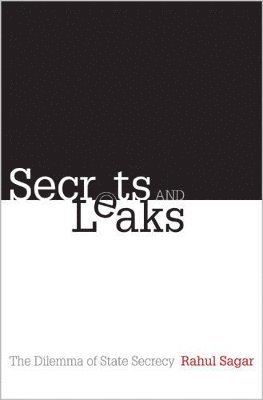
    Secrets and Leaks

    The Dilemma of State Secrecy

    AvRahul Sagar

    Inbunden, Engelska, 2013

    455 kr

    Beställningsvara. Skickas inom 5-8 vardagar. Fri frakt över 249 kr.

    Fler format och utgåvor

    Häftad

    227 kr

    E-bok

    304 kr

    Beskrivning

    Secrets and Leaks examines the complex relationships among executive power, national security, and secrecy. State secrecy is vital for national security, but it can also be used to conceal wrongdoing. How then can we ensure that this power is used responsibly? Typically, the onus is put on lawmakers and judges, who are expected to oversee the executive. Yet because these actors lack access to the relevant information and the ability to determine the harm likely to be caused by its disclosure, they often defer to the executive's claims about the need for secrecy. As a result, potential abuses are more often exposed by unauthorized disclosures published in the press. But should such disclosures, which violate the law, be condoned? Drawing on several cases, Rahul Sagar argues that though whistleblowing can be morally justified, the fear of retaliation usually prompts officials to act anonymously--that is, to "leak" information. As a result, it becomes difficult for the public to discern when an unauthorized disclosure is intended to further partisan interests. Because such disclosures are the only credible means of checking the executive, Sagar writes, they must be tolerated.However, the public should treat such disclosures skeptically and subject irresponsible journalism to concerted criticism.

    Produktinformation

    • Utgivningsdatum:2013-10-13
    • Mått:152 x 235 x undefined mm
    • Vikt:599 g
    • Format:Inbunden
    • Språk:Engelska
    • Antal sidor:304
    • Förlag:Princeton University Press
    • ISBN:9780691149875
    • Utmärkelser:Winner of National Academy of Public Administration Louis Brownlow Award 2014

    Utforska kategorier

    • Centralt styre och förvaltning inom Samhälle och politik
    • Statsvetenskap och politisk teori inom Samhälle och politik
    • Offentlig förvaltning inom Samhälle och politik

    Mer om författaren

    Rahul Sagar is assistant professor of politics at Princeton University.

    Recensioner i media

    Winner of the 2015 Myres S. McDougal Prize, Society of Policy Scientists Winner of the 2014 Louis Brownlow Book Award, National Academy of Public Administration One of Choice's Outstanding Academic Titles for 2014 "Were Snowden's leaks justified? Rahul Sagar's Secrets and Leaks sheds important light on the question. In carefully argued and lucid prose, Sagar, a professor of politics at Princeton, argues that secrets are inevitable, as are leaks--and that leaks have an important if precarious part in checking secrecy abuse."--David Cole, New York Review of Books "This is an excellent book that comes at an essential time. Snowden's leaks, which took place after Sagar finished the book, have focused public debate on the secrecy/transparency paradox, and Sagar's book is infinitely superior to the sloganeering that dominates the media."--Eric Posner, New Republic "Rahul Sagar's new book Secrets and Leaks: The Dilemma of State Secrecy is both an important new work on the deep problem of political accountability in the context of U.S. government secrecy, and it is an excellent teaching resource."--Mary L. Dudziak, Balkinization "Sagar makes a compelling argument that leaking plays an important role in uncovering wrongdoing in an arena in which both Congress and the courts are institutionally inhibited."--Gabrielle Appleby, Inside Story "In his new book, Secrets and Leaks, the Princeton political scientist Rahul Sagar ably documents ... growth in secrecy and the problems it poses, excavating from his thorough research a concise history of concealment and revelation from the Revolutionary War to the present. Atop this scholarship, he adds legal analysis and an attempt to map a regulatory framework that will keep the country secure, make the government accountable, and still preserve Americans' civil liberties."--Jack Shafer, Foreign Affairs "[Secrets and Leaks is] a shining deed in a naughty world."--International Affairs "[A] fresh, original and provocative contribution to the field... [Sagar] is about as critical of his own arguments as he is towards those of others, and readers will be the wiser for it."--Steven Aftergood, Lawfare "[A] thoroughly researched, thoughtfully considered work that clarifies an unsolvable dilemma at the heart of democratic governance."--Gabriel Schoenfeld, Claremont Review of Books "Rahul Sagar's Secrets and Leaks ... is a thoughtfully considered work that clarifies an unsolvable dilemma at the heart of democratic governance."--Gabriel Schoenfeld, Claremont Review of Books "Sagar's new book could not come at a more opportune time. As a fresh national and even international debate about the morality of whistle-blowing and state secrecy develops, Sagar presents a compelling set of arguments about the balance between national security and liberty. In doing so, he examines all of the relevant actors: the national security apparatus, the courts, Congress, the leakers, and of course the executive itself... In fact, Secrets and Leaks can be read as a case study in the inexorable tensions of executive power in a liberal democracy. This profound and profoundly important book deserves to inform the on-going debate."--Choice "Whether one accepts or rejects this conclusion, Secrets and Leaks is a provocative, thoughtful, and important contribution to our understanding."--Geoffrey R. Stone, Political Science Quarterly "Sagar provides us with a thoroughly researched and well-documented study of the politico-legal context of regimented state secrecy and offers an insightful analysis of the politics behind state secrecy going back to the constitutional debates and the Framers' intent."--David Grondin, Perspectives on Politics

    Innehållsförteckning

    • Acknowledgments xi Who Watches the Watchers? 1 Chapter 1 The Problem: How to Regulate State Secrecy? 16 Chapter 2 Should We Rely on Judges? Transparency and the Problem of Judicial Deference 51 Chapter 3 Should We Rely on Congress? Oversight and the Problem of Executive Privilege 80 Chapter 4 Should the Law Condone Unauthorized Disclosures? Fire Alarms and the Problem of Legitimacy 103 Chapter 5 Should We Rely on Whistleblowers? Disobedience and the Problem of Retaliation 127 Chapter 6 Should We Trust Leakers? Anonymous Sources and the Problem of Regulation 153 Conclusion Bitter Medicine 181 Notes 205 Selected Bibliography 245 Index 269