• Fri frakt över 249 kr
  • •
  • Snabba leveranser
  • •
  • Billiga böcker
Kundservice

Du är på sajten för privatpersoner.

Företag, bibliotek eller offentlig verksamhet?

Du handlar på classic.bokus.com, där alla dina funktioner finns intakta.
Till classic.bokus.com
Bokus logotyp. Gå till startsidan.
  • Erbjudanden
  • Student
  • Topplistor
  • Barn & ungdom
  • Bokus Play
  • E-böcker
  • Ljudböcker
  • Pocketböcker
  • Spel & pussel

10% rabatt på allt med kod NYSTART10 →

Sidfot

Mina sidor

    Hjälp

    • Kundservice
    • Vanliga frågor och svar
    • Frakt och leverans
    • Retur vid ångerrätt
    • Reklamera vara
    • Betalning
    • Köpvillkor
    • Allmänna villkor
    • Information om webbplatsens tillgänglighet

    Om Bokus

    • Om oss
    • Pressrum
    • För studenter
    • För företag
    • För bibliotek och offentlig verksamhet
    • För leverantörer
    • Hållbarhet

    Populärt

    • Aktuella erbjudanden
    • Presentkort
    • Studentlitteratur
    • Nya böcker
    • Topplistor
    • Signerade böcker
    • Engelska böcker

    Inspiration

    • Boktips
    • BookTok
    • Populära bokserier
    • Barnbokskaraktärer
    • Populära författare
    Logotyp för Bokus
    Följ oss på Facebook (extern länk)Följ oss på Instagram (extern länk)Följ oss på YouTube (extern länk)Följ oss på TikTok (extern länk)
    bokus @ CookiesAnpassa cookiesIntegritetspolicyKöpvillkor
    Till Citymail hemsida (extern länk)Till Budbee hemsida (extern länk)Till Postnord hemsida (extern länk)Till Schenker hemsida (extern länk)Till Early Bird hemsida (extern länk)Till Walleys hemsida (extern länk)
    1. Samhälle och politik
    2. Samhälle och kultur
    3. Kultur och medier
    4. Kulturvetenskap

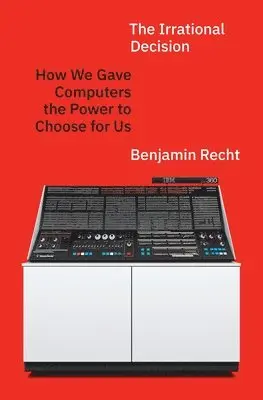
    Irrational Decision

    How We Gave Computers the Power to Choose for Us

    AvBenjamin Recht

    Inbunden, Engelska, 2026

    250 kr

    . Fri frakt över 249 kr.

    Beskrivning

    How the computer revolution shaped our conception of rationality—and why human problems require solutions rooted in human intuition, morality, and judgmentIn the 1940s, mathematicians set out to design computers that could act as ideal rational agents in the face of uncertainty. The Irrational Decision tells the story of how they settled on a peculiar mathematical definition of rationality in which every decision is a statistical question of risk. Benjamin Recht traces how this quantitative standard came to define our understanding of rationality, looking at the history of optimization, game theory, statistical testing, and machine learning. He explains why, now more than ever, we need to resist efforts by powerful tech interests to drive public policy and essentially rule our lives.While mathematical rationality has proven valuable in accelerating computers, regulating pharmaceuticals, and deploying electronic commerce, it fails to solve messy human problems and has given rise to a view of a rational world that is not only overquantified but surprisingly limited. Recht shows how these mathematical methods emerged from wartime research and influenced fields ranging from economics to health care, drawing on illuminating examples ranging from diet planning to chess to self-driving cars.Highlighting both the power and limitations of mathematical rationality, The Irrational Decision reveals why only humans can resolve fundamentally political or value-based questions and proposes a more expansive approach to decision making that is appropriately supported by computational tools yet firmly rooted in human intuition, morality, and judgment.

    Produktinformation

    • Utgivningsdatum:2026-03-10
    • Mått:224 x 28 x 142 mm
    • Vikt:460 g
    • Format:Inbunden
    • Språk:Engelska
    • Antal sidor:280
    • Förlag:Princeton University Press
    • ISBN:9780691272443

    Utforska kategorier

    • Kulturvetenskap inom Samhälle och politik
    • Matematikens historia inom Naturvetenskap och teknik
    • Naturvetenskap:allmänt inom Naturvetenskap och teknik

    Mer om författaren

    Benjamin Recht is professor of electrical engineering and computer sciences at the University of California, Berkeley. He is the author (with Stephen J. Wright) of Optimization for Data Analysis and (with Moritz Hardt) Patterns, Predictions, and Actions: Foundations of Machine Learning (Princeton).

    Recensioner i media

    "Clear, authoritative, easy to follow, and full of quotable phrases about the folly of giving optimizers and computers the power to govern our lives."---Jathan Sadowski, Critical AI