• Fri frakt över 249 kr
  • •
  • Snabba leveranser
  • •
  • Billiga böcker
Kundservice

Du är på sajten för privatpersoner.

Företag, bibliotek eller offentlig verksamhet?

Du handlar på classic.bokus.com, där alla dina funktioner finns intakta.
Till classic.bokus.com
Bokus logotyp. Gå till startsidan.
  • Erbjudanden
  • Nyheter
  • Student
  • Topplistor
  • Barn & ungdom
  • Bokus Play
  • E-böcker
  • Pocketböcker
  • Spel & pussel

10% rabatt på allt med kod: NYSTART10 →

Sidfot

Mina sidor

    Hjälp

    • Kundservice
    • Vanliga frågor och svar
    • Frakt och leverans
    • Retur vid ångerrätt
    • Reklamera vara
    • Betalning
    • Köpvillkor
    • Allmänna villkor
    • Information om webbplatsens tillgänglighet

    Om Bokus

    • Om oss
    • Pressrum
    • För studenter
    • För företag
    • För bibliotek och offentlig verksamhet
    • För leverantörer
    • Hållbarhet

    Populärt

    • Aktuella erbjudanden
    • Presentkort
    • Studentlitteratur
    • Nya böcker
    • Topplistor
    • Signerade böcker
    • Engelska böcker

    Inspiration

    • Boktips
    • BookTok
    • Populära bokserier
    • Barnbokskaraktärer
    • Populära författare
    Logotyp för Bokus
    Följ oss på Facebook (extern länk)Följ oss på Instagram (extern länk)Följ oss på YouTube (extern länk)Följ oss på TikTok (extern länk)
    bokus @ CookiesAnpassa cookiesIntegritetspolicyKöpvillkor
    Till Citymail hemsida (extern länk)Till Budbee hemsida (extern länk)Till Postnord hemsida (extern länk)Till Schenker hemsida (extern länk)Till Early Bird hemsida (extern länk)Till Walleys hemsida (extern länk)
    1. Filosofi och religion
    2. Filosofi
    3. Filosofiska discipliner

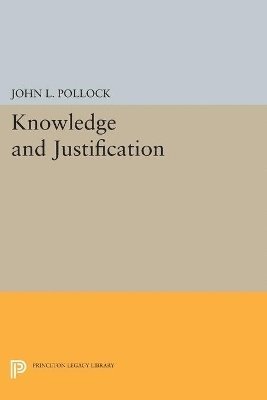
    Knowledge and Justification

    AvJohn L. Pollock

    Häftad, Engelska, 2015

    Del i serien Princeton Legacy Library

    561 kr

    Beställningsvara. Skickas inom 5-8 vardagar. Fri frakt över 249 kr.

    Fler format och utgåvor

    Inbunden

    2 523 kr

    E-bok

    779 kr

    Beskrivning

    One of the most firmly entrenched beliefs of contemporary philosophy is that the only way to analyze a concept is to state its truth conditions. In epistemology this has led to the search for reductive analyses, to phenomenalism, behaviorism, and their analogues in other areas of knowledge. Arguing that these attempts at reductive analysis have invariably failed, John L. Pollock defends an alternative theory of conceptual analysis in this book. The author suggests that concepts should be analyzed in terms of their justification conditions rather than their truth conditions. After laying a theoretical foundation for this alternative scheme of analysis, Professor Pollock applies his theory in proposing solutions to a number of traditional epistemological problems. Among the areas of knowledge discussed are perception, knowledge of the past, induction, knowledge of other minds, and a priori knowledge. Originally published in 1975. The Princeton Legacy Library uses the latest print-on-demand technology to again make available previously out-of-print books from the distinguished backlist of Princeton University Press.These editions preserve the original texts of these important books while presenting them in durable paperback and hardcover editions. The goal of the Princeton Legacy Library is to vastly increase access to the rich scholarly heritage found in the thousands of books published by Princeton University Press since its founding in 1905.

    Produktinformation

    • Utgivningsdatum:2015-03-08
    • Mått:152 x 235 x 20 mm
    • Vikt:508 g
    • Format:Häftad
    • Språk:Engelska
    • Serie:Princeton Legacy Library
    • Antal sidor:362
    • Förlag:Princeton University Press
    • ISBN:9780691618272

    Utforska kategorier

    • Filosofiska discipliner inom Filosofi och religion
    • Barnpsykologi och utvecklingspsykologi inom Psykologi och pedagogik

    Innehållsförteckning

    • *Frontmatter, pg. i*Preface, pg. vii*Contents, pg. ix*Chapter One. What Is an Epistemological Problem?, pg. 1*Chapter Two. The Structure of Epistemic Justification, pg. 23*Chapter Three. Theories of Perceptual Knowledge, pg. 50*Chapter Four. Incorrigibility, pg. 71*Chapter Five. Perceptual Attributes, pg. 80*Chapter Six. The Reidentification of Physical Things, pg. 134*Chapter Seven. Memory and Historical Knowledge, pg. 175*Chapter Eight. Induction, pg. 204*Chapter Nine. The Concept of a Person, pg. 249*Chapter Ten. Truths of Reason, pg. 300*References, pg. 341*Index, pg. 347