• Fri frakt över 249 kr
  • •
  • Snabba leveranser
  • •
  • Billiga böcker
Kundservice

Du är på sajten för privatpersoner.

Företag, bibliotek eller offentlig verksamhet?

Du handlar på classic.bokus.com, där alla dina funktioner finns intakta.
Till classic.bokus.com
Bokus logotyp. Gå till startsidan.
  • Erbjudanden
  • Nyheter
  • Student
  • Topplistor
  • Barn & ungdom
  • Bokus Play
  • E-böcker
  • Pocketböcker
  • Spel & pussel

10% studentrabatt med kod TERM26

Sidfot

Mina sidor

    Hjälp

    • Kundservice
    • Vanliga frågor och svar
    • Frakt och leverans
    • Retur vid ångerrätt
    • Reklamera vara
    • Betalning
    • Köpvillkor
    • Allmänna villkor
    • Information om webbplatsens tillgänglighet

    Om Bokus

    • Om oss
    • Pressrum
    • För studenter
    • För företag
    • För bibliotek och offentlig verksamhet
    • För leverantörer
    • Hållbarhet

    Populärt

    • Aktuella erbjudanden
    • Presentkort
    • Studentlitteratur
    • Nya böcker
    • Topplistor
    • Signerade böcker
    • Engelska böcker

    Inspiration

    • Boktips
    • BookTok
    • Populära bokserier
    • Barnbokskaraktärer
    • Populära författare
    Logotyp för Bokus
    Följ oss på Facebook (extern länk)Följ oss på Instagram (extern länk)Följ oss på YouTube (extern länk)Följ oss på TikTok (extern länk)
    bokus @ CookiesAnpassa cookiesIntegritetspolicyKöpvillkor
    Till Citymail hemsida (extern länk)Till Budbee hemsida (extern länk)Till Postnord hemsida (extern länk)Till Schenker hemsida (extern länk)Till Early Bird hemsida (extern länk)Till Walleys hemsida (extern länk)
    1. Ekonomi och Ledarskap
    2. Nationalekonomi
    3. Internationell ekonomi

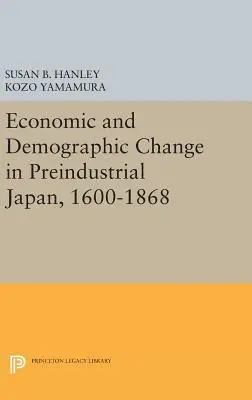
    Economic and Demographic Change in Preindustrial Japan, 1600-1868

    AvSusan B. Hanley,Kozo Yamamura

    Inbunden, Engelska, 2016

    Del i serien Princeton Legacy Library

    2 886 kr

    Beställningsvara. Skickas inom 3-6 vardagar. Fri frakt över 249 kr.

    Fler format och utgåvor

    Häftad

    672 kr

    Beskrivning

    According to the Marxist interpretation still dominant in Japanese studies, the last century and a half of the Tokugawa period was a time of economic and demographic stagnation. Professors Hanley and Yamamura argue that a more satisfactory explanation can be provided within the framework of modem economic theory, and they advance and test three important new hypotheses in this book. The authors suggest that the Japanese economy grew throughout the Tokugawa period, though slowly by modern standards and unevenly. This growth, they show, tended to exceed the rate of population increase even in the poorer regions, thus raising the living standard despite major famines. Population growth was controlled by a variety of methods, including abortion and infanticide, for the primary purpose of raising the standard of living. Contrary to the prevailing view of scholars, thus, the conclusions advanced here indicate that the basis for Japan's rapid industrialization in the Meiji period was in many ways already established during the latter part of the Tokugawa period. The authors' analysis combines original fieldwork with study of data based on findings of the postwar years.Originally published in 1978. The Princeton Legacy Library uses the latest print-on-demand technology to again make available previously out-of-print books from the distinguished backlist of Princeton University Press. These editions preserve the original texts of these important books while presenting them in durable paperback and hardcover editions. The goal of the Princeton Legacy Library is to vastly increase access to the rich scholarly heritage found in the thousands of books published by Princeton University Press since its founding in 1905.

    Produktinformation

    • Utgivningsdatum:2016-04-19
    • Mått:152 x 235 x 27 mm
    • Vikt:765 g
    • Format:Inbunden
    • Språk:Engelska
    • Serie:Princeton Legacy Library
    • Antal sidor:426
    • Förlag:Princeton University Press
    • ISBN:9780691643793

    Utforska kategorier

    • Internationell ekonomi inom Ekonomi och Ledarskap
    • Sociologi inom Samhälle och politik
    • Industrialismen och industrihistoria inom Historia och arkeologi

    Innehållsförteckning

    • *Frontmatter, pg. i*Contents, pg. vii*List of Tables and Figures, pg. viii*Preface, pg. xi*1. Introduction, pg. 1*2. The Framework of Analysis, pg. 12*3. Aggregate Demographic Data: An Assessment, pg. 38*4. Economic Growth: A General Perspective, pg. 69*5. The Kinai, pg. 91*6. Morioka, pg. 126*7. Okayama, pg. 161*8. Fertility, Mortality, and Life Expectancy in Four Villages, pg. 199*9. Population Control in Tokugawa Japan, pg. 226*10. The Village of Fujito: A Case Study, pg. 267*11. A Comparison of Population Trends, pg. 292*12. Conclusion, pg. 320*Glossary of Japanese Terms, pg. 335*Notes, pg. 341*Bibliography, pg. 387*Index, pg. 405