• Fri frakt över 249 kr
  • •
  • Snabba leveranser
  • •
  • Billiga böcker
Kundservice

Du är på sajten för privatpersoner.

Företag, bibliotek eller offentlig verksamhet?

Du handlar på classic.bokus.com, där alla dina funktioner finns intakta.
Till classic.bokus.com
Bokus logotyp. Gå till startsidan.
  • Erbjudanden
  • Nyheter
  • Student
  • Topplistor
  • Barn & ungdom
  • Bokus Play
  • E-böcker
  • Pocketböcker
  • Spel & pussel

10% rabatt på allt med kod NYSTART10 →

Sidfot

Mina sidor

    Hjälp

    • Kundservice
    • Vanliga frågor och svar
    • Frakt och leverans
    • Retur vid ångerrätt
    • Reklamera vara
    • Betalning
    • Köpvillkor
    • Allmänna villkor
    • Information om webbplatsens tillgänglighet

    Om Bokus

    • Om oss
    • Pressrum
    • För studenter
    • För företag
    • För bibliotek och offentlig verksamhet
    • För leverantörer
    • Hållbarhet

    Populärt

    • Aktuella erbjudanden
    • Presentkort
    • Studentlitteratur
    • Nya böcker
    • Topplistor
    • Signerade böcker
    • Engelska böcker

    Inspiration

    • Boktips
    • BookTok
    • Populära bokserier
    • Barnbokskaraktärer
    • Populära författare
    Logotyp för Bokus
    Följ oss på Facebook (extern länk)Följ oss på Instagram (extern länk)Följ oss på YouTube (extern länk)Följ oss på TikTok (extern länk)
    bokus @ CookiesAnpassa cookiesIntegritetspolicyKöpvillkor
    Till Citymail hemsida (extern länk)Till Budbee hemsida (extern länk)Till Postnord hemsida (extern länk)Till Schenker hemsida (extern länk)Till Early Bird hemsida (extern länk)Till Walleys hemsida (extern länk)
    1. Historia och arkeologi
    2. Historia
    3. Historia: särskilda händelser och ämnen
    4. Socialhistoria och kulturhistoria

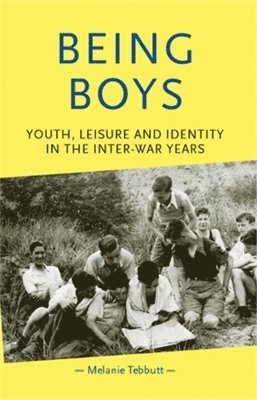
    Being Boys

    Youth, Leisure and Identity in the Inter-War Years

    AvMelanie Tebbutt

    Häftad, Engelska, 2014

    Del i serien Gender in History

    371 kr

    Beställningsvara. Skickas inom 5-8 vardagar. Fri frakt över 249 kr.

    Fler format och utgåvor

    Inbunden

    1 120 kr

    Beskrivning

    This original and fresh approach to the emotions of adolescence focuses on the leisure lives of working-class boys and young men in the inter-war years. Being boys challenges many stereotypes about their behaviour. It offers new perspectives on familiar and important themes in inter-war social and cultural history, ranging from the cinema and mass consumption to boys’ clubs, personal advice pages, street cultures, dancing, sexuality, mobility and the body. It draws on many autobiographies and personal accounts and is particularly distinctive in offering an unusual insight into working-class adolescence through the teenage diaries of the author’s father, which are interwoven with the book’s broader analysis of contemporary leisure developments. Being boys will be of interest to scholars and students across the humanities and social sciences and is also relevant to those teaching and studying in the fields of child development, education, and youth and community studies.

    Produktinformation

    • Utgivningsdatum:2014-04-30
    • Mått:138 x 216 x 18 mm
    • Vikt:390 g
    • Format:Häftad
    • Språk:Engelska
    • Serie:Gender in History
    • Antal sidor:340
    • Förlag:Manchester University Press
    • ISBN:9780719066146

    Utforska kategorier

    • Socialhistoria och kulturhistoria inom Historia och arkeologi
    • Sociologi inom Samhälle och politik
    • Sociala grupper och identitet inom Samhälle och politik

    Mer om författaren

    Melanie Tebbutt is Senior Lecturer in History at Manchester Metropolitan University.

    Recensioner i media

    This well-researched book is a corrective to depictions of working-class young men as rigidly masculine.'Jad Adams, The TLS, 25/05/2012'A welcome addition to the literature on inter-war youth; contributing to our understanding of American influences across this 20-year period and offering insights into aspects of experiences that affected all young men, not just a minority.'John Griffiths, Reviews in History, 24/05/2012'The ultimate success of this marvellous book lies in the way that Tebbutt allows the private voices behind the public swagger of the ‘monkey parade’ to articulate the longing in 1930’s Britain for a better world while also showing how, in their own small way, boys like Les helped that world come into being.'Richard Weight, History Today, December 2012'A valuable contextual source for historians of post-war youth'Sarah Mills, Contemporary British History, May 2013'A fresh and welcome contribution to our understanding of youth in twentieth-century Britain'Kate Bradley, Twentieth Century British History, 2012'Being Boys makes an important contribution to the nexus of the history of interwar society and culture, of the history of gender and of childhood and youth, and of the history of leisure and consumerism.'Stephanie Olsen, Journal of British Studies, 52 (3) July 2013'The historian Melanie Tebbutt, Les Tebbutt's daughter, has drawn on her father's teenage diary entries, as well as contemporary memories and interviews, to try to reconstruct the inner lives of working class boys in the interwar years.'Alan Allport, London Review of Books, 21/11/2013'It is one of the most stimulating books to appear on British youth history in recent years.'David Fowler, University of Cambridge, English Historical Review, 04/09/2013'In its exploration of the subjective and affective dimensions of growing up male, Being Boys is both important and consistently moving. The boys who lie at the core of this study are complex characters who interact with dominant models of masculinity in diverse and surprising ways. Tebbutt consistently places boys’ experiences alongside those of girls and in so doing generates a richly relational sense of gender.'Claire Langhamer, University of Sussex, Sport in History, 33:4, 605-607, 2013

    Innehållsförteckning

    • Introduction1. Looking at youth2. Ordinary boys and masculine men3. Bodies and appearance4. Sex and sentiment5. Seeking advice6. Dancing and gender7. Movement, motion and street space8. Being a boy and becoming a manConclusionsBibliographyIndex