• Fri frakt över 249 kr
  • •
  • Snabba leveranser
  • •
  • Billiga böcker
Kundservice

Du är på sajten för privatpersoner.

Företag, bibliotek eller offentlig verksamhet?

Du handlar på classic.bokus.com, där alla dina funktioner finns intakta.
Till classic.bokus.com
Bokus logotyp. Gå till startsidan.
  • Erbjudanden
  • Nyheter
  • Student
  • Topplistor
  • Barn & ungdom
  • Bokus Play
  • E-böcker
  • Pocketböcker
  • Spel & pussel

10% studentrabatt med kod TERM26

Sidfot

Mina sidor

    Hjälp

    • Kundservice
    • Vanliga frågor och svar
    • Frakt och leverans
    • Retur vid ångerrätt
    • Reklamera vara
    • Betalning
    • Köpvillkor
    • Allmänna villkor
    • Information om webbplatsens tillgänglighet

    Om Bokus

    • Om oss
    • Pressrum
    • För studenter
    • För företag
    • För bibliotek och offentlig verksamhet
    • För leverantörer
    • Hållbarhet

    Populärt

    • Aktuella erbjudanden
    • Presentkort
    • Studentlitteratur
    • Nya böcker
    • Topplistor
    • Signerade böcker
    • Engelska böcker

    Inspiration

    • Boktips
    • BookTok
    • Populära bokserier
    • Barnbokskaraktärer
    • Populära författare
    Logotyp för Bokus
    Följ oss på Facebook (extern länk)Följ oss på Instagram (extern länk)Följ oss på YouTube (extern länk)Följ oss på TikTok (extern länk)
    bokus @ CookiesAnpassa cookiesIntegritetspolicyKöpvillkor
    Till Citymail hemsida (extern länk)Till Budbee hemsida (extern länk)Till Postnord hemsida (extern länk)Till Schenker hemsida (extern länk)Till Early Bird hemsida (extern länk)Till Walleys hemsida (extern länk)
    1. Kultur
    2. Konstböcker
    3. Konsthistoria

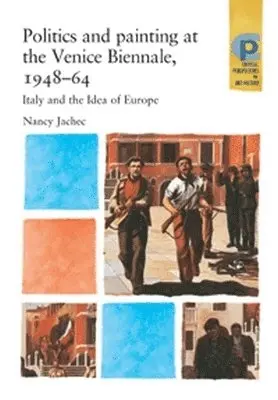
    Politics and Painting at the Venice Biennale, 1948–64

    Italy and the Idea of Europe

    AvNancy Jachec

    Inbunden, Engelska, 2007

    Del i serien Critical Perspectives in Art History

    1 224 kr

    Beställningsvara. Skickas inom 5-8 vardagar. Fri frakt över 249 kr.

    Beskrivning

    Although cultural exchanges were named within the Council of Europe in the mid- 1950s as being second only in importance to the military as a tool for ensuring a stable and integrated Western Europe in the aftermath of the Second World War, European-led initiatives have generally been overlooked in the historiography of art of the immediate post-war period. Popularly remembered as the era of the United States’ cultural ‘triumph’, American Abstract Expressionism in particular is commonly identified as the cultural ‘weapon’ by which that nation conquered Western European culture.Using the Venice Biennale as a case study, this book challenges the idea that there was an American cultural conquest in the 1950s through the fine arts, arguing instead that Western Europe retained a strong sense of world cultural leadership in the immediate post-war years. An institutional history that combines political and diplomatic with art history, and is informed by extensive archival research, it argues that Italian political and cultural figures actively promoted the ‘Idea of Europe’ – the Council of Europe’s cultural initiative of 1955 designed to promote the idea of a homogeneous post-war European culture – at the Biennale in the form of gesture painting as an international style, as the emblem of a culturally united Western Europe, and as the repository of universal humanist values for the international community. Scholarly but accessible, this book will be of interest not only to researchers and to students of international cultural relations during the Cold War, but to general, interested readers, too.

    Produktinformation

    • Utgivningsdatum:2007-09-01
    • Mått:170 x 240 x 19 mm
    • Vikt:685 g
    • Format:Inbunden
    • Språk:Engelska
    • Serie:Critical Perspectives in Art History
    • Antal sidor:224
    • Förlag:Manchester University Press
    • ISBN:9780719068966

    Utforska kategorier

    • Konsthistoria inom Kultur
    • Målarkonst inom Kultur

    Mer om författaren

    Nancy Jachec is an independent scholar and currently holds a part-time research fellowship at the History of Art Department, Oxford Brookes University

    Innehållsförteckning

    • AcknowledgementsList of figuresAbbreviationsIntroduction: the Idea of Europe1 The Abstraction-Realism Debate and its background, 1938-19482 Communism, anti-Communism, and government intervention at the Venice Biennale, 1948-19523 The Biennali of 1954-1956: the politics of Realism4 The 1958 Biennale: the collapse of the Ente and the rise of Gesture Painting as the ‘European Idea’5 The Biennali of 1960 and 1962: from European to global cultural policy6 Gesture Painting in Communist Europe7 Gesture Painting in Africa, Asia and Latin America8 Epilogue: the 1964 Biennale: the end of Gesture PaintingBibliography