• Fri frakt över 249 kr
  • •
  • Snabba leveranser
  • •
  • Billiga böcker
Kundservice

Du är på sajten för privatpersoner.

Företag, bibliotek eller offentlig verksamhet?

Du handlar på classic.bokus.com, där alla dina funktioner finns intakta.
Till classic.bokus.com
Bokus logotyp. Gå till startsidan.
  • Erbjudanden
  • Nyheter
  • Student
  • Topplistor
  • Barn & ungdom
  • Bokus Play
  • E-böcker
  • Pocketböcker
  • Spel & pussel

10% rabatt på allt med kod: NYSTART10 →

Sidfot

Mina sidor

    Hjälp

    • Kundservice
    • Vanliga frågor och svar
    • Frakt och leverans
    • Retur vid ångerrätt
    • Reklamera vara
    • Betalning
    • Köpvillkor
    • Allmänna villkor
    • Information om webbplatsens tillgänglighet

    Om Bokus

    • Om oss
    • Pressrum
    • För studenter
    • För företag
    • För bibliotek och offentlig verksamhet
    • För leverantörer
    • Hållbarhet

    Populärt

    • Aktuella erbjudanden
    • Presentkort
    • Studentlitteratur
    • Nya böcker
    • Topplistor
    • Signerade böcker
    • Engelska böcker

    Inspiration

    • Boktips
    • BookTok
    • Populära bokserier
    • Barnbokskaraktärer
    • Populära författare
    Logotyp för Bokus
    Följ oss på Facebook (extern länk)Följ oss på Instagram (extern länk)Följ oss på YouTube (extern länk)Följ oss på TikTok (extern länk)
    bokus @ CookiesAnpassa cookiesIntegritetspolicyKöpvillkor
    Till Citymail hemsida (extern länk)Till Budbee hemsida (extern länk)Till Postnord hemsida (extern länk)Till Schenker hemsida (extern länk)Till Early Bird hemsida (extern länk)Till Walleys hemsida (extern länk)
    1. Historia och arkeologi
    2. Historia
    3. Europas historia

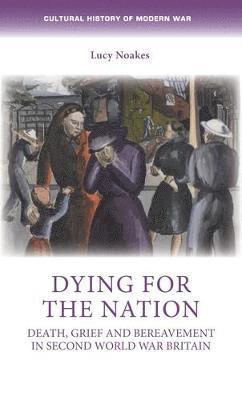
    Dying for the Nation

    Death, Grief and Bereavement in Second World War Britain

    AvLucy Noakes

    Inbunden, Engelska, 2020

    Del i serien Cultural History of Modern War

    1 224 kr

    Beställningsvara. Skickas inom 5-8 vardagar. Fri frakt över 249 kr.

    Fler format och utgåvor

    Häftad

    377 kr

    Beskrivning

    Death in war matters. It matters to the individual, threatened with their own death, or the death of loved ones. It matters to groups and communities who have to find ways to manage death, to support the bereaved and to dispose of bodies amidst the confusion of conflict. It matters to the state, which has to find ways of coping with mass death that convey a sense of gratitude and respect for the sacrifice of both the victims of war, and those that mourn in their wake. This social and cultural history of Britain in the Second World War places death at the heart of our understanding of the British experience of conflict. Drawing on a range of material, Dying for the nation demonstrates just how much death matters in wartime and examines the experience, management and memory of death. The book will appeal to anyone with an interest in the social and cultural history of Britain in the Second World War.

    Produktinformation

    • Utgivningsdatum:2020-01-31
    • Mått:138 x 216 x 17 mm
    • Vikt:499 g
    • Format:Inbunden
    • Språk:Engelska
    • Serie:Cultural History of Modern War
    • Antal sidor:304
    • Förlag:Manchester University Press
    • ISBN:9780719087592

    Utforska kategorier

    • Europas historia inom Historia och arkeologi
    • Andra världskriget inom Historia och arkeologi
    • Sociologi inom Samhälle och politik

    Mer om författaren

    Lucy Noakes is the Rab Butler Professor of Modern History at the University of Essex

    Recensioner i media

    Winner of the Social History Society Book Prize 2022'This thoughtful book reminds us that societies interpret mass death on rhetorical, discursive and mnemonic levels, but people also live with its harsh practicalities, as death intersects with lived everyday experience and emotion. This deeply significant book thus has much to teach both historians and a wider readership today.'Twentieth Century British History'Drawing on cultural histories of death, emotions, and mourning, and on extensive archival research, Noakes (Univ. of Essex, UK) examines how the British government and people responded to the deaths of over 260,000 members of the armed forces and over 60,000 civilians during WW II. She argues that it was crucial for the government to manage mass death in a respectful way so as to maintain the consent of the public and keep morale high, and to encourage citizens to control their emotions and remain stoic even as they faced a total war in which they and their loved ones were the targets. There are somber chapters on how civilians and soldiers died (crushed or eviscerated by bombs, burned in tanks, frozen in Arctic waters), were buried and mourned, and how the dead “work[ed] for the nation” as symbols of shared sacrifice and unity. When this “people’s war” ended, the emphasis was on looking ahead, not back, and on creating a better world rather than grand monuments for the dead. This perceptive study of wartime death, grief, and bereavement will be welcomed by students of WW II, Great Britain, and nationalism.--A. H. Plunkett, Piedmont Virginia Community CollegeSumming Up: Highly recommended. Upper-division undergraduates through faculty.Reprinted with permission from Choice Reviews. All rights reserved. Copyright by the American Library Association.'There is much here to interest scholars working on death and grief, and conceptions of selfhood or citizenship, as well as those working more generally on social, cultural, and emotional histories of modern warfare. At the current moment, as many individuals and communities continue to grapple with the ramifications of the coronavirus pandemic, others may also find Noakes’ poignant history of what it means to live through periods of crisis and mass bereavement well worth a read.'Journal of Contemporary History 'A rich and multi-dimensional analysis of how war, death, and grief pervaded the lives of individuals and societies throughout the first half of the twentieth century is thus proffered here. Reading Dying for the Nation as 2020 draws to a painful close, it strikes me that there is much that may be gained from this thoughtful book in terms of understanding our own emotional codes and management of grief and loss in this last appalling year. Overall, Noakes’ new book is a pleasure to read and a real gift to anyone who teaches or researches the social and cultural history of Britain and the Second World War.'War in History

    Innehållsförteckning

    • Introduction: death, grief and bereavement in wartime Britain1 Shadowing: death, grief and mourning before the Second World War2 Feeling: the emotional economy of interwar Britain3 Planning: imagining and planning for death in wartime4 Coping: belief and agency in wartime5 Dying: death and destruction of the body in war6 Burying: the disposal of the war’s dead7 Grieving: bereavement, grief, and the emotional labour of wartime8 Remembering: remembering and commemorating the dead of warConclusion: the personal and the political Bibliography