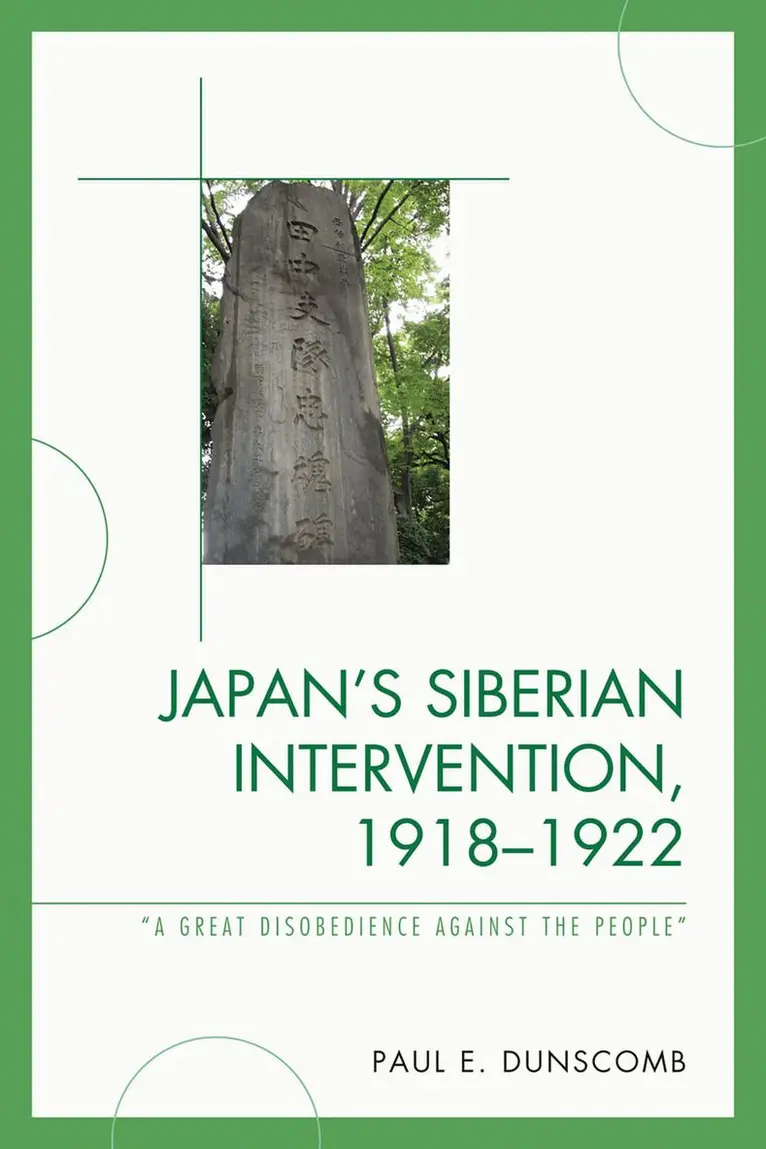
Häftad, Engelska, 2011
Japan's Siberian Intervention, 1918–1922
'A Great Disobedience Against the People'
Av Paul E. Dunscomb, Douglas Slaymaker
Del i serien New Studies in Modern Japan
732 kr
Beställningsvara. Skickas inom 10-15 vardagar. Fri frakt över 249 kr.
Beskrivning
Produktinformation
- Utgivningsdatum: 2011-01-20
- Mått: 155 x 231 x 17 mm
- Vikt: 397 g
- Format: Häftad
- Språk: Engelska
- Serie: New Studies in Modern Japan
- Antal sidor: 264
- Förlag: Bloomsbury Publishing Plc
- ISBN: 9780739146019
Utforska kategorier
Mer om författaren
Paul E. Dunscomb is associate professor of history at the University of Alaska, Anchorage.
Recensioner i media
Paul Dunscomb fills a major historical lacuna, explaining in clear, persuasive prose the nature of Japan's incursion into Siberia late in World War I and the complex issues that have so long baffled historians. Drawing on a rich array of primary sources, both governmental and journalistic, he sheds light not only on the often disastrous experiences of Japan's army but on the domestic debates that the expedition triggered. Dunscomb is incisive in exploring the internal struggles of Taish? Japan's political world, sometimes between interventionists and "realists," more often between the cabinet and the army, which used tones that presaged the militarists' rhetoric of the 1930s in insisting on its "right of supreme command." The issues raised here also speak (sometimes uncannily) to more recent military incursions elsewhere in the world, particularly in Vietnam and Afghanistan.
Betyg & recensioner
0 recensioner
Inga recensioner tillgängliga.