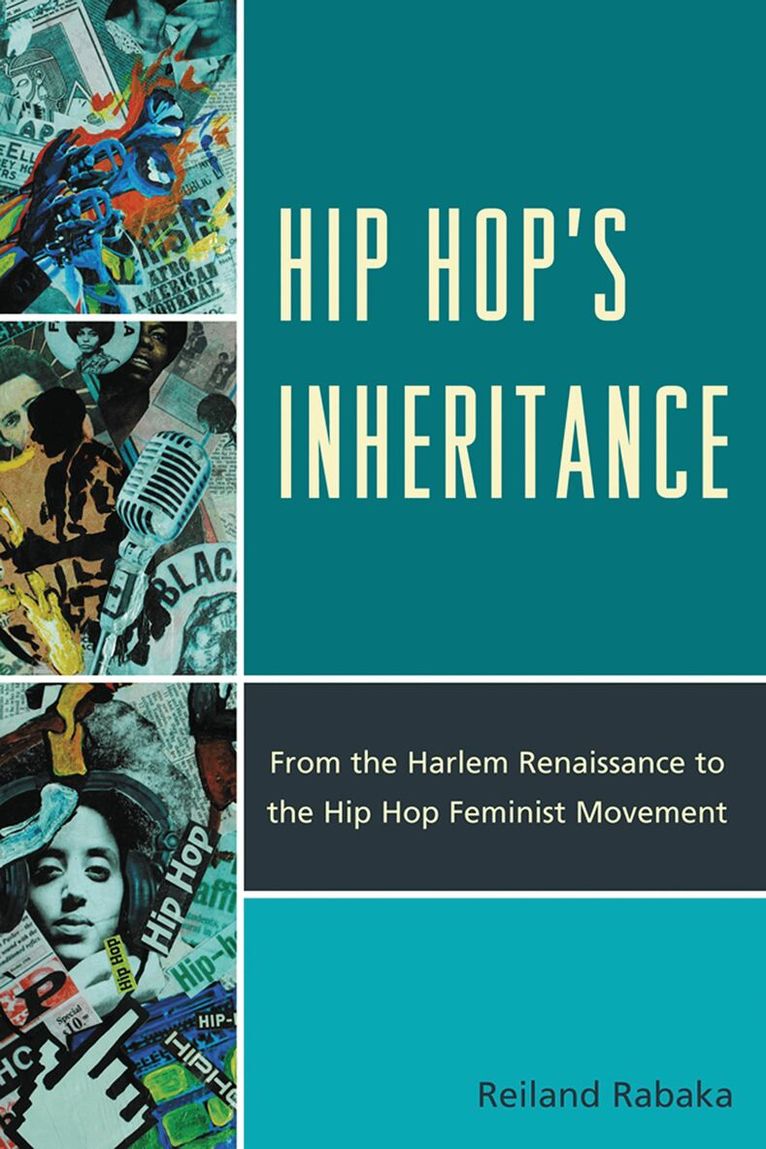
Häftad, Engelska, 2011
Hip Hop's Inheritance
From the Harlem Renaissance to the Hip Hop Feminist Movement
709 kr
Beställningsvara. Skickas inom 10-15 vardagar. Fri frakt över 249 kr.
Beskrivning
Produktinformation
- Utgivningsdatum: 2011-03-31
- Mått: 156 x 229 x 18 mm
- Vikt: 454 g
- Format: Häftad
- Språk: Engelska
- Antal sidor: 302
- Förlag: Bloomsbury Publishing Plc
- ISBN: 9780739164815
Utforska kategorier
Mer om författaren
Reiland Rabaka is an associate professor of Africana Studies in the Department of Ethnic Studies at the University of Colorado, Boulder, where he is also an affiliate professor in the Women and Gender Studies Program and a Research Fellow at the Center for Studies of Ethnicity and Race in America (CSERA). He is the author of several books, including: Du Bois's Dialectics (2008); Africana Critical Theory (2009); Forms of Fanonism (2010); and, Against Epistemic Apartheid (2010). He is also the recipient of the Cheikh Anta Diop Distinguished Career Award.
Recensioner i media
Rabaka (Univ. of Colorado, Boulder) offers a sweeping historical assessment of cultural ideologies connecting hip-hop to artistic innovations of the Harlem Renaissance and Black Arts movements. He mobilizes cultural theorists — Baraka, Foucault, DuBois, Jameson, Said, Fanon, Hurston — to describe the evolution of African American intellectual and cultural history via 'radical humanism, and democratic socialism.' Sprawling overviews of Africana critical theory, feminist theory, and queer theory imagine, 'anti-racist, anti-capitalist, anti-colonialist, and sexual orientation-sensitive critical theory of contemporary society.' The author provides interesting, if diffuse, discussion of gay literary voices in the Harlem Renaissance in relation to the contemporary homo-hop movement; Black Arts Movement members' perception of the 'aesthetic radicalism of the Harlem Renaissance'; and the 'black aesthetic' sensibility that ''authentic' black art was always historically grounded, politically engaged, socially uplifting, and consciousness-raising.' In exploring the relationships between the black women's liberation, feminist art, and hip-hop feminist movements, Rabaka mines work by Patricia Collins. In a final chapter, he considers postmodernist approaches to popular culture while asserting that 'rap music re-Africanizes and reanimates African American music, all the while continuing the African Americanization of mainstream American music and popular culture....' Summing Up: Recommended. Upper-division undergraduates, graduate students.
Betyg & recensioner
0 recensioner
Inga recensioner tillgängliga.