• Fri frakt över 249 kr
  • •
  • Snabba leveranser
  • •
  • Billiga böcker
Kundservice

Du är på sajten för privatpersoner.

Företag, bibliotek eller offentlig verksamhet?

Du handlar på classic.bokus.com, där alla dina funktioner finns intakta.
Till classic.bokus.com
Bokus logotyp. Gå till startsidan.
  • Erbjudanden
  • Nyheter
  • Student
  • Topplistor
  • Barn & ungdom
  • Bokus Play
  • E-böcker
  • Pocketböcker
  • Spel & pussel

10% rabatt på allt med kod: NYSTART10 →

Sidfot

Mina sidor

    Hjälp

    • Kundservice
    • Vanliga frågor och svar
    • Frakt och leverans
    • Retur vid ångerrätt
    • Reklamera vara
    • Betalning
    • Köpvillkor
    • Allmänna villkor
    • Information om webbplatsens tillgänglighet

    Om Bokus

    • Om oss
    • Pressrum
    • För studenter
    • För företag
    • För bibliotek och offentlig verksamhet
    • För leverantörer
    • Hållbarhet

    Populärt

    • Aktuella erbjudanden
    • Presentkort
    • Studentlitteratur
    • Nya böcker
    • Topplistor
    • Signerade böcker
    • Engelska böcker

    Inspiration

    • Boktips
    • BookTok
    • Populära bokserier
    • Barnbokskaraktärer
    • Populära författare
    Logotyp för Bokus
    Följ oss på Facebook (extern länk)Följ oss på Instagram (extern länk)Följ oss på YouTube (extern länk)Följ oss på TikTok (extern länk)
    bokus @ CookiesAnpassa cookiesIntegritetspolicyKöpvillkor
    Till Citymail hemsida (extern länk)Till Budbee hemsida (extern länk)Till Postnord hemsida (extern länk)Till Schenker hemsida (extern länk)Till Early Bird hemsida (extern länk)Till Walleys hemsida (extern länk)
    1. Historia och arkeologi
    2. Historia
    3. Europas historia

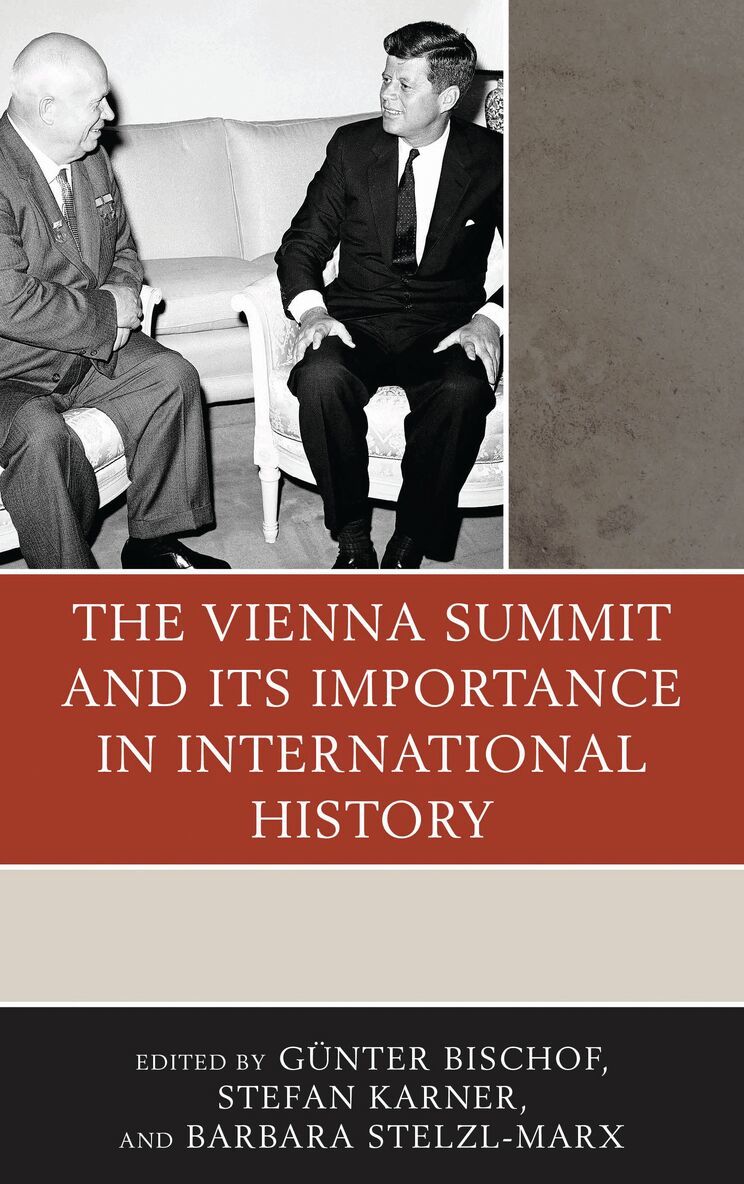
    Vienna Summit and Its Importance in International History

    AvGünter Bischof,Stefan Karner

    Inbunden, Engelska, 2013

    Del i serien Harvard Cold War Studies Book Series

    2 151 kr

    Beställningsvara. Skickas inom 10-15 vardagar. Fri frakt över 249 kr.

    Beskrivning

    At the beginning of June 1961, the tensions of the Cold War were supposed to abate as both sides sought a resolution. The two most important men in the world, John F. Kennedy and Nikita Khrushchev, met for a summit in Vienna. Yet the high hopes were disappointed. Within months the Cold War had become very hot: Khrushchev built the Berlin Wall and a year later he sent missiles to Cuba to threaten the United States directly. Despite the fact that the Vienna Summit yielded barely any tangible results, it did lead to some very important developments. The superpowers came to see for the first time that there was only one way to escape from the atomic hell of their respective arsenals: dialogue. The "peace through fear" and the "hotline" between Washington and Moscow prevented an atomic confrontation. Austria successfully demonstrated its new role as neutral state and host when Vienna became a meeting place in the Cold War. In The Vienna Summit and Its Importance in International History international experts use new Russian and Western sources to analyze what really happened during this critical time and why the parties had a close shave with catastrophe.

    Produktinformation

    • Utgivningsdatum:2013-12-19
    • Mått:160 x 237 x 37 mm
    • Vikt:998 g
    • Format:Inbunden
    • Språk:Engelska
    • Serie:Harvard Cold War Studies Book Series
    • Antal sidor:540
    • Förlag:Bloomsbury Publishing Plc
    • ISBN:9780739185568
    • Utmärkelser:Winner of Choice Outstanding Academic Titles 2014

    Utforska kategorier

    • Europas historia inom Historia och arkeologi
    • Allmän historia och världshistoria inom Historia och arkeologi

    Mer om författaren

    Günter Bischof is a university research professor and director of CenterAustria at the University of New Orleans, Louisiana.Stefan Karner is head of the Department of Economic, Social, and Business History at the University of Graz and director of the Ludwig Boltzmann Institute for Research of War Consequences, Graz-Vienna.Barbara Stelzl-Marx is deputy director of the Ludwig Boltzmann Institute for Research of War Consequences and lecturer at the University of Graz.

    Recensioner i media

    Based on Russian and US archives and the multinational research efforts of the Ludwig Boltzmann Institute for the Study of the Consequences of War in Graz, Austria, in conjunction with the Contemporary History Archives (RGANI) in Moscow and the Institute of Contemporary History in Munich-Berlin, this book represents a definitive study of the bilateral Vienna Summit meeting of Nikita Khrushchev and John F. Kennedy. The authors of the various articles are top scholars and, in the case of Ted Sorensen and Viktor Sukhodrev, participants in the summit. This valuable contribution to the history of the Vienna Summit's place in international history and in the history of the Cold War offers fresh assessments of Kennedy, Khrushchev, and the Kremlin's decision-making process. It shows, too, that the US had accepted the Soviet sphere of influence in Eastern Europe. The book is rich in documents and should be in every research library. Includes a useful introduction, index, and bibliography. Summing Up: Essential. All academic levels/libraries.

    Innehållsförteckning

    • Part I: Introduction and Historical Context1. Introduction: The Vienna Summit and Its Importance in International History Günter Bischof, Stefan Karner, Barbara Stelzl-Marx2. Summitry in the Twentieth Century: An OverviewDavid ReynoldsPart II: Contextualizing the Vienna SummitUnited States, France, and Great Britain3. “The First Test of [. . .] Détente Will Be the Berlin Negotiation”: Berlin, Disarmament, and the 1960 Paris Summit Richard D. Williamson 4. “Vienna, a City that is Symbolic of the Possibility of Finding Equitable Solutions”: John F. Kennedy and His European Summitry in Early June 1961Günter Bischof and Martin Kofler5. Great Britain and the Vienna Summit of June 1961Anne Deighton6. Paris as Beneficiary of the Unsuccessful Vienna SummitGeorges-Henri SoutouSoviet Union7. Soviet–American Relations in the Early 1960sVladimir Pechatnov8. Between Pragmatism and Ideology: The U.S. –Soviet Negotiating Process in the Khrushchev EraOl’ga PavlenkoAsia and Africa9. Casting a Long Shadow over Vienna: The Chinese Factor in the Vienna SummitMichail Prozumenshchikov10. Laos and the Vienna SummitLawrence FreedmanPart III: The Summit11. Two Days of Drama: Preparation and Execution of the Vienna SummitBarbara Stelzl-Marx12. A Difficult Education: John F. Kennedy and Nikita S. Khrushchev in ViennaTimothy Naftali13. “Summit Ladies”: Gender Arrangements, Media Staging, and Symbolic Scenes of the 1961Vienna Summit Talks Ingrid Bauer14. Moral Masculinity: Gender, Power, and the Kennedy–Khrushchev RelationshipJennifer Lynn Walton15. On the Significance of Austrian Neutrality for Soviet Foreign Policy under Nikita S. Khrushchev Peter Ruggenthaler16. The Personal Recollections of a Presidential Adviser in ViennaTed Sorensen17. The Personal Recollections of Khrushchev’s Interpreter in ViennaViktor SukhodrevPart IV: The Berlin Crisis18. Khrushchev, the Berlin Wall, and the Demand for a Peace Treaty, 1961–1963Gerhard Wettig 19. The Vienna Summit and the Construction of the Berlin WallManfred WilkeAppendicesAppendix 1: Soviet Kennedy ProfileAppendix 2: CIA Profile of Krushchev in Kennedy’s Briefing PapersAppendix 4:Krushchev’s Presidium Statement before the Vienna TripAppendix 3-1:Memorandum of Conversation, Vienna, 3 June 1961, 12:45 p.m.Appendix 3-2:Memorandum of Conversation, Vienna, 3 June 1961, 3 p.m.Appendix 3-3:Memorandum of Conversation, Vienna, 4 June 1961, 10:15 a.m.BibliographyAbout the Contributors