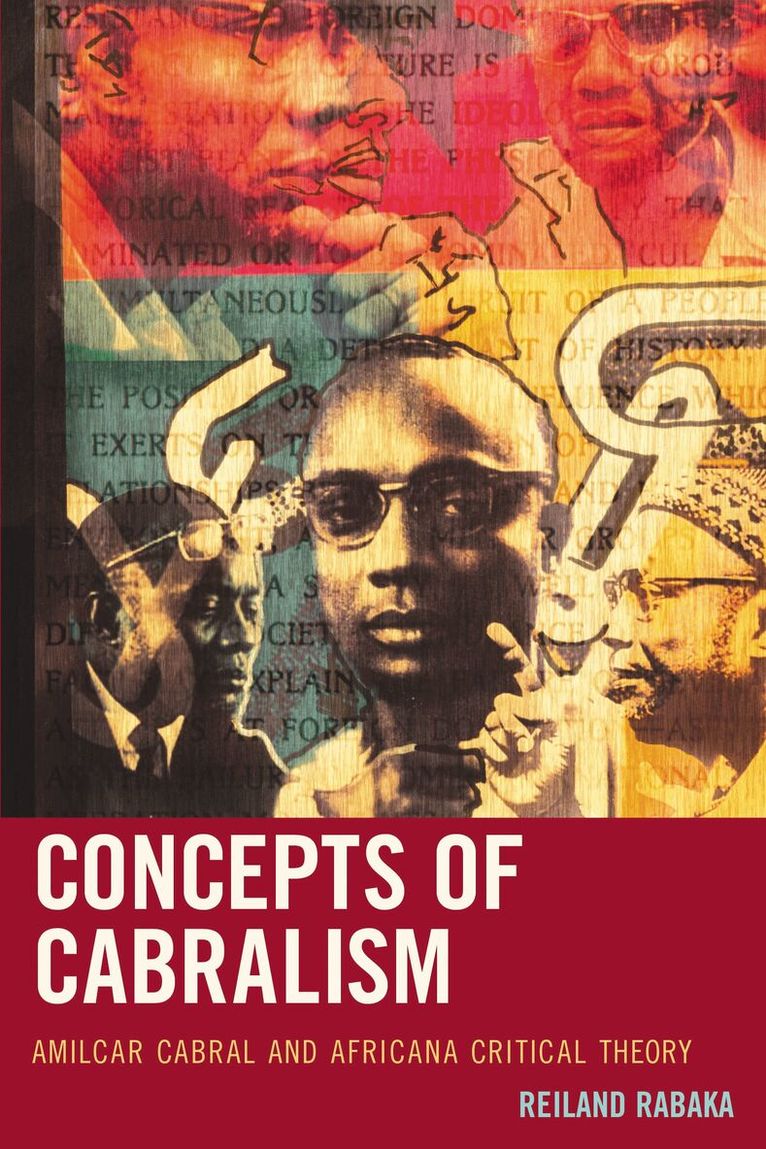
Häftad, Engelska, 2015
Concepts of Cabralism
Amilcar Cabral and Africana Critical Theory
Del i serien Critical Africana Studies
815 kr
Beställningsvara. Skickas inom 10-15 vardagar. Fri frakt över 249 kr.
Beskrivning
Produktinformation
- Utgivningsdatum: 2015-08-25
- Mått: 156 x 229 x 28 mm
- Vikt: 590 g
- Format: Häftad
- Språk: Engelska
- Serie: Critical Africana Studies
- Antal sidor: 386
- Förlag: Bloomsbury Publishing Plc
- ISBN: 9780739199268
- Utmärkelser: Choice Outstanding Academic Title
Utforska kategorier
Mer om författaren
Reiland Rabaka is professor of African, African American, and Caribbean studies in the Department of Ethnic Studies at the University of Colorado at Boulder, where he also has affiliations with the Women & Gender Studies Program, Humanities Program, Center for Studies of Ethnicity & Race in America (CSERA), and School of Education. He is the author of twelve books, including Africana Critical Theory, Against Epistemic Apartheid, Forms of Fanonism, and The Negritude Movement.
Recensioner i media
Rabaka contributes to radical black politics and Africana critical social theory and exceeds expectations on both counts. Six chapters guide readers through a corpus that 'draws from a diverse array of often eclectic and enigmatic sources and, therefore, offers no closed system or absolute truths.'. . . .Rabaka's critical introduction outlines Cabral’s biography and the genealogy of his thought. Chapter 1 begins with a provocative claim: 'in many respects Frantz Fanon and Amilcar Cabral represent the pillars and pinnacle of the Africana tradition of critical theory in the second half of the 20th century.' The author situates the dialectic task before black thinkers as 'challenging both whites’ demonization and Blacks’ romanticism' of Africa. Chapter 2 carefully outlines Fanon’s challenge to negritude. Fanon’s method for apprehending the totalizing effects of European colonialism becomes cartographic in Rabaka’s reading of Cabral’s engagement with colonialism, neocolonialism, imperialism, Marxism, and history. The book ends by articulating Cabral’s usefulness for Rabaka’s larger vision of Africana critical theory. An original contribution to Africana philosophy and studies, critical theory, and currently reemerging anticolonial paradigms throughout the academy. A must-have. Summing Up: Essential. Upper-division undergraduates and above.
Betyg & recensioner
0 recensioner
Inga recensioner tillgängliga.