• Fri frakt över 249 kr
  • •
  • Snabba leveranser
  • •
  • Billiga böcker
Kundservice

Du är på sajten för privatpersoner.

Företag, bibliotek eller offentlig verksamhet?

Du handlar på classic.bokus.com, där alla dina funktioner finns intakta.
Till classic.bokus.com
Bokus logotyp. Gå till startsidan.
  • Erbjudanden
  • Nyheter
  • Student
  • Topplistor
  • Barn & ungdom
  • Bokus Play
  • E-böcker
  • Pocketböcker
  • Spel & pussel

10% rabatt på allt med kod NYSTART10 →

Sidfot

Mina sidor

    Hjälp

    • Kundservice
    • Vanliga frågor och svar
    • Frakt och leverans
    • Retur vid ångerrätt
    • Reklamera vara
    • Betalning
    • Köpvillkor
    • Allmänna villkor
    • Information om webbplatsens tillgänglighet

    Om Bokus

    • Om oss
    • Pressrum
    • För studenter
    • För företag
    • För bibliotek och offentlig verksamhet
    • För leverantörer
    • Hållbarhet

    Populärt

    • Aktuella erbjudanden
    • Presentkort
    • Studentlitteratur
    • Nya böcker
    • Topplistor
    • Signerade böcker
    • Engelska böcker

    Inspiration

    • Boktips
    • BookTok
    • Populära bokserier
    • Barnbokskaraktärer
    • Populära författare
    Logotyp för Bokus
    Följ oss på Facebook (extern länk)Följ oss på Instagram (extern länk)Följ oss på YouTube (extern länk)Följ oss på TikTok (extern länk)
    bokus @ CookiesAnpassa cookiesIntegritetspolicyKöpvillkor
    Till Citymail hemsida (extern länk)Till Budbee hemsida (extern länk)Till Postnord hemsida (extern länk)Till Schenker hemsida (extern länk)Till Early Bird hemsida (extern länk)Till Walleys hemsida (extern länk)
    1. Samhälle och politik
    2. Samhälle och kultur
    3. Kultur och medier
    4. Medievetenskap

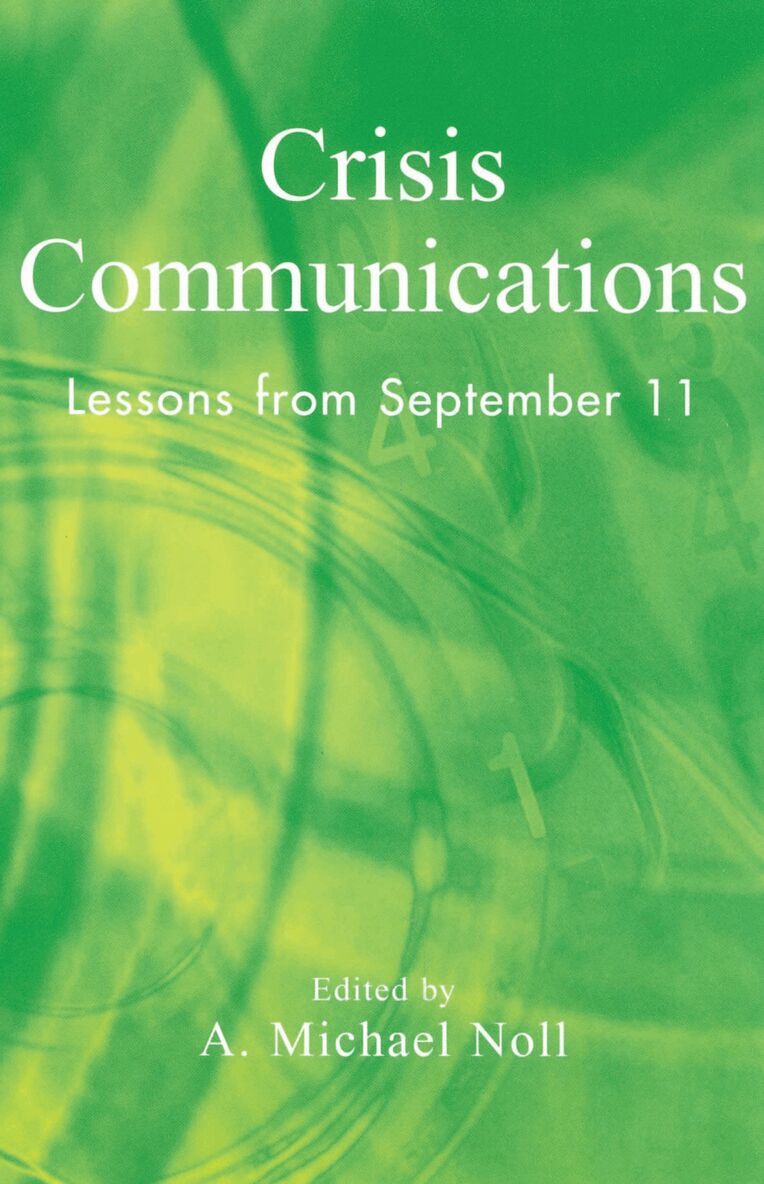
    Crisis Communications

    Lessons from September 11

    AvMichael A. Noll

    Inbunden, Engelska, 2003

    1 536 kr

    Beställningsvara. Skickas inom 10-15 vardagar. Fri frakt över 249 kr.

    Beskrivning

    On September 11, 2001, AT&T's traffic was 40 percent greater than its previous busiest day. Wireless calls were made from the besieged airplanes and buildings, with the human voice having a calming influence. E-mail was used to overcome distance and time zones. And storytelling played an important role both in conveying information and in coping with the disaster. Building on such events and lessons, Crisis Communications features an international cast of top contributors exploring emergency communications during crisis. Together, they evaluate the use, performance, and effects of traditional mass media (radio, TV, print), newer media (Internet, email), conventional telecommunications (telephones, cell phones), and interpersonal communication in emergency situations. Applying what has been learned from the behavior of the mass media in past crises, the authors clearly show the central role of communications on September 11. They establish how people learned of the tragedy and how they responded; examine the effects of media globalization on terrorism; and, in many cases, give specific advice for the future.

    Produktinformation

    • Utgivningsdatum:2003-11-19
    • Mått:165 x 235 x 24 mm
    • Vikt:567 g
    • Format:Inbunden
    • Språk:Engelska
    • Antal sidor:256
    • Förlag:Bloomsbury Publishing Plc
    • ISBN:9780742525429

    Utforska kategorier

    • Medievetenskap inom Samhälle och politik
    • Militär strategi inom Samhälle och politik
    • Internationella relationer inom Samhälle och politik

    Mer om författaren

    A. Michael Noll is a professor at the Annenberg School for Communication at the University of Southern California. He is also affiliated with the Columbia Institute for Tele-Information at Columbia University's Business School and the Media Center at New York Law School.

    Recensioner i media

    The book provides an unusual and compelling look at communication in a time of national crisis. Given its diverse chapters and unique approach, it should be of great interest to a variety of communication scholars and would fit nicely into a number of undergraduate and graduate courses that examine communication processes and effects within mediated, organization, and interpersonal contexts.

    Innehållsförteckning

    • Chapter 1 ForewordChapter 2 PrefaceChapter 3 IntroductionChapter 4 The Functions and Uses of Media during the September 11 Crisis and Its AftermathChapter 5 Diffusion of News of the September 11 Terrorist AttacksChapter 6 Civic Actions after September 11: A Communication Infrastructure PerspectiveChapter 7 Communication during the World Trade Center Disaster: Causes of Failure, Lessons, RecommendationsChapter 8 Response, Restoration, and Recovery: September 11 and New York City's Digital NetworksChapter 9 The Social Dynamics of Wireless on September 11: Reconfiguring AccessChapter 10 The Telephone as a Medium of Faith, Hope, Terror, and Redemption: America, September 11Chapter 11 A Content Analysis of American Network Newscasts before 9/11Chapter 12 Something's Happened: Fictional Media as a Recovery MechanismChapter 13 September 11 in Germany and the United States: Reporting, Reception, and InterpretationChapter 14 The Internet as a News Medium for the Crisis News of Terrorist Attacks in the United StatesChapter 15 The Internet and the Demand for News: Macro- and MicroevidenceChapter 16 History and September 11: A Comparison of Online and Network TV DiscoursesChapter 17 From Disaster Marathon to Media Event: Live Television's Performance on September 11, 2001 and September 11, 2002Chapter 18 Globalization Isn't New, and Antiglobalization Isn't Either: September 11 and the History of NationsChapter 19 Is There a bin Laden in the Audience? Considering the Events of September 11 as a Possible Boomerang Effect of the Globalization of U.S. Mass Communication