• Fri frakt över 249 kr
  • •
  • Snabba leveranser
  • •
  • Billiga böcker
Kundservice

Du är på sajten för privatpersoner.

Företag, bibliotek eller offentlig verksamhet?

Du handlar på classic.bokus.com, där alla dina funktioner finns intakta.
Till classic.bokus.com
Bokus logotyp. Gå till startsidan.
  • Erbjudanden
  • Student
  • Topplistor
  • Barn & ungdom
  • Bokus Play
  • E-böcker
  • Ljudböcker
  • Pocketböcker
  • Spel och pussel

5% studentrabatt – använd koden KURSBOK27 →

Sidfot

Mina sidor

    Hjälp

    • Kundservice
    • Vanliga frågor och svar
    • Frakt och leverans
    • Retur vid ångerrätt
    • Reklamera vara
    • Betalning
    • Köpvillkor
    • Allmänna villkor
    • Information om webbplatsens tillgänglighet

    Om Bokus

    • Om oss
    • Pressrum
    • För studenter
    • För företag
    • För bibliotek och offentlig verksamhet
    • För leverantörer
    • Hållbarhet

    Populärt

    • Aktuella erbjudanden
    • Presentkort
    • Studentlitteratur
    • Nya böcker
    • Topplistor
    • Signerade böcker
    • Engelska böcker

    Inspiration

    • Boktips
    • BookTok
    • Barnbokskaraktärer
    • Populära författare
    Logotyp för Bokus
    Följ oss på Facebook (extern länk)Följ oss på Instagram (extern länk)Följ oss på YouTube (extern länk)Följ oss på TikTok (extern länk)
    bokus @ CookiesAnpassa cookiesIntegritetspolicyKöpvillkor
    Till Citymail hemsida (extern länk)Till Budbee hemsida (extern länk)Till Postnord hemsida (extern länk)Till Schenker hemsida (extern länk)Till Early Bird hemsida (extern länk)Till Walleys hemsida (extern länk)
    1. Samhälle och politik
    2. Politik och statsskick
    3. Politiska ideologier och rörelser

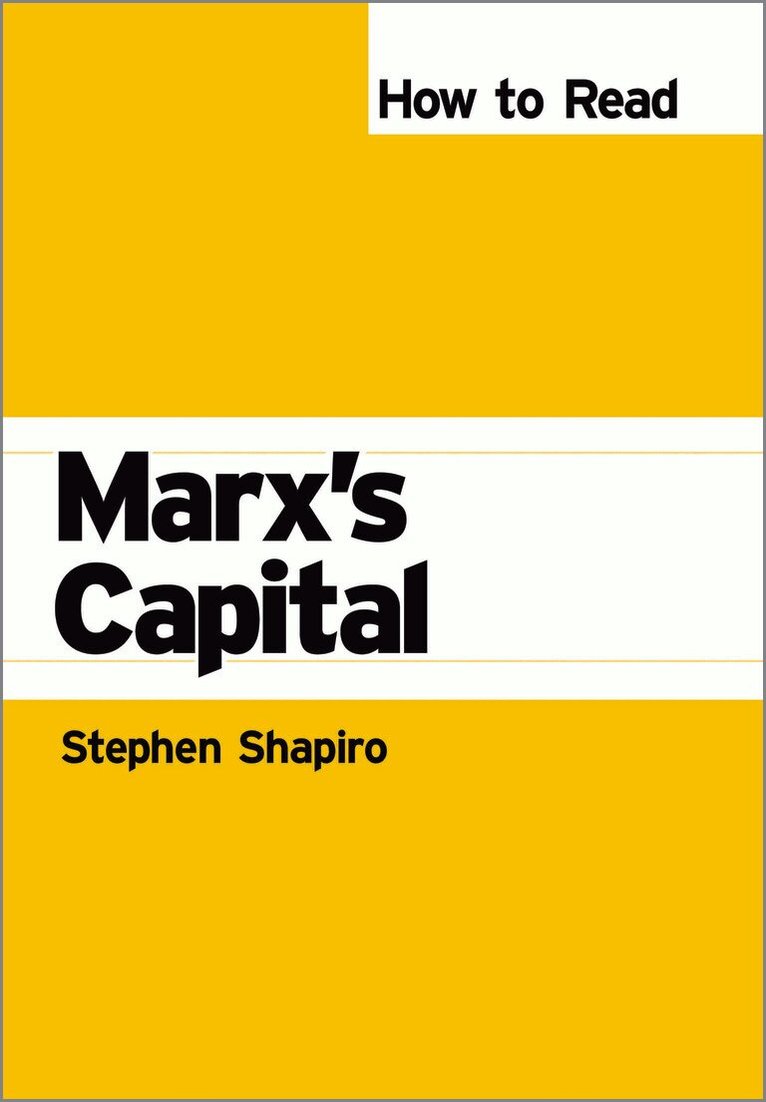
    How to Read Marx's Capital

    AvStephen Shapiro

    Häftad, Engelska, 2008

    Del i serien How to Read Theory

    425 kr

    Beställningsvara. Skickas inom 5-8 vardagar. Fri frakt över 249 kr.

    Fler format och utgåvor

    E-bok

    296 kr

    Beskrivning

    Capital Volume I is essential reading on many undergraduate courses, but the structure and style of the book can be confusing for students, leading them to abandon the text. This book is a clear guide to reading Marx's classic text, which explains the reasoning behind the book's structure and provides help with the more technical aspects that non-economists may find taxing.Students are urged to think for themselves and engage with Marx's powerful methods of argument and explanation. Shapiro shows that Capital is key to understanding critical theory and cultural production.This highly focused book will prove invaluable to students of politics, cultural studies and literary theory.

    Produktinformation

    • Utgivningsdatum:2008-03-20
    • Mått:125 x 177 x 11 mm
    • Vikt:190 g
    • Format:Häftad
    • Språk:Engelska
    • Serie:How to Read Theory
    • Antal sidor:192
    • Förlag:Pluto Press
    • ISBN:9780745325613

    Utforska kategorier

    • Politiska ideologier och rörelser inom Samhälle och politik
    • Ekonomisk politik inom Ekonomi och Ledarskap
    • Statsvetenskap och politisk teori inom Samhälle och politik

    Mer om författaren

    Stephen Shapiro is Professor of American Literature at the University of Warwick. He is the author of How to Read Marx's Capital (Pluto, 2008) and How to Read Foucault's Discipline and Punishment (Pluto, 2011).

    Innehållsförteckning

    • PrefaceAcknowledgementsPart One: Commodities and Money1. The Commodity2. The Process of Exchange3. Money, or the Circulation of CommoditiesPart Two: The Transformation of Money into Capital4. The General Formula for Capital 5. Contradictions in the General Formula6. The Sale and Purchase of Labour-powerPart Three: The Production of Absolute Surplus-Value7. The Labour Process and the Valorisation Process8. Constant Capital and Variable Capital9. The Rate of Surplus-Value10. The Working Day11. The Rate and Mass of Surplus-ValuePart Four: The Production of Relative Surplus-Value12. The Concept of Relative Surplus-Value13. Co-operation14. The Division of Labour and Manufacture15. Machinery and Large-Scale IndustryPart Five: The Production of Absolute and Relative Surplus-Value16. Absolute and Relative Surplus-Value17. Changes of Magnitude in the Price of Labour-power and in Surplus-value18: Different Formulae for the Rate of Surplus-ValuePart Six: Wages19. The Transformation of the Value (and Respectively the Price) of Labour-power into Wages20. Time-Wages21. Piece Wages22. National Differences in WagesPart Seven: The Process of Accumulation of Capital23. Simple Reproduction24. The Transformation of Surplus-Value into Capital25. The General Law of Capitalist AccumulationPart Eight: So-Called Primitive ["Originating"] Accumulation26. The Secret of Primitive Accumulation27. The Expropriation of the Agricultural Population from the Land28. Bloody Legislation Against the Expropriated Since the End of the Fifteenth Century. The Forcing Down of Wages by Act of Parliament29. The Genesis of the Capitalist Farmer30. Impact of the Agricultural Revolution on Industry. The Creation of a Home Market for Industrial Capital31. The Genesis of the Industrial Capitalist32. The Historical Tendency of Capitalist Accumulation33. The Modern Theory of ColonisationSuggestions for Further ReadingIndex