• Fri frakt över 249 kr
  • •
  • Snabba leveranser
  • •
  • Billiga böcker
Kundservice

Du är på sajten för privatpersoner.

Företag, bibliotek eller offentlig verksamhet?

Du handlar på classic.bokus.com, där alla dina funktioner finns intakta.
Till classic.bokus.com
Bokus logotyp. Gå till startsidan.
  • Erbjudanden
  • Nyheter
  • Student
  • Topplistor
  • Barn & ungdom
  • Bokus Play
  • E-böcker
  • Pocketböcker
  • Spel & pussel

10% rabatt på allt med kod: NYSTART10 →

Sidfot

Mina sidor

    Hjälp

    • Kundservice
    • Vanliga frågor och svar
    • Frakt och leverans
    • Retur vid ångerrätt
    • Reklamera vara
    • Betalning
    • Köpvillkor
    • Allmänna villkor
    • Information om webbplatsens tillgänglighet

    Om Bokus

    • Om oss
    • Pressrum
    • För studenter
    • För företag
    • För bibliotek och offentlig verksamhet
    • För leverantörer
    • Hållbarhet

    Populärt

    • Aktuella erbjudanden
    • Presentkort
    • Studentlitteratur
    • Nya böcker
    • Topplistor
    • Signerade böcker
    • Engelska böcker

    Inspiration

    • Boktips
    • BookTok
    • Populära bokserier
    • Barnbokskaraktärer
    • Populära författare
    Logotyp för Bokus
    Följ oss på Facebook (extern länk)Följ oss på Instagram (extern länk)Följ oss på YouTube (extern länk)Följ oss på TikTok (extern länk)
    bokus @ CookiesAnpassa cookiesIntegritetspolicyKöpvillkor
    Till Citymail hemsida (extern länk)Till Budbee hemsida (extern länk)Till Postnord hemsida (extern länk)Till Schenker hemsida (extern länk)Till Early Bird hemsida (extern länk)Till Walleys hemsida (extern länk)
    1. Samhälle och politik
    2. Samhälle och kultur
    3. Kultur och medier
    4. Medievetenskap

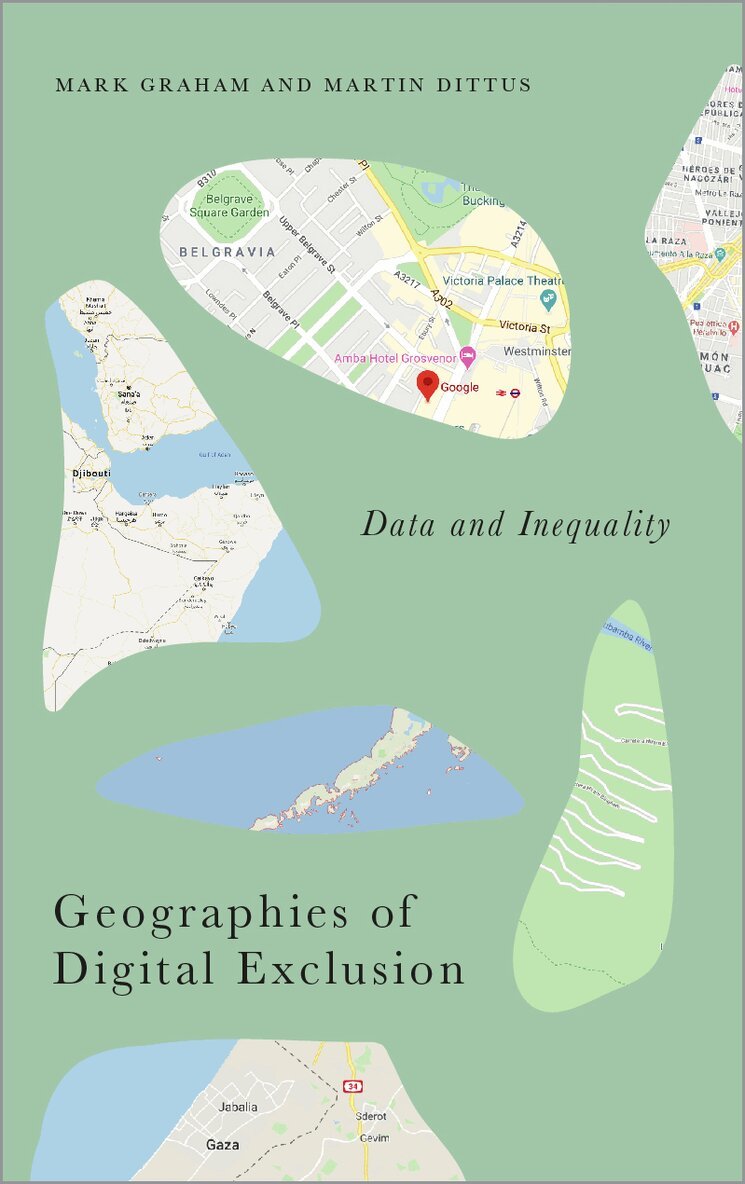
    Geographies of Digital Exclusion

    Data and Inequality

    AvMark Graham,Martin Dittus

    Inbunden, Engelska, 2022

    Del i serien Radical Geography

    901 kr

    Beställningsvara. Skickas inom 5-8 vardagar. Fri frakt över 249 kr.

    Fler format och utgåvor

    Häftad

    232 kr

    Beskrivning

    Today's urban environments are layered with data and algorithms that fundamentally shape how we perceive and move through space. But are our digitally dense environments continuing to amplify inequalities rather than alleviate them? This book looks at the key contours of information inequality, and who, what and where gets left out.Platforms like Google Maps and Wikipedia have become important gateways to understanding the world, and yet they are characterised by significant gaps and biases, often driven by processes of exclusion. As a result, their digital augmentations tend to be refractions rather than reflections: they highlight only some facets of the world at the expense of others.This doesn't mean that more equitable futures aren't possible. By outlining the mechanisms through which our digital and material worlds intersect, the authors conclude with a roadmap for what alternative digital geographies might look like.
    Produktinformation

    • Utgivningsdatum:2022-01-20
    • Mått:135 x 215 x 21 mm
    • Vikt:417 g
    • Format:Inbunden
    • Språk:Engelska
    • Serie:Radical Geography
    • Antal sidor:208
    • Förlag:Pluto Press
    • ISBN:9780745340197

    Utforska kategorier

    • Medievetenskap inom Samhälle och politik
    • Diskriminering och rättvisa inom Samhälle och politik
    • Geografi inom Naturvetenskap och teknik

    Mer om författaren

    Mark Graham is Professor of Internet Geography at the Oxford Internet Institute, University of Oxford. His research focuses on information geographies and the difference that changing digital connectivities make at the world's economic margins.

    Recensioner i media

    'Conceptually rich and well-illustrated, this is a valuable analysis of data power at the global scale'

    Innehållsförteckning

    • List of Figures Series Preface Acknowledgements 1. We All Are Digital Geographers 2. When the Map Becomes the Territory 3. Making Digital Geographies 4. A Geography of Digital Geographies 5. Digital Augmentations of the City 6. Who are the Map-Makers? 7. Information Power and Inequality 8. Towards More Just Digital Geographies Epilogue Appendix Reference tables Data sources Methodology for Chapter 5 Bibliography Index