• Fri frakt över 249 kr
  • •
  • Snabba leveranser
  • •
  • Billiga böcker
Kundservice

Du är på sajten för privatpersoner.

Företag, bibliotek eller offentlig verksamhet?

Du handlar på classic.bokus.com, där alla dina funktioner finns intakta.
Till classic.bokus.com
Bokus logotyp. Gå till startsidan.
  • Erbjudanden
  • Nyheter
  • Student
  • Topplistor
  • Barn & ungdom
  • Bokus Play
  • E-böcker
  • Pocketböcker
  • Spel & pussel

Må bättre, för mindre! Upp till 50% rabatt på hälsoböcker

Sidfot

Mina sidor

    Hjälp

    • Kundservice
    • Vanliga frågor och svar
    • Frakt och leverans
    • Retur vid ångerrätt
    • Reklamera vara
    • Betalning
    • Köpvillkor
    • Allmänna villkor
    • Information om webbplatsens tillgänglighet

    Om Bokus

    • Om oss
    • Pressrum
    • För studenter
    • För företag
    • För bibliotek och offentlig verksamhet
    • För leverantörer
    • Hållbarhet

    Populärt

    • Aktuella erbjudanden
    • Presentkort
    • Studentlitteratur
    • Nya böcker
    • Topplistor
    • Signerade böcker
    • Engelska böcker

    Inspiration

    • Boktips
    • BookTok
    • Populära bokserier
    • Barnbokskaraktärer
    • Populära författare
    Logotyp för Bokus
    Följ oss på Facebook (extern länk)Följ oss på Instagram (extern länk)Följ oss på YouTube (extern länk)Följ oss på TikTok (extern länk)
    bokus @ CookiesAnpassa cookiesIntegritetspolicyKöpvillkor
    Till Citymail hemsida (extern länk)Till Budbee hemsida (extern länk)Till Postnord hemsida (extern länk)Till Schenker hemsida (extern länk)Till Early Bird hemsida (extern länk)Till Walleys hemsida (extern länk)
    1. Filosofi och religion
    2. Filosofi
    3. Filosofiska discipliner

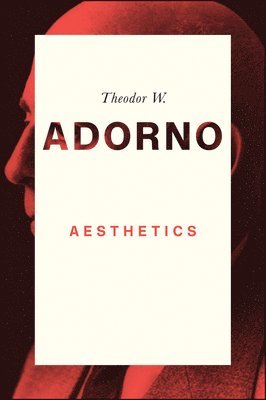
    Aesthetics

    AvTheodor W. Adorno,Eberhard Ortland

    Häftad, Engelska, 2017

    365 kr

    Beställningsvara. Skickas inom 5-8 vardagar. Fri frakt över 249 kr.

    Fler format och utgåvor

    Inbunden

    743 kr

    E-bok

    395 kr

    Beskrivning

    This volume of lectures on aesthetics, given by Adorno in the winter semester of 1958–9, formed the foundation for his later Aesthetic Theory, widely regarded as one of his greatest works. The lectures cover a wide range of topics, from an intense analysis of the work of Georg Lukács to a sustained reflection on the theory of aesthetic experience, from an examination of works by Plato, Kant, Hegel, Schopenhauer, Kierkegaard and Benjamin, to a discussion of the latest experiments of John Cage, attesting to the virtuosity and breadth of Adorno's engagement.  All the while, Adorno remains deeply connected to his surrounding context, offering us a window onto the artistic, intellectual and political confrontations that shaped life in post-war Germany. This volume will appeal to a broad range of students and scholars in the humanities and social sciences, as well as anyone interested in the development of critical theory.

    Produktinformation

    • Utgivningsdatum:2017-11-03
    • Mått:150 x 229 x 28 mm
    • Vikt:590 g
    • Format:Häftad
    • Språk:Engelska
    • Antal sidor:376
    • Förlag:John Wiley and Sons Ltd
    • ISBN:9780745679402
    • Översättare:Wieland Hoban

    Utforska kategorier

    • Filosofiska discipliner inom Filosofi och religion

    Mer om författaren

    Theodor W. Adorno (1903-1969), a prominent member of the Frankfurt School, was one of the most influential thinkers of the 20th century in the areas of social theory, philosophy and aesthetics.

    Recensioner i media

    "Adorno's lectures provide a fascinating glimpse into the philosophical workshop where his ideas were forged and developed, and this lecture course on aesthetics from the late 1950s is no exception. With an irrepressible sense of intellectual adventure, Adorno argues with the giants of the German tradition in the philosophy of art, interprets Plato's theory of beauty in the Phaedrus, and struggles to make sense of the music of John Cage. He offers a virtuoso series of variations on his central claim that, in art, we experience reason 'in the form of its otherness', as a 'particular resistance' to the instrumental rationality which dominates our lives."Peter Dews, University of Essex "These lectures are much more than an early record of Adorno's path toward his late, uncompleted masterwork, Aesthetic Theory. They represent an independent and often revelatory statement of his thinking on aesthetics in the late 1950's. This book is an indispensable addition to the English-language reader's understanding of this central thinker."Michael Jennings, Princeton University

    Innehållsförteckning

    • Editor's ForewordLECTURE 1The situationThe possibility of philosophical aesthetics todayThe connection between philosophy and aesthetics in KantHegel's definition of beautyAesthetic objectivityA critique of 'aesthetics from above'On the methodThe problem of aesthetic relativityThe objectivity of aesthetic judgementAesthetic logicThe irrationality of artThe work of art as an expression of naïvetéBasic research in the field of aestheticsLECTURE 2Not a set of instructionsThe individualist prejudiceTalentResistance to aestheticsThe poles of aesthetic insight: (a) Theoretical reflection; (b) The experience of artistic practiceAgainst cultivatednessThe riddle characterA justification of the philosophy of art'Aesthetics' is equivocalNatural beauty and artistic beautyHegel's turn away from natural beautyUnresolved aspect to natural beautyLECTURE 3The elusiveness of natural beautyThe model character of natural beautyAuraThe experiences of something objective'Mood'The mediation of natural beauty and artistic beautyThe historicity of natural beautyThe sublime in KantAesthetic experience is dialectical in itself 'Disinterested pleasure'LECTURE 4Special sphere of aesthetic semblanceThe taboo on desireSublimationDissonance'Spring's command, sweet need'MimesisImitationTransitionLECTURE 5The separation of art from the real worldPlay and semblance'The world once again'Art as 'unfolding of truth'The negation of the reality principleExpression of sufferingThe participation of art in the process of controlling natureTechniqueProgressLECTURE 6Does art merely express what has been destroyed?Restoring the bodyStart from the most advanced artThe expressive ideal of expressionismPrincipium stilisationisConstructionThe dialectic of expression and constructionLECTURE 7Nature is historicalConstruction and formA critique of the creator roleThe aversion to expressionThe reduction of the individualFalling silent after AuschwitzThe crisis of meaningThe limits of constructionLECTURE 8The crisis of meaning (contd.)Giving a voice to mutilated natureExpression of alienationDefamiliarizationConsistency of constructionAleatory musicThe problem of charactersLECTURE 9The Platonic doctrine of beautyIntroduction to an interpretation of the PhaedrusEnthousiasmosBeauty as a form of madnessBeing seizedPain as a constituent of the experience of beautyNot a definitionIdeaThe subjectivity of beautyThe imitation of the idea of beautyThe aspect of danger in beautyLECTURE 10Interpretation of the Phaedrus, contd.The paradox of beautyThe image of beautyAffinity with deathElevating oneself above the contingent world Kant's theory of the sublimeThe sensual and the spiritual in artForce fieldLECTURE 11Ontology and dialectic in PlatoThe relationship between beauty and artThe aspect of uglinessThe aspect of sensual pleasureAesthetic experience'Throw away in order to gain!'The meaning of the wholeLECTURE 12RecapitulationEnjoyment of artThe inhabitantFetishismAesthetic enjoymentThe suspension of the principium individuationisUnderstanding works of artLECTURE 13Reflective co-enactmentAesthetic stupidityTranslation, commentary, critiqueThe spiritualization of artConstructivismThe dialectic of sensual and spiritual aspects in the work of artLECTURE 14Spiritual contentThe structural contextForce fieldThe allergy to sensual pleasureAesthetics without beautyLECTURE 15Correcting the definition of the work of artAlienationReference to the object in visual art'Abstract' artForm as sedimented contentLoss of tensionTheoretical preconditions of artistic experienceLECTURE 16Beauty and truthNaturalismTruth of expressionCoherenceNecessityThe idea of beauty as something internally in motionHomeostasisThe mediated truthLECTURE 17Subjectivism and objectivism in aestheticsHegel's critique of tasteThe physiognomy of the aestheteGoût quamd mêmeAccumulated experienceFashionLECTURE 18A critique of aesthetic subjectivismA critique of psychological aestheticsMethodologyThe immediacy of subjective reactions is mediatedThe consumption of prestigeThe emotional relationship with artLECTURE 19Recapitulation'The Tired Businessman's Show'Conceptless synthesisThe cognition of artDefensive reactions to modern artLECTURE 20RecapitulationThe rancour of those left behind towards new artSemi-literacyThe alienation of modern art from consumption is itself socialLukács's pseudo-realismThe concept of ideologyKant's subjectivismA critique of the theory of aesthetic experienceThe ambiguity of the work of artLECTURE 21Recovery of the truthThe idea lies in the totality of aspects'... being completely filled with the matter'ExperienceThe psychology of the artistEmpathyThe work of art as objectified spiritArtistic productionAdorno's Notes for the LecturesEditor's NotesIndex