• Fri frakt över 249 kr
  • •
  • Snabba leveranser
  • •
  • Billiga böcker
Kundservice

Du är på sajten för privatpersoner.

Företag, bibliotek eller offentlig verksamhet?

Du handlar på classic.bokus.com, där alla dina funktioner finns intakta.
Till classic.bokus.com
Bokus logotyp. Gå till startsidan.
  • Erbjudanden
  • Nyheter
  • Student
  • Topplistor
  • Barn & ungdom
  • Bokus Play
  • E-böcker
  • Pocketböcker
  • Spel & pussel

10% rabatt på allt med kod NYSTART10 →

Sidfot

Mina sidor

    Hjälp

    • Kundservice
    • Vanliga frågor och svar
    • Frakt och leverans
    • Retur vid ångerrätt
    • Reklamera vara
    • Betalning
    • Köpvillkor
    • Allmänna villkor
    • Information om webbplatsens tillgänglighet

    Om Bokus

    • Om oss
    • Pressrum
    • För studenter
    • För företag
    • För bibliotek och offentlig verksamhet
    • För leverantörer
    • Hållbarhet

    Populärt

    • Aktuella erbjudanden
    • Presentkort
    • Studentlitteratur
    • Nya böcker
    • Topplistor
    • Signerade böcker
    • Engelska böcker

    Inspiration

    • Boktips
    • BookTok
    • Populära bokserier
    • Barnbokskaraktärer
    • Populära författare
    Logotyp för Bokus
    Följ oss på Facebook (extern länk)Följ oss på Instagram (extern länk)Följ oss på YouTube (extern länk)Följ oss på TikTok (extern länk)
    bokus @ CookiesAnpassa cookiesIntegritetspolicyKöpvillkor
    Till Citymail hemsida (extern länk)Till Budbee hemsida (extern länk)Till Postnord hemsida (extern länk)Till Schenker hemsida (extern länk)Till Early Bird hemsida (extern länk)Till Walleys hemsida (extern länk)
    1. Samhälle och politik
    2. Sociologi och antropologi
    3. Antropologi

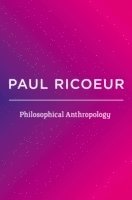
    Philosophical Anthropology

    AvPaul Ricoeur

    Häftad, Engelska, 2015

    378 kr

    Beställningsvara. Skickas inom 5-8 vardagar. Fri frakt över 249 kr.

    Fler format och utgåvor

    Inbunden

    740 kr

    Beskrivning

    How do human beings become human? This question lies behind the so-called �human sciences.� But these disciplines are scattered among many different departments and hold up a cracked mirror to humankind. This is why, in the view of Paul Ricoeur, we need to develop a philosophical anthropology, one that has a much older history but still offers many untapped resources.This appeal to a specifically philosophical approach to questions regarding what it was to be human did not stop Ricoeur from entering into dialogue with other disciplines and approaches, such as psychoanalysis, history, sociology, anthropology, linguistics and the philosophy of language, in order to offer an up-to-date reflection on what he saw as the fundamental issues. For there is clearly not a simple, single answer to the question �what is it to be human?� Ricoeur therefore takes up the complexity of this question in terms of the tensions he sees between the �voluntary� and the �involuntary,� �acting� and �suffering,� �autonomy� and �vulnerability,� �capacity� and �fragility,� and �identity� and �otherness.�The texts brought together in this volume provide an overall view of the development of Ricoeur�s philosophical thinking on the question of what it is to be human, from his early 1939 lecture on �Attention� to his remarks on receiving the Kluge Prize in 2004, a few months before his death.

    Produktinformation

    • Utgivningsdatum:2015-12-18
    • Mått:152 x 229 x 28 mm
    • Vikt:494 g
    • Format:Häftad
    • Språk:Engelska
    • Antal sidor:304
    • Förlag:John Wiley and Sons Ltd
    • ISBN:9780745688541

    Utforska kategorier

    • Antropologi inom Samhälle och politik
    • Filosofiska discipliner inom Filosofi och religion
    • Sociologi inom Samhälle och politik

    Mer om författaren

    Paul Ricoeur is (1913-2005) is widely recognized as one of the most distinguished philosophers of the twentieth century. He taught for many years at the University of Chicago. His many works include Freud and Philosophy, Time and Narrative and Oneself as Another.

    Innehållsförteckning

    • I. Phenomenology of the Will1. Attention: A Phenomenological Study of Attention and its Philosophical Connections2. The Unity of the Voluntary and the Involuntary as a Limit-Idea3. The Problem of the Will and Philosophical Discourse4. The Phenomenology of the Will and the Approach through Ordinary LanguageII. Semantics of Action5. The Symbol Gives Rise to Thought6. Freedom7. Myth8. The Symbolic Structure of Action9. Human Beings as the Subject of PhilosophyIII. Hermeneutics of the Self10. Individual and Personal Identity11. Narrative Identity12. The Paradoxes of Identity13. Strangeness Many Times Over14. The Addressee of Religion: The Capable Human Being