• Fri frakt över 249 kr
  • •
  • Snabba leveranser
  • •
  • Billiga böcker
Kundservice

Du är på sajten för privatpersoner.

Företag, bibliotek eller offentlig verksamhet?

Du handlar på classic.bokus.com, där alla dina funktioner finns intakta.
Till classic.bokus.com
Bokus logotyp. Gå till startsidan.
  • Erbjudanden
  • Nyheter
  • Student
  • Topplistor
  • Barn & ungdom
  • Bokus Play
  • E-böcker
  • Pocketböcker
  • Spel & pussel

10% rabatt på allt med kod: NYSTART10 →

Sidfot

Mina sidor

    Hjälp

    • Kundservice
    • Vanliga frågor och svar
    • Frakt och leverans
    • Retur vid ångerrätt
    • Reklamera vara
    • Betalning
    • Köpvillkor
    • Allmänna villkor
    • Information om webbplatsens tillgänglighet

    Om Bokus

    • Om oss
    • Pressrum
    • För studenter
    • För företag
    • För bibliotek och offentlig verksamhet
    • För leverantörer
    • Hållbarhet

    Populärt

    • Aktuella erbjudanden
    • Presentkort
    • Studentlitteratur
    • Nya böcker
    • Topplistor
    • Signerade böcker
    • Engelska böcker

    Inspiration

    • Boktips
    • BookTok
    • Populära bokserier
    • Barnbokskaraktärer
    • Populära författare
    Logotyp för Bokus
    Följ oss på Facebook (extern länk)Följ oss på Instagram (extern länk)Följ oss på YouTube (extern länk)Följ oss på TikTok (extern länk)
    bokus @ CookiesAnpassa cookiesIntegritetspolicyKöpvillkor
    Till Citymail hemsida (extern länk)Till Budbee hemsida (extern länk)Till Postnord hemsida (extern länk)Till Schenker hemsida (extern länk)Till Early Bird hemsida (extern länk)Till Walleys hemsida (extern länk)
    1. Kultur
    2. Arkitektur
    3. Arkitekturhistoria

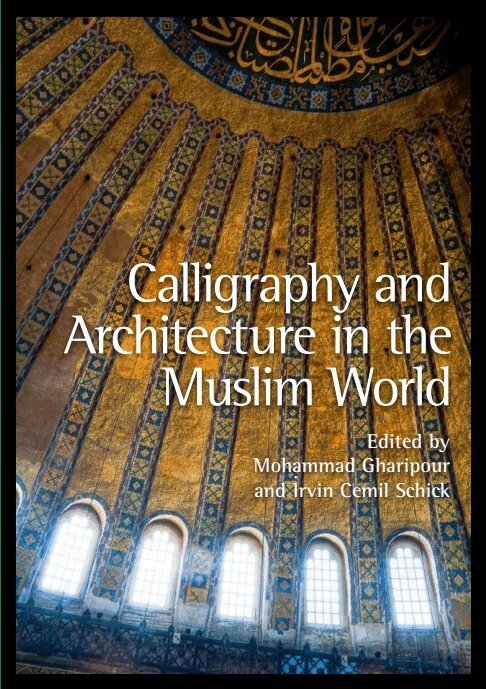
    Calligraphy and Architecture in the Muslim World

    AvMohammad Gharipour,Irvin Cemil Schick

    Inbunden, Engelska, 2013

    1 988 kr

    Beställningsvara. Skickas inom 7-10 vardagar. Fri frakt över 249 kr.

    Beskrivning

    This major reference work covers all aspects of architectural inscriptions in the Muslim world: the artists and their patrons, what inscriptions add to architectural design, what materials were used, what their purpose was and how they infuse buildings with meaning. From Spain to China, and from the Middle Ages to our own lifetime, Islamic architecture and calligraphy are inexorably intertwined. Mosques, dervish lodges, mausolea, libraries, even baths and market places bear masterpieces of calligraphy that rival the most refined of books and scrolls.

    Produktinformation

    • Utgivningsdatum:2013-12-09
    • Mått:246 x 294 x 34 mm
    • Vikt:2 634 g
    • Format:Inbunden
    • Språk:Engelska
    • Antal sidor:544
    • Förlag:Edinburgh University Press
    • ISBN:9780748669226

    Utforska kategorier

    • Arkitekturhistoria inom Kultur
    • Sociala grupper och identitet inom Samhälle och politik

    Mer om författaren

    An ACSA Distinguished Professor, Mohammad Gharipour serves as a Professor and Director of the Architecture Program at the University of Maryland, USA. He has published 15 books and has received awards and grants from many organizations, including AIA, NEH, NIH, Fullbright, SAH, ARCC, and ACSA. He is the director and founder of the award-winning International Journal of Islamic Architecture (IJIA), the director and co-founder of the Epidemic Urbanism Initiative, and the president of the Society of Architectural Historians. İrvin Cemil Schick is Assistant Professor in Cultural Studies at Istanbul Şehir University. İrvin Cemil Schick holds a PhD from the Massachusetts Institute of Technology. He has taught at Harvard University and MIT, and is currently at İstanbul Şehir University.

    Recensioner i media

    This is a comprehensive and thought-stimulating volume.

    Innehållsförteckning

    • A: Introduction; B: Sites; 1. Inscribing the Square: The Inscriptions on the Maidān-i Shāh in Iṣfahān, Sheila S. Blair; 2. Speaking Architecture: Poetry and Aesthetics in the Alhambra Palace, José Miguel Puerta Vílchez; 3. The Arabic Calligraphy on the Ceiling of the Twelfth-Century Cappella Palatina in Palermo, Sicily: Function and Identity, Hashim Al-Tawil; 4. Wall-Less Walls: The Calligraphy at the Hadži Sinanova Tekija in Sarajevo, Snježana Buzov; 5. Survey – The Qur’ānic Inscriptions Monument From Jām, Afghanistan, Ulrike-Christiane Lintz; C: Style vs. Content; 6. Multi-Sensorial Messages of the Divine and the Personal: Qur’an Inscriptions and Recitation in Sixteenth-Century Ottoman Mosques in Istanbul, Nina Ergin; 7. The Revival of Kūfī Script During the Reign of Sultan Abdülhamid II, İrvin Cemil Schick; 8. Calligraphy in Chinese Mosques: At the Intersection of Arabic and Chinese Calligraphy, Barbara Stöcker-Parnian; 9. Qur’anic Verses on Works of Architecture: The Ottoman Case, Murat Sülün; 10. Reading Qājār Epigraphs: Case Studies from Shīrāz and Iṣfahān, Bavand Behpoor; D: Patronage; 11. ‘The Pen Has Extolled Her Virtues’: Gender and Power within the Visual Legacy of Shajar al-Durr in Cairo, Caroline Olivia M. Wolf; 12. Sovereign Epigraphy in Location: Politics, Devotion and Legitimisation around the Quṭb Minār, Delhi, Johanna Blayac; 13. Archival Evidence on the Commissioning of Architectural Calligraphy in the Ottoman Empire, Talip Mert; 14. On the Renewal of the Calligraphy at the Mosque of the Prophet (al-Masjid al-Nabawī) under the Reign of Sultan Abdülmecid, Hilal Kazan; 15. Faṭimid Kūfī Epigraphy on the Gates of Cairo: Between Royal Patronage and Civil Utility, Bahia Shehab; E: Artists; 16. An Art Ambassador: The Inscriptions of ‘Alī Reżā ‘Abbāsī, Saeid Khaghani; 17. Mustafa Râkım Efendi’s Architectural Calligraphy, Süleyman Berk; 18. Yesârîzâde Mustafa İzzet Efendi and his Contributions to Ottoman Architectural Calligraphy, M. Uğur Derman; 19. The Visual Interpretation of Nasta‘līq in Architecture: Mīrzā Gholām Reżā’s Monumental Inscriptions for the Sepahsālār Mosque in Tehran, Sina Goudarzi; F: Regional; 20. Ma‘qilī Inscriptions on the Great Mosque of Mardin: Stylistic and Epigraphic Contexts, Tehnyat Majeed; 21. The Composition of Kūfī Inscriptions in Transitional and Early-Islamic Architecture of North Khurasan, Nasiba S. Baimatowa; 22. Space and Calligraphy in the Chinese Mosque, Sadiq Javer; 23. Medium and Message in the Monumental Epigraphy of Medieval Cairo, Bernard O’Kane; 24. Allegiance, Praise and Space: Monumental Inscriptions in Thirteenth-Century Anatolia as Architectural Guides, Patricia Blessing; 25. Symmetrical Compositions in Pre-Ottoman and Ottoman Architectural Inscriptions in Asia Minor, Abdülhamit Tüfekçioğlu; G: Modernity; 26. Writing Less, Saying More: Calligraphy and Modernisation in the Last Ottoman Century, Edhem Eldem; 27. The Absence and Emergence of Calligraphy in Najd: Calligraphy as a Modernist Component of Architecture in Riyadh, Sumayah Al-Solaiman; 28. Cairo to Canton and Back: Tradition in the Islamic Vernacular, Ann Shafer; H: Bibliography; I: List of Figures; J: About the Contributors.