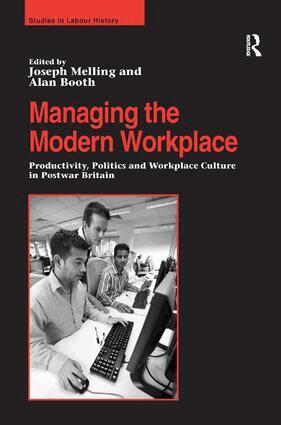
Inbunden, Engelska, 2008
Managing the Modern Workplace
Productivity, Politics and Workplace Culture in Postwar Britain
2497 kr
Beställningsvara. Skickas inom 10-15 vardagar. Fri frakt över 249 kr.
Beskrivning
Produktinformation
- Utgivningsdatum: 2008-03-28
- Mått: 156 x 234 x undefined mm
- Vikt: 510 g
- Format: Inbunden
- Språk: Engelska
- Antal sidor: 188
- Förlag: Taylor & Francis Ltd
- ISBN: 9780754608745
Utforska kategorier
Mer om författaren
Joseph Melling is Reader in History and Director of the Centre for Medical History at the University of Exeter, UK. Alan Booth is Professor of History, also at the University of Exeter.
Recensioner i media
’As well as academics, this book will appeal to students and anyone interested in management and labor history. I highly recommend it.’ EH.Net Book Review ’All these individual essays form part of a consistent whole; unlike many edited books, this one hangs together, very much aided by the two joint essays by the editors.’ Reviews in History ’This valuable collection of essays, edited by Jo Melling and Alan Booth, contributes further considered, and much needed, scholarship that questions the comfortable assumptions of the pervasive narrative of decline. ... This well-integrated collection of scholarly work makes a valuable contribution to our understanding of debates about industrial relations and growth in post-war Britain and should be disseminated widely as a rejoinder to the grandiose assumptions of declinist literature. It also raises important questions about the need for further in-depth studies of the behaviour of management at the various levels, and of the impact of wider social and cultural change on workplace relations, within the post-war British economy.’ Scottish Labour History ’This is a very important collection, and labour and business historians interested in postwar Britain will find it invaluable.’ Economic History Review ’On the one hand, Managing the Modern Workplace casts doubt on the whole notion of decline, since it makes clear that several industries, such as banking, were technological leaders and that the economy as a whole performed better than has often been allowed. On the other hand, this volume provides a corrective to those critics who have blamed the British trade union movement for Britain’s economic problems. Above all, it moves beyond clichés that treat the trade union movement as a monolith to show the variations between industries and within unions and the logic of the workers’ response to the conditions in which they found themselves. It is a helpful work of historical revisionism that will be of
Betyg & recensioner
0 recensioner
Inga recensioner tillgängliga.