• Fri frakt över 249 kr
  • •
  • Snabba leveranser
  • •
  • Billiga böcker
Kundservice

Du är på sajten för privatpersoner.

Företag, bibliotek eller offentlig verksamhet?

Du handlar på classic.bokus.com, där alla dina funktioner finns intakta.
Till classic.bokus.com
Bokus logotyp. Gå till startsidan.
  • Erbjudanden
  • Nyheter
  • Student
  • Topplistor
  • Barn & ungdom
  • Bokus Play
  • E-böcker
  • Pocketböcker
  • Spel & pussel

10% rabatt på allt med kod: NYSTART10 →

Sidfot

Mina sidor

    Hjälp

    • Kundservice
    • Vanliga frågor och svar
    • Frakt och leverans
    • Retur vid ångerrätt
    • Reklamera vara
    • Betalning
    • Köpvillkor
    • Allmänna villkor
    • Information om webbplatsens tillgänglighet

    Om Bokus

    • Om oss
    • Pressrum
    • För studenter
    • För företag
    • För bibliotek och offentlig verksamhet
    • För leverantörer
    • Hållbarhet

    Populärt

    • Aktuella erbjudanden
    • Presentkort
    • Studentlitteratur
    • Nya böcker
    • Topplistor
    • Signerade böcker
    • Engelska böcker

    Inspiration

    • Boktips
    • BookTok
    • Populära bokserier
    • Barnbokskaraktärer
    • Populära författare
    Logotyp för Bokus
    Följ oss på Facebook (extern länk)Följ oss på Instagram (extern länk)Följ oss på YouTube (extern länk)Följ oss på TikTok (extern länk)
    bokus @ CookiesAnpassa cookiesIntegritetspolicyKöpvillkor
    Till Citymail hemsida (extern länk)Till Budbee hemsida (extern länk)Till Postnord hemsida (extern länk)Till Schenker hemsida (extern länk)Till Early Bird hemsida (extern länk)Till Walleys hemsida (extern länk)
    1. Skönlitteratur
    2. Poesi

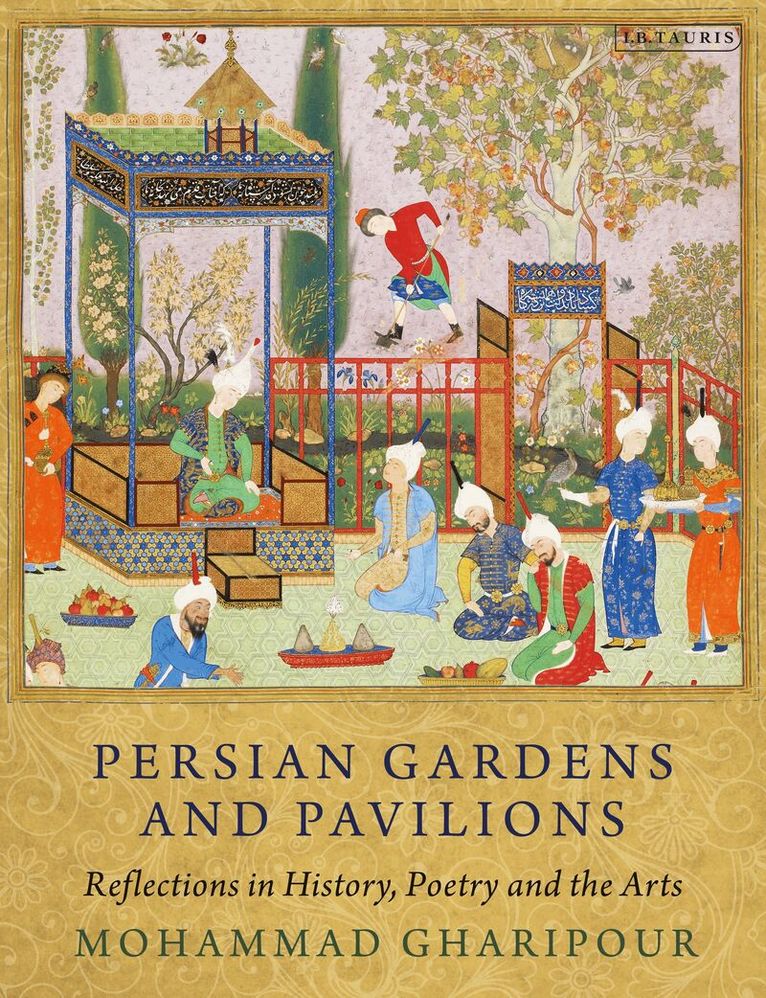
    Persian Gardens and Pavilions

    Reflections in History, Poetry and the Arts

    AvMohammad Gharipour

    Häftad, Engelska, 2020

    559 kr

    Beställningsvara. Skickas inom 5-8 vardagar. Fri frakt över 249 kr.

    Fler format och utgåvor

    E-bok

    608 kr

    Beskrivning

    From Timur's tent in Samarqand to Shah 'Abbas's palace in Isfahan and Humayun's tomb in Delhi, the pavilion has been an integral part of Persianate gardens since its earliest appearance at the Achaemenid garden in Pasargadae in the sixth century BC. Here, Mohammad Gharipour places both the garden and the pavilion within their historical, literary and artistic contexts, emphasizing the importance of the pavilion, which has hitherto been overlooked in the study of Iranian historical architecture. Starting with an examination of the depictions and representations of gardens in religious texts, Gharipour analyses how the idea of the garden developed from the model of pre-Islamic gardens in Achaemenid and Sassanian Persia to its mentions in the Zoroastrian text of Aban Yasht and on to its central role as paradise in the Qur'an. Continuing on with an exploration of gardens and pavilions in Persian poetry, Gharipour offers in-depth analysis of their literal and metaphorical values.It is in the poetry of major Persian poets such as Ferdowsi, Naser Khosrow, Sa'di, Rumi and Hafez that Gharipour finds that whilst gardens are praised for their spiritual values, they also contain significant symbolic worth in terms of temporal wealth and power. Persian Gardens and Pavilions then goes onto examine the garden and the pavilion as reflected in Persian miniature painting, sculpture and carpets, as well as accounts of travelers to Persia. With masters such as Bizhad representing daily life as well as the more mystical prose and poetry in, for example, Sa'di's Bustan (The Orchard) and Golestan (The Rose Garden), the garden and the pavilion can be seen to have crucial semiotic significance and cultural meanings. But in addition to this, they also point to historical patterns of patronage and ownership which were of central importance in the diplomatic and social life of the royal courts of Persia. Gharipour thereby highlights the metaphorical, spiritual, symbolic and religious aspects of gardens, as well as their more materialistic and economic functions.This book reaches back through Persia's rich history to explore the material and psychological relationships between human beings, pavilions and gardens, and will be a valuable resource for Art History, Architecture and Iranian Studies.

    Produktinformation

    • Utgivningsdatum:2020-07-09
    • Mått:185 x 239 x 18 mm
    • Vikt:704 g
    • Format:Häftad
    • Språk:Engelska
    • Antal sidor:256
    • Förlag:Bloomsbury Publishing PLC
    • ISBN:9780755600366

    Utforska kategorier

    • Poesi inom Skönlitteratur
    • Konsthistoria inom Kultur
    • Målarkonst inom Kultur

    Mer om författaren

    Mohammad Gharipour is professor at the School of Architecture and Planning at Morgan State University. The recipient of the Hamad Bin Khalifa Fellowship in Islamic Art and the Spiro Kostof Fellowship Award from the Society of Architectural Historians, Gharipour has published extensively on architectural history. He is the the author of Gardens of Renaissance Europe and the Islamic Empires, Synagogues of the Islamic World, and Historiography of Persian Architecture and is editor of 'Bazaar in the Islamic City' (2012) and the founding editor of the 'International Journal of Islamic Architecture'.

    Recensioner i media

    Mohammad Gharipour's fine book focuses on Persian gardens and the permanent or temporary structures within them, during the period from the fifteenth through the eighteenth centuries, but includes a useful concise survey of references to gardens in earlier literature stretching back to ancient Sumer, the Bible and the Qur'an. A scholarly book, it includes extensive apparatus of glossary, notes and sources, and 100 illustrations, many in color, generally of high quality and beautiful to study. It relies heavily on textual sources, including histories and poetry and travelers' accounts especially, and also pictorial sources, especially manuscript illuminations. Its wide scope seeks to set the garden in its social and historical context as a place for meetings and display and pleasure, as well as sometimes places of production. It goes beyond earlier treatments of the theme, including even color visualizations of Haravi's proposal for a "paradise" garden in the fifteenth century, and has systematic investigations of many questions, especially in regard to structures, such as tents, or thrones in gardens, and also discusses what can be said about the types and arrangements of plants."

    Innehållsförteckning

    • List of IllustrationsAcknowledgementsChapter 1: IntroductionChapter 2: The Garden and Pavilion in Near Eastern Pre-Islamic Texts, the Qur'an and Persian PoetryChapter 3: The Garden and Pavilion in Persian ArtChapter 4: The Garden and Pavilion through the Lens of Travelers and HistoriansChapter 5: ConclusionMatrixGlossary of TermsPoets, Historians and TravellersNotesBibliographyIndex