• Fri frakt över 249 kr
  • •
  • Snabba leveranser
  • •
  • Billiga böcker
Kundservice

Du är på sajten för privatpersoner.

Företag, bibliotek eller offentlig verksamhet?

Du handlar på classic.bokus.com, där alla dina funktioner finns intakta.
Till classic.bokus.com
Bokus logotyp. Gå till startsidan.
  • Erbjudanden
  • Student
  • Topplistor
  • Barn & ungdom
  • Bokus Play
  • E-böcker
  • Ljudböcker
  • Pocketböcker
  • Spel och pussel

5% studentrabatt – använd koden KURSBOK27 →

Sidfot

Mina sidor

    Hjälp

    • Kundservice
    • Vanliga frågor och svar
    • Frakt och leverans
    • Retur vid ångerrätt
    • Reklamera vara
    • Betalning
    • Köpvillkor
    • Allmänna villkor
    • Information om webbplatsens tillgänglighet

    Om Bokus

    • Om oss
    • Pressrum
    • För studenter
    • För företag
    • För bibliotek och offentlig verksamhet
    • För leverantörer
    • Hållbarhet

    Populärt

    • Aktuella erbjudanden
    • Presentkort
    • Studentlitteratur
    • Nya böcker
    • Topplistor
    • Signerade böcker
    • Engelska böcker

    Inspiration

    • Boktips
    • BookTok
    • Barnbokskaraktärer
    • Populära författare
    Logotyp för Bokus
    Följ oss på Facebook (extern länk)Följ oss på Instagram (extern länk)Följ oss på YouTube (extern länk)Följ oss på TikTok (extern länk)
    bokus @ CookiesAnpassa cookiesIntegritetspolicyKöpvillkor
    Till Citymail hemsida (extern länk)Till Budbee hemsida (extern länk)Till Postnord hemsida (extern länk)Till Schenker hemsida (extern länk)Till Early Bird hemsida (extern länk)Till Walleys hemsida (extern länk)
    1. Samhälle och politik
    2. Samhälle och kultur
    3. Kultur och medier
    4. Kulturvetenskap

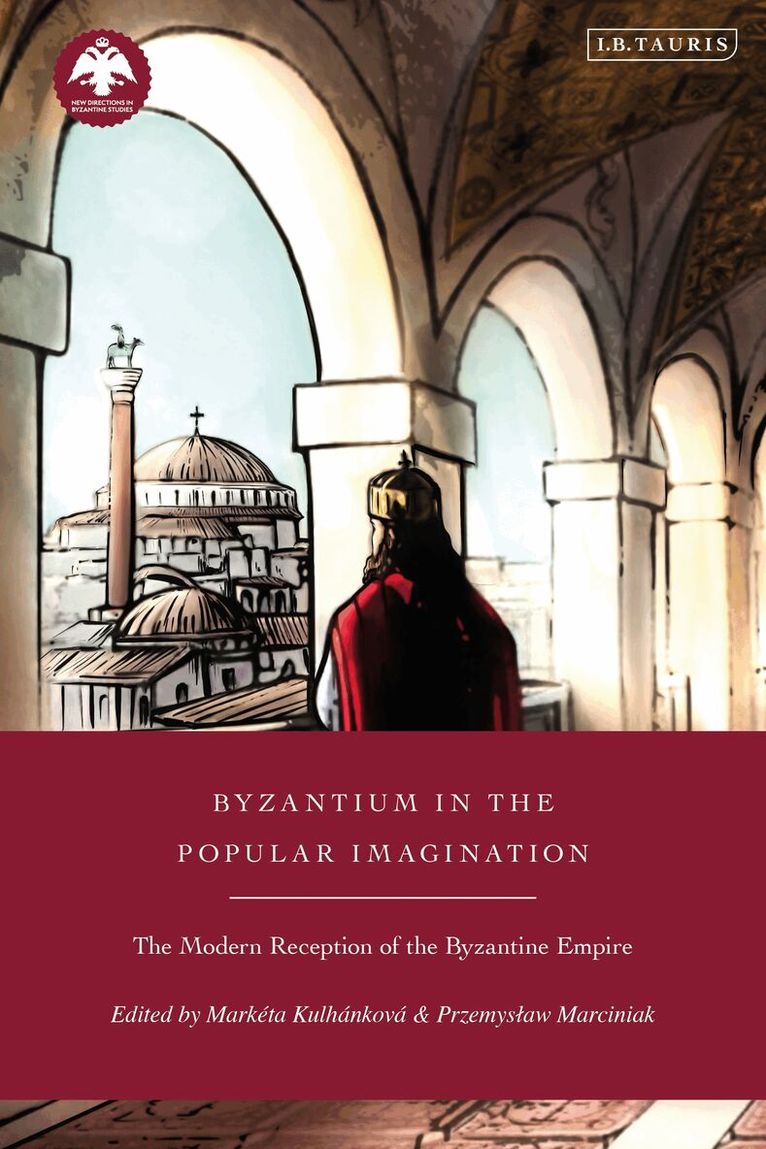
    Byzantium in the Popular Imagination

    The Modern Reception of the Byzantine Empire

    AvMarkéta Kulhánková,Przemyslaw Marciniak

    Inbunden, Engelska, 2023

    Del i serien New Directions in Byzantine Studies

    1 358 kr

    Beställningsvara. Skickas inom 10-15 vardagar. Fri frakt över 249 kr.

    Beskrivning

    What is the contemporary cultural legacy of Byzantium or The Eastern Roman Empire? This book explores the varied reception history of the Byzantine Empire across a range of cultural production.Split into four sections: the origins of 'Byzantomania' in France, modern media, literature, and politics, it provides case studies which show the numerous ways in which the empire's legacy can be felt today. Covering television, video games and contemporary political discourse, contributors also consider a wide range of national and geographical perspectives including Russian, Turkish, Polish, Greek and Hungarian. It will be essential reading for scholars and students of the reception and cultural history of the Byzantine Empire.

    Produktinformation

    • Utgivningsdatum:2023-09-07
    • Mått:162 x 236 x 24 mm
    • Vikt:603 g
    • Format:Inbunden
    • Språk:Engelska
    • Serie:New Directions in Byzantine Studies
    • Antal sidor:296
    • Förlag:Bloomsbury Publishing PLC
    • ISBN:9780755607280

    Utforska kategorier

    • Kulturvetenskap inom Samhälle och politik
    • Socialhistoria och kulturhistoria inom Historia och arkeologi

    Mer om författaren

    Markéta Kulhánková is Associate Professor at the Institute of Classics, Masaryk University, Czech Republic.Przemyslaw Marciniak is Professor of Byzantine Literature and Head of Center for Studies on Literature and the Reception of Byzantium, at the University of Silesia, Poland. He is the author of Greek Drama in Byzantine Times (2004), a Polish translation of the satire Timarion, and is the co-editor of The Reception of Byzantium in European Culture since 1500 (2016).

    Innehållsförteckning

    • List of FiguresList of ContributorsThe Many Faces of the Reception of Byzantium (Markéta Kulhánková, Masaryk University, Czech Republic, & Przemyslaw Marciniak, University of Silesia, Poland)Part One: Byzantium on Display. Scholarly Debates, Political Uses, Modern ReconstructionismChapter 1: Popularizing Byzantine Architecture –the 1900 Paris World Exhibition, Balkan Nationalisms, and the Byzantine Revival (Fani Gargova, University of Vienna, Austria)Chapter 2: East or West? Byzantine Architecture and the Origins of French Medieval Architecture in the Scholarly Debate, 19th C. (Francesco Lovino, American Academy in Rome, Italy)Chapter 3: Byzantium as a Political Tool (1657–1952). Nations, Colonialism, and Globalism (Ivan Foletti, Masaryk University, Czech Republic, and Adrien Palladino, Masaryk University, Czech Republic)Chapter 4: The Prince and The Greeks. The Byzantine Baptizers of Prince Vladimir in Modern Russian Sculpture, Mosaic and Church Architecture (Roman Shliakhtin, Johannes Gutenberg-Universität Mainz, Germany)Chapter 5: Museum Interpretations of Byzantium (Sofia Mali, University of The Arts London, UK)Part Two: Byzantium & Modern MediaChapter 6: Byzantium in Comics (Lilia Diamantopoulou, Ludwig-Maximilians-University, Germany)Chapter 7: Games of Byzantium. The Image of the Empire in Three Strategy Videogames (Marco Fasolio, University of Eastern Piedmont, Italy)Chapter 8: From History to Propaganda and Back: Byzantium in the Romanian Historical Cinema (Florin Leonte, Palacký University of Olomouc, Czech Republic)Chapter 9: Imagination of Byzantium and the Byzantines in Modern Turkish Popular Literature and Cinema (Buket Kitapçi Bayri, independent)Chapter 10: Byzantium in Greek Cinema (Konstantinos Chryssogelos, University of Patras, Greece)Part Three: Byzantium & LiteratureChapter 11: “Beware of Greeks Bearing Gifts”: Byzantium in Czech Historical Fiction (Markéta Kulhánková, Masaryk University, Czech Republic)Chapter 12: Imagining Action: Explanation in Twentieth-Century Historiographical and Fictional Rewritings of the Chronicle of Morea (Matthew Kinloch, University of Oslo, Norway)Chapter 13: The Barbarians Will Always Stay: Rose Macaulay and the Futility of Empire (Olof Heilo, Swedish Research Institute in Istanbul, Turkey)Chapter 14: M. Karagatsis’s Byzantinism in his Sergios and Bacchos (1959) (Katerina Liasi, Independent)Chapter 15: Fantastic(al) Byzantium: The Imagery of Byzantium in Speculative Fiction (Przemyslaw Marciniak, University of Silesia, Poland)No Longer a Forgotten Empire? (Przemyslaw Marciniak, University of Silesia, Poland) Afterword: Forging Textual Realities, or How to Write a ‘Byzantine Mystery Story’ (Panagiotis Agapitos, Johannes Gutenberg University of Mainz, Germany)INDEX