• Fri frakt över 249 kr
  • •
  • Snabba leveranser
  • •
  • Billiga böcker
Kundservice

Du är på sajten för privatpersoner.

Företag, bibliotek eller offentlig verksamhet?

Du handlar på classic.bokus.com, där alla dina funktioner finns intakta.
Till classic.bokus.com
Bokus logotyp. Gå till startsidan.
  • Erbjudanden
  • Nyheter
  • Student
  • Topplistor
  • Barn & ungdom
  • Bokus Play
  • E-böcker
  • Pocketböcker
  • Spel & pussel

10% rabatt på allt med kod: NYSTART10 →

Sidfot

Mina sidor

    Hjälp

    • Kundservice
    • Vanliga frågor och svar
    • Frakt och leverans
    • Retur vid ångerrätt
    • Reklamera vara
    • Betalning
    • Köpvillkor
    • Allmänna villkor
    • Information om webbplatsens tillgänglighet

    Om Bokus

    • Om oss
    • Pressrum
    • För studenter
    • För företag
    • För bibliotek och offentlig verksamhet
    • För leverantörer
    • Hållbarhet

    Populärt

    • Aktuella erbjudanden
    • Presentkort
    • Studentlitteratur
    • Nya böcker
    • Topplistor
    • Signerade böcker
    • Engelska böcker

    Inspiration

    • Boktips
    • BookTok
    • Populära bokserier
    • Barnbokskaraktärer
    • Populära författare
    Logotyp för Bokus
    Följ oss på Facebook (extern länk)Följ oss på Instagram (extern länk)Följ oss på YouTube (extern länk)Följ oss på TikTok (extern länk)
    bokus @ CookiesAnpassa cookiesIntegritetspolicyKöpvillkor
    Till Citymail hemsida (extern länk)Till Budbee hemsida (extern länk)Till Postnord hemsida (extern länk)Till Schenker hemsida (extern länk)Till Early Bird hemsida (extern länk)Till Walleys hemsida (extern länk)
    1. Kultur
    2. Designböcker
    3. Grafisk design

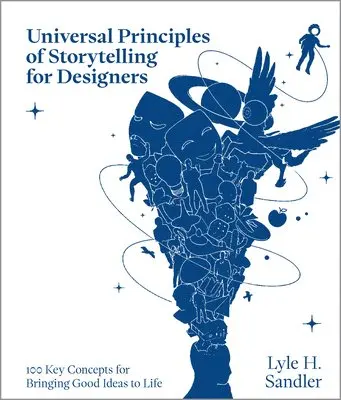
    Universal Principles of Storytelling for Designers

    100 Key Concepts for Bringing Good Ideas to Life

    AvLyle H. Sandler

    Inbunden, Engelska, 2025

    Del i serien Rockport Universal

    303 kr

    Skickas . Fri frakt över 249 kr.

    Beskrivning

    Unlock the power of storytelling in design with Universal Principles of Storytelling for Designers. This essential reference explores how timeless storytelling principles—character, conflict, and resolution—can be woven into design and everyday life. It shows how integrating these narrative elements leads to more engaging and meaningful creative outcomesIn Universal Principles of Storytelling for Designers, interdisciplinary designer, innovator, and anthropologist Lyle Sandler covers:Character Development: How to craft relatable and memorable personas in visual narratives.Plot Structure: Techniques for creating compelling arcs and engaging storylines.Emotional Resonance: Leveraging emotions to connect with the audience on a deeper level.Visual Storytelling: Utilizing design elements like color, typography, and composition to convey meaning and enhance the narrative.The book is rich with examples from various disciplines, including literature, film, psychology, philosophy, and theatre. Sandler’s expertise and accessible writing style make complex concepts easy to understand and apply.Universal Principles of Storytelling for Designers is not just another design book; it’s The Science of Storytelling for designers, a guide to transforming your design work into unforgettable stories. By mastering these storytelling principles, you can create designs that not only look good but also resonate deeply with your audience.The titles in the Rockport Universal series offer comprehensive and authoritative information and edifying and inspiring visual examples on multidisciplinary subjects for designers, architects, engineers, students, and anyone who is interested in expanding and enriching their design knowledge.

    Produktinformation

    • Utgivningsdatum:2025-06-19
    • Mått:216 x 254 x 19 mm
    • Vikt:1 012 g
    • Format:Inbunden
    • Språk:Engelska
    • Serie:Rockport Universal
    • Antal sidor:216
    • Förlag:Quarto Publishing Group USA Inc
    • ISBN:9780760392461

    Utforska kategorier

    • Grafisk design inom Kultur
    • Designhistoria inom Kultur
    • Produktdesign inom Kultur

    Mer om författaren

    Lyle Sandler is an interdisciplinary designer, innovator, and anthropologist. He assists organizations, corporate leaders, and governments in designing products, services, and experiences that drive new forms of value in anticipation of future human needs. He is currently the Chief Design Officer at Aon Corporation, overseeing the design of products and services across all business units. Lyle is exploring innovative techniques that enable humans to efficiently interact with large volumes of data, including the creation of non-language, multi-sensory, progressive storytelling. He resides in Morganville, New Jersey, where he continues to inspire designers through his writing and teaching.

    Recensioner i media

    "An ideal DIY study that will be of particular value to readers with an interest in advertising development and graphic design techniques."

    Innehållsförteckning

    • Introduction1 Affect as Information TheoryEmotion provides an important source of information for decision-making.2 AllegoryA narrative that expresses an alternative or hidden meaning.3 Analogy (Design by Analogy, DbA)The comparison between two things for the purpose of explanation or clarification.4 AnthropomorphismThe application of human characteristics to nonhuman entities.5 ArchetypesUniversal patterns recognizable to all human beings.6 AspirationThe desire or ambition to achieve something.7 Calls to ActionAn invitation for an audience to act.8 Ceremonies and RitualsThe way humans practice and observe their customs, both formally and informally.9 Character RelatabilityAn audience’s ability to relate and draw a connection to characters in a story.10 ChoreographyThe movement and sequencing of events, people, products, services, and experiences.11 ConflictThe friction between two opposing forces.12 Contrast, Beginning to EndA distinct otherness must exist between the beginning and end of your story.13. Core ValuesEmbedded principles and beliefs that guide actions and behaviors.14 CreativityUsing one’s imagination to create original ideas.15 Data StorytellingRenders data into a consumable and actionable narrative.16 Deceptive CadenceAn effective and dramatic way of adding surprise to your story.17 DeductionsThe human technology that enables decision-making.18 Deus ex MachinaThe resolution of a hopeless or unexpected situation by a divine or miraculous power.19 Dieter Rams’ Principles of DesignTen principles for good design and great storytelling.20 Disney’s Twelve Basic Principles of AnimationFundamental principles of animated storytelling and character design.DramaturgyThe theory and practice of dramatic composition.22 EmotionThe instinctive responses to external stimuli.23 EmpathyThe ability to understand the feelings and needs of others.24 EpigraphA brief phrase, quotation, or poem that acts as a preface to a story.25 Essence ModelThe basic nature of a thing—the quality or qualities that make a thing what it is.26 EthicsThe standards that express what is right and what is wrong.27 ExpositionAn introduction to a story’s critical background information.28 ForeshadowingA warning or indication that something is about to happen.29 Form and FunctionAppearance and utility must be in balance.30 Freytag’s PyramidA multistage guide to dramatic structure.31 Functions of StorytellingThe multiple functions and forms of storytelling.32 GestaltThe whole of something is greater than the sum of its parts.33 Happily Ever AfterThe end of a story, assuming stories ever end.34 Hitchcock’s Rules of Visual StorytellingThree rules to live by when telling visual stories.35 Hofstede’s Cultural Dimensions TheoryA guide to cultural similarities and differences.36 Human TechnologyOur inborn abilities that allow us to function organically.37 HyperboleExaggerating the mundane.38 In Medias ResA story that begins in the middle or end, not the beginning.39 InfrathinA feeling that is so small it is barely perceptible.40 Jekyll and Hyde SyndromeTwo distinctly different characteristics residing in the same organism.41 Jobs to Be DoneA schema that offers a perspective on why people buy or hire products, services, and experiences.42 Kano and StorytellingDetermines the correlation between product features and customer satisfaction.43 Kill Your DarlingsThe willing removal of content and features that do not support the value of your story or design.44 KishōtenketsuA classical narrative structure originating from Chinese, Korean, and Japanese cultures.45 LexiconAn upscale way of saying a list of words.46 Mary’s RoomAn intriguing and important thought experiment.47 Maslow’s Hierarchy of NeedsFive fundamental levels of human need.48 Master PlanningEvery city is a story.49 Meaning versus ValueEvery story should include elements of meaning, value, or both.50 MentaleseOur innermost narratives.51 MetaphorsA figure of speech or expression.52 Mise en ScènePutting onto the stage | Setting of the scene | Look of the scene53 Mission/Vision/Value StatementsShort stories that explain what is, what will be, and the value you bring.54 MusicA metaphor for harmonious storytelling.55 Narrative DesignA text-based description of your design’s experience.56 Narrative IntelligenceThe ability to listen, understand, and analyze narratives.57 Narrative TransportationThe experience of being fully immersed in a story.58 ObservingWatching humans being.59 PerformanceThe telling of a story.60 PersonasThe fictional representation of real humans.61 PhenomenologyThe exploration of phenomena and human experience.62 Pixar’s Story StructureEight steps to exceptional storytelling.63 PlotThe sequence of events that keeps a story in motion.64 PresentationsThe conveyance of information from one person to another or group.65 PrototypingThe sample or model of something yet-tobe- developed.66 ProximityThe relationship between characters, things, and places.67 Resource-Based Theory (Marketing)The story of intangibles that are irreplaceable.68 Rhythm and SilenceThe pace and sequencing of a story.69 Rule of ThreeItems grouped in three are always more memorable.70 SensemakingMaking sense of things.71 Seven Basic PlotsThe seminal list of familiar plots.72 Seven-Point Story StructureAn alternative use for this long-standing narrative structure.73 Show, Don’t TellAn immersive storytelling technique.74 Star TrekThe influence of fiction on nonfiction and vice versa.75 StickinessWhen something becomes contagious, memorable, and hard to forget.76 Stimulus, Organism, Response Theory (S-O-R)Stimulus drives organisms (humans) to evaluate and respond.77 Stream of ConsciousnessThe natural and continuous flow of ideas, thoughts, feelings, and reactions within a narrative.78 Super NormalBeauty often exists in what is not present.79 Synaptic PruningThe human brain has limited capacity.80 SynecdocheA figure of speech in which a part is made to represent the whole or vice versa.81 The Fichtean CurveA story structure that focuses on conflict and crisis.82 The Five PsProduct, Price, Promotion, Place, and People.83 The Hero’s JourneyThe archetypal narrative pattern that traverses time, culture, and religion.84 The MacGuffinAn object or device that serves as a trigger for the plot but is otherwise useless.85 The Paradox of SuspenseWhen a suspenseful story remains compelling despite its familiarity.86 The Peak End RuleOur memory is affected around the most intense moments and the end of an experience.87 The SensesHow humans interact and perceive the world around us.88 The Trigger or Wicked ProblemThe reasons we tell stories and design things – the why behind the what.89 The WallThe imaginary wall that sits between the teller of a story and their audience.90 The Willing Suspension of DisbeliefSuspending one’s capacity for critical and logical thinking to temporarily believe in something that appears too extraordinary to be real.91 Theodore Levitt and the Quarter-Inch HoleThe quarter-inch hole is one of the greatest, yet simplest, marketing theories.92 Thesis + Antithesis = SynthesisA point, followed by an alternative point, followed by a solution.93 Three Act StructureThe simplest structure of a story.94 Tone and TenorDescribing the overall attitude, mood, and depth of a story or design.95 TransformationStories have two jobs: to prompt transformation and to provoke action.96 VerisimilitudeThe appearance of being true.97 Vonnegut’s Shapes of StoriesKurt Vonnegut’s simple yet effective story structure. 98 VulnerabilityExposing one’s emotions or weaknesses.99 Work BackwardsBegin writing your story from the ending.100 World-BuildingThe world your humans, designs, and environments live in.AcknowledgmentsAbout the DesignersAbout the AuthorIndex